
Inside the Story · No. 19 · Thursday 22 October 2026 · Craft · South Asia and Western

Drawn in India for Japan

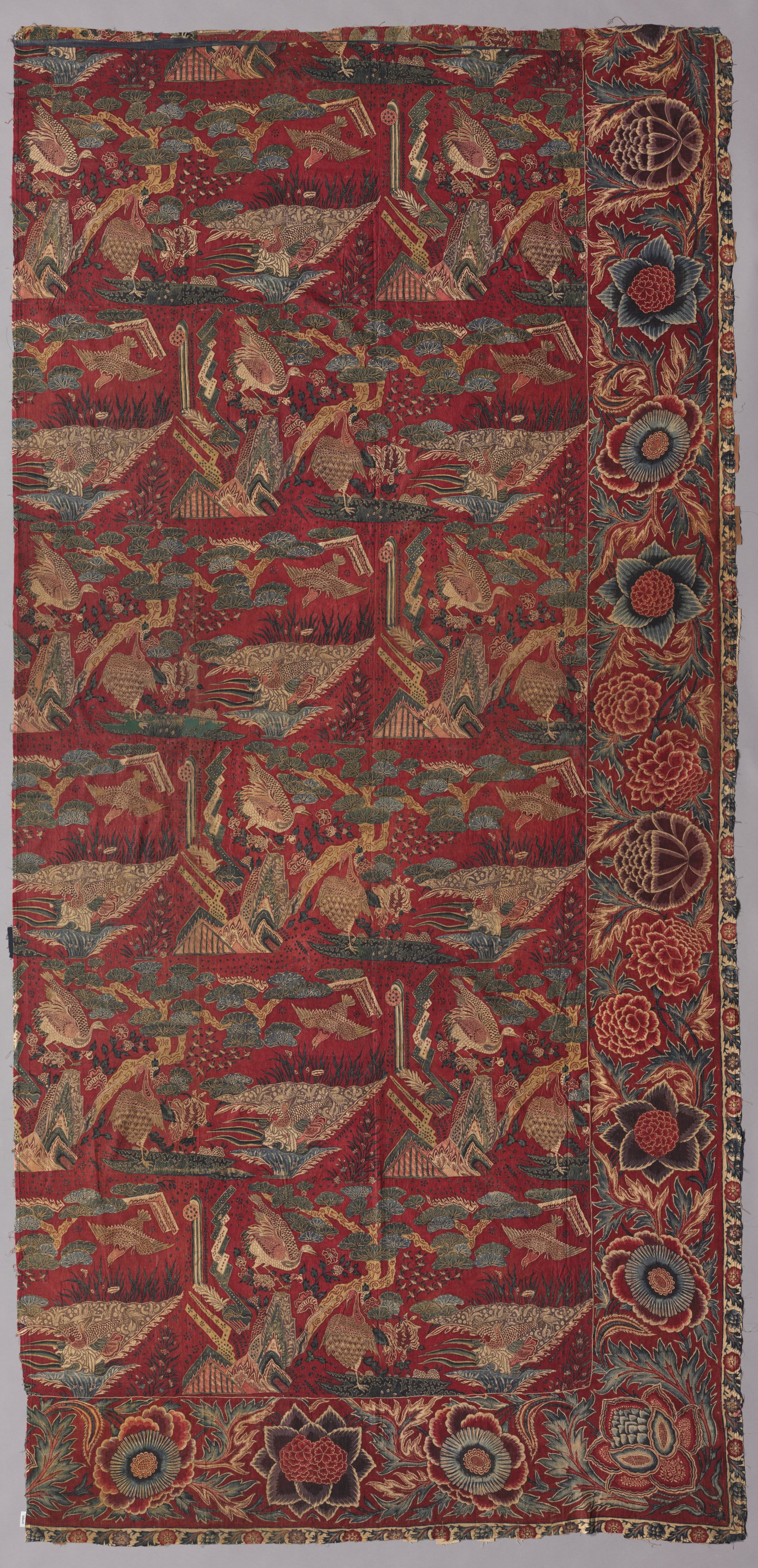
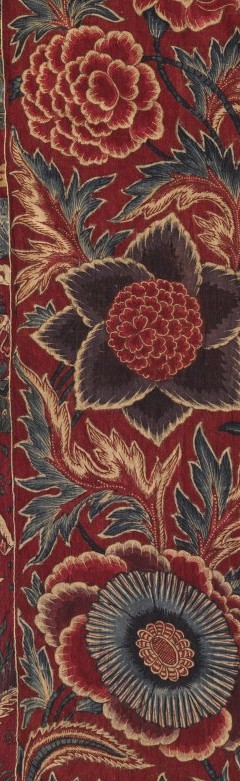
These peonies and pines were drawn by hand on the Coromandel Coast of India between 1700 and 1750, for a buyer in Japan, and the museum holds only the right half.

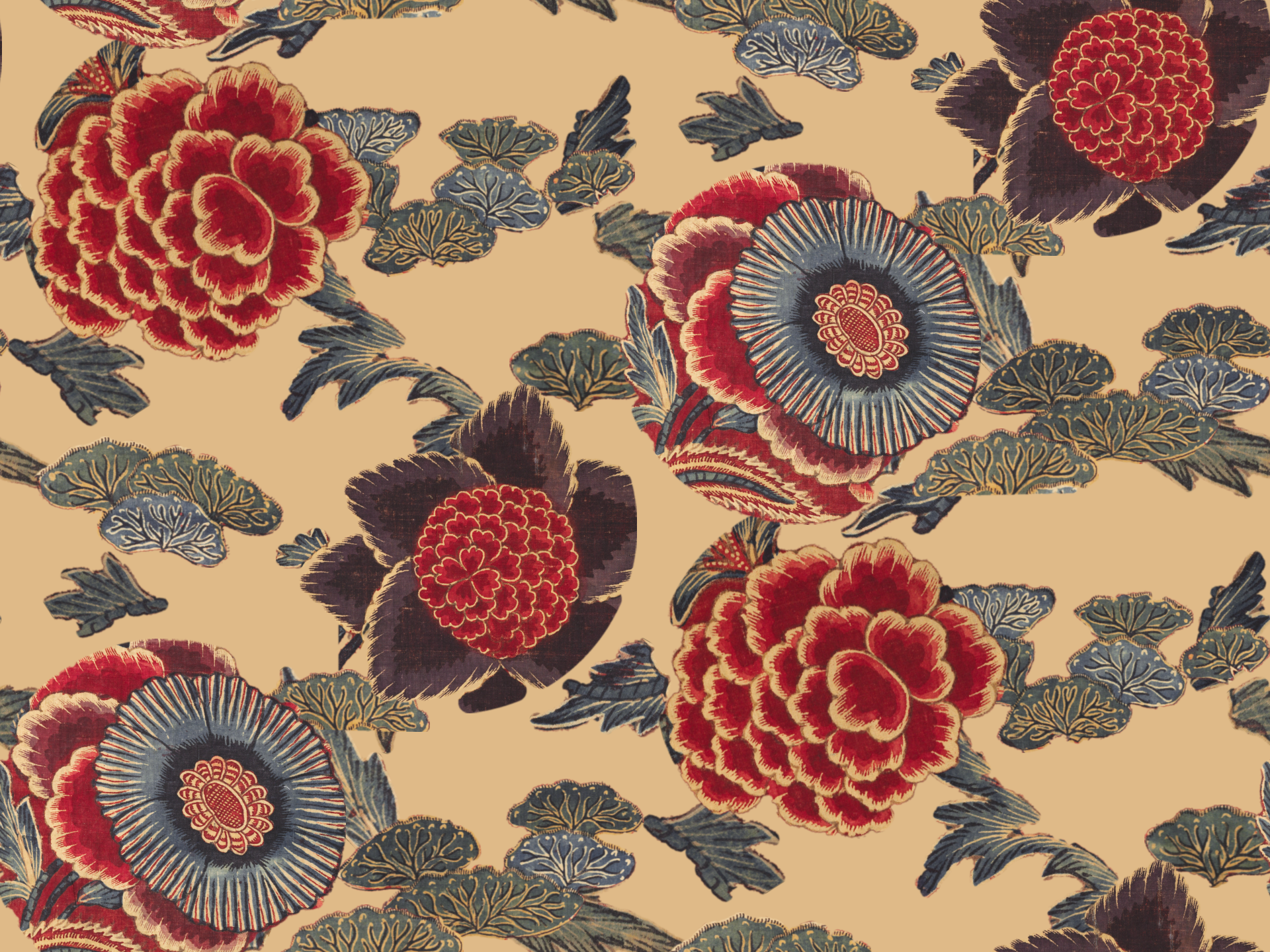
The inside story of a design inspired by a chintz drawn on the Coromandel Coast for Japan, 1700 to 1750.

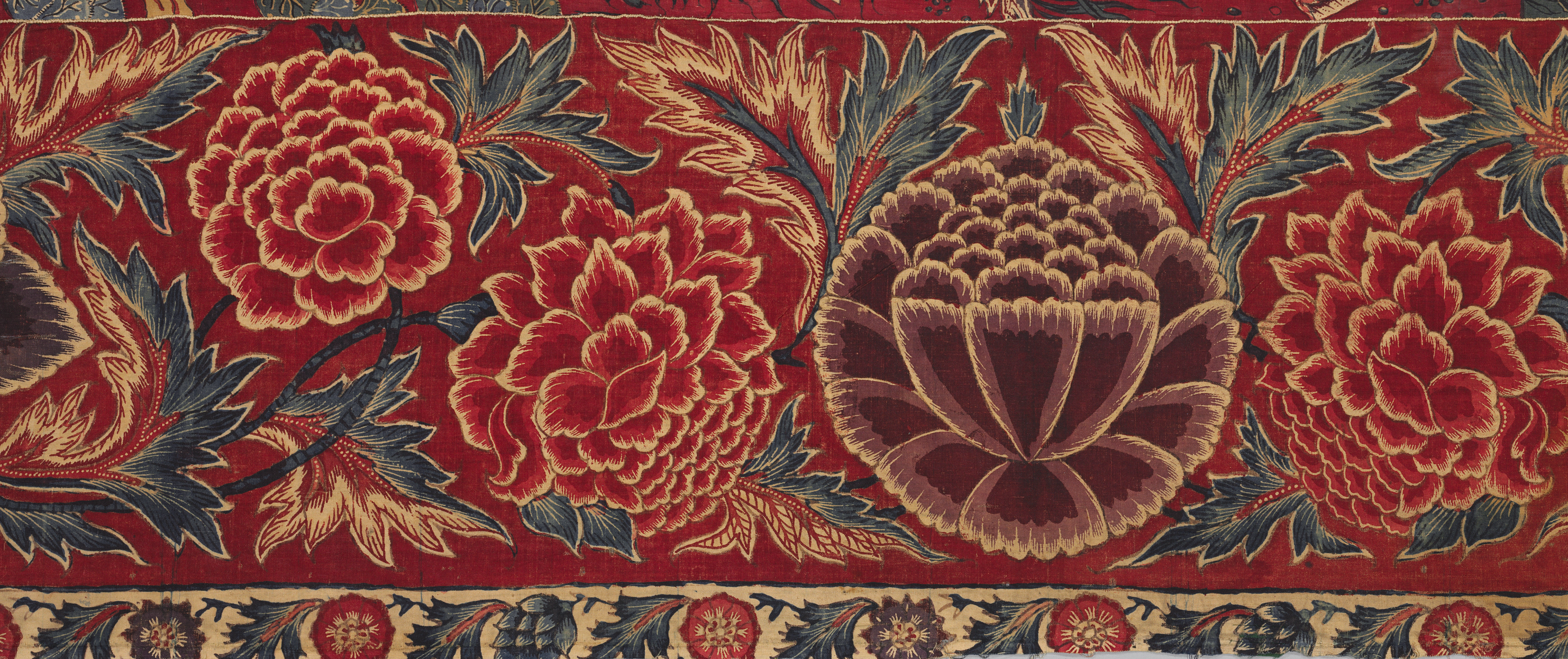
Chintz Bed Cover or Hanging with a Japanese-inspired Pattern, Right Half, The Cleveland Museum of Art
The source
Chintz Bed Cover or Hanging with a Japanese-inspired Pattern, Right HalfCotton: drawn resist, painted mordants, dyed · India, Coromandel Coast, 1700 to 1750 (first half of the 18th century) · Overall: 284.5 x 136 cm (112 x 53 9/16 in.)The Cleveland Museum of Art · Chintz Bed Cover or Hanging with a Japanese-inspired Pattern, Right Half, 1700 to 1750. India, Coromandel Coast, first half of the 18th century. Cotton: drawn resist, painted mordants, dyed (2 reds, 2 blues, purple, brown, green); overall: 284.5 x 136 cm. The Cleveland Museum of Art, John L. Severance Fund, 2003.43. CC0. · object Cleveland Museum of Art accession 2003.43 (web id 163006) · CC0View at The Cleveland Museum of Art ↗

The museum says this chintz was made in India for the Japanese market. Its technique line reads drawn resist, painted mordants, dyed: the resist and the mordants were put on by hand with a pen, and the dye baths brought up two reds, two blues, purple, brown and green. Cloth like this, drawn on the Coromandel Coast for Japan, was called sarasa there, which meant calico or chintz (the GWU Textile Museum).

What we saw

Five parts, traced from the photograph
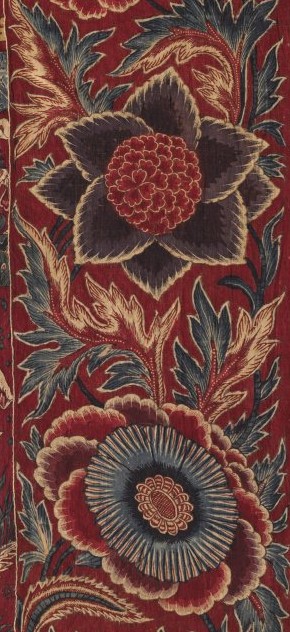
The large heads of the long side border
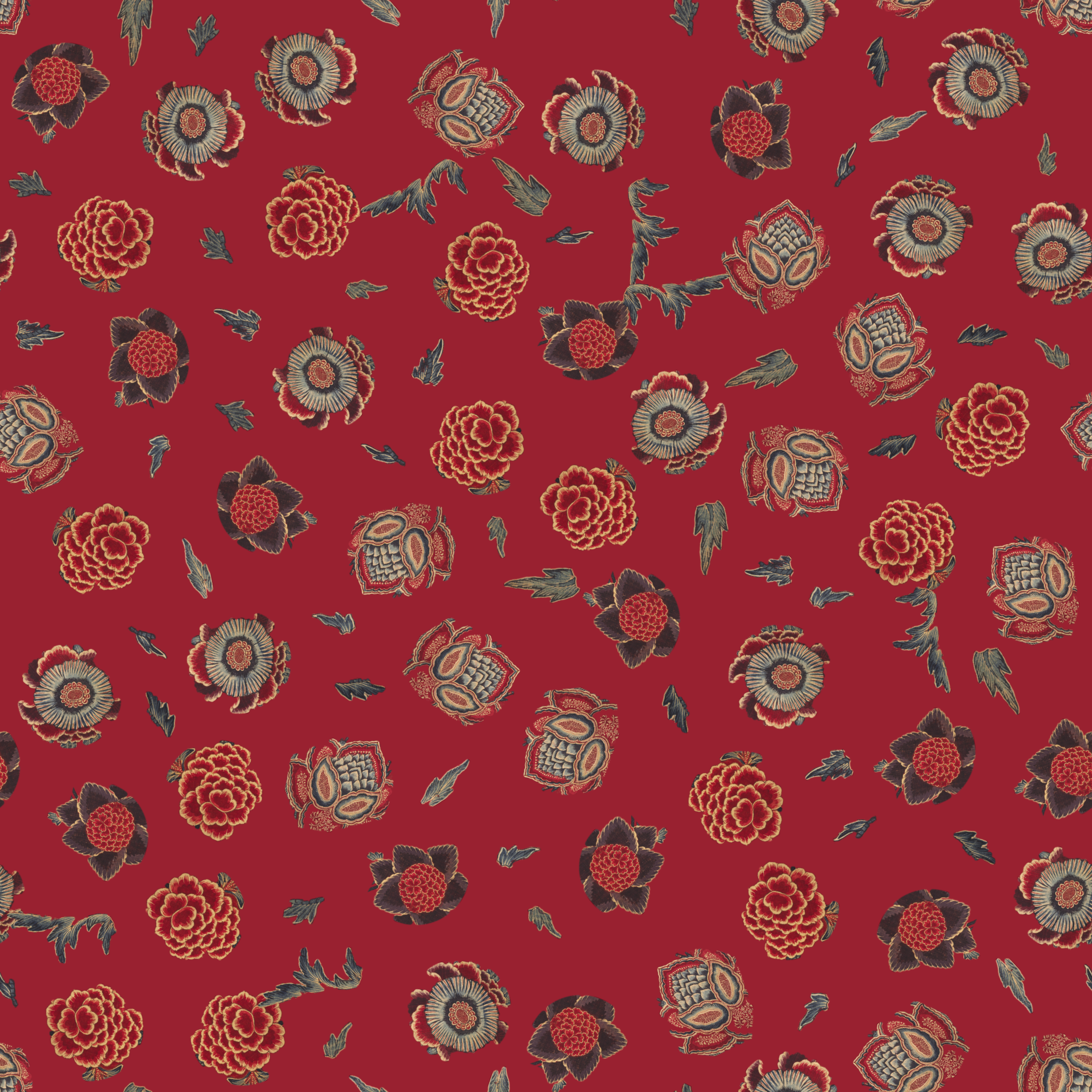
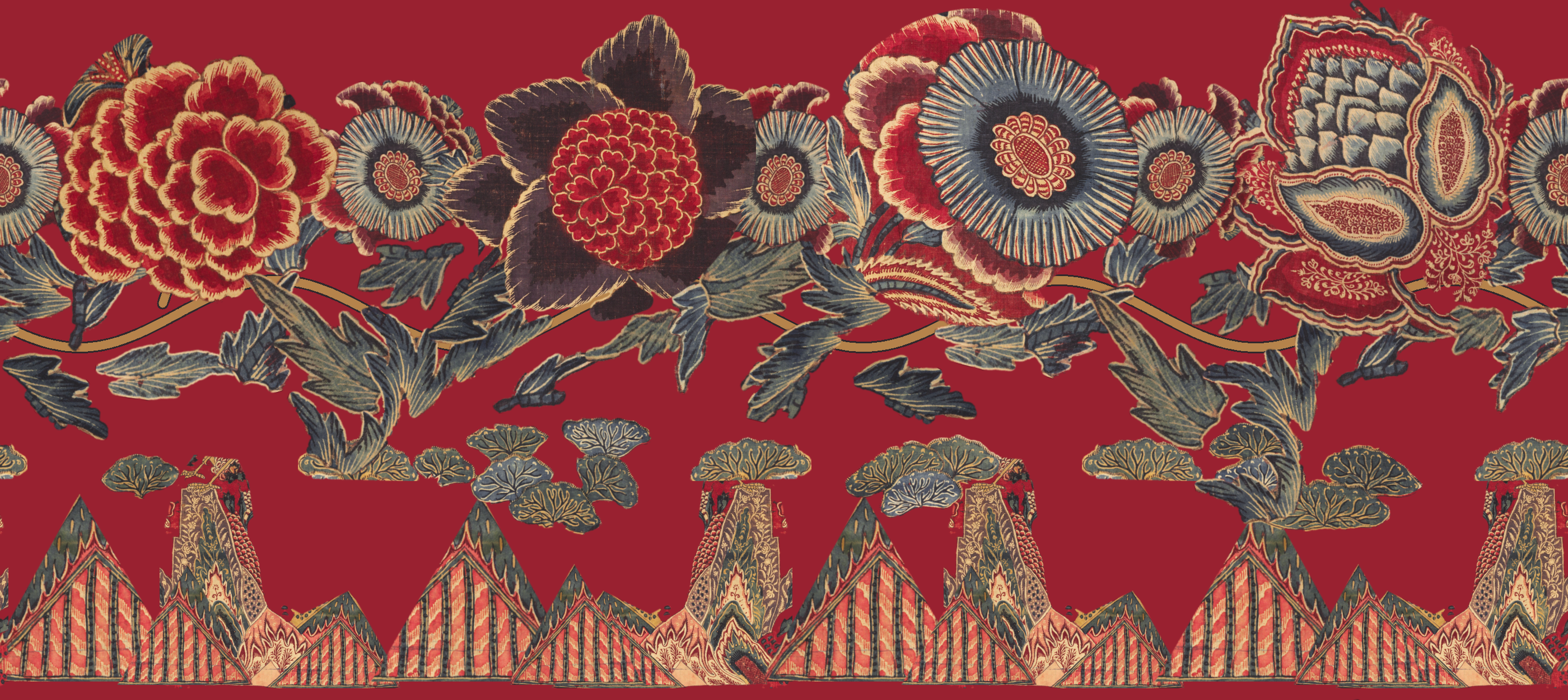
1The large heads of the long side borderFirst, the heads along the long border. Eleven of them: red peonies, chrysanthemums on a star of dark leaves, rayed peonies, and two cone-shaped heads.
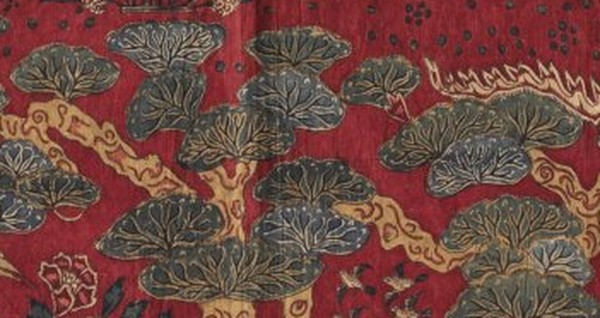
The pine clusters
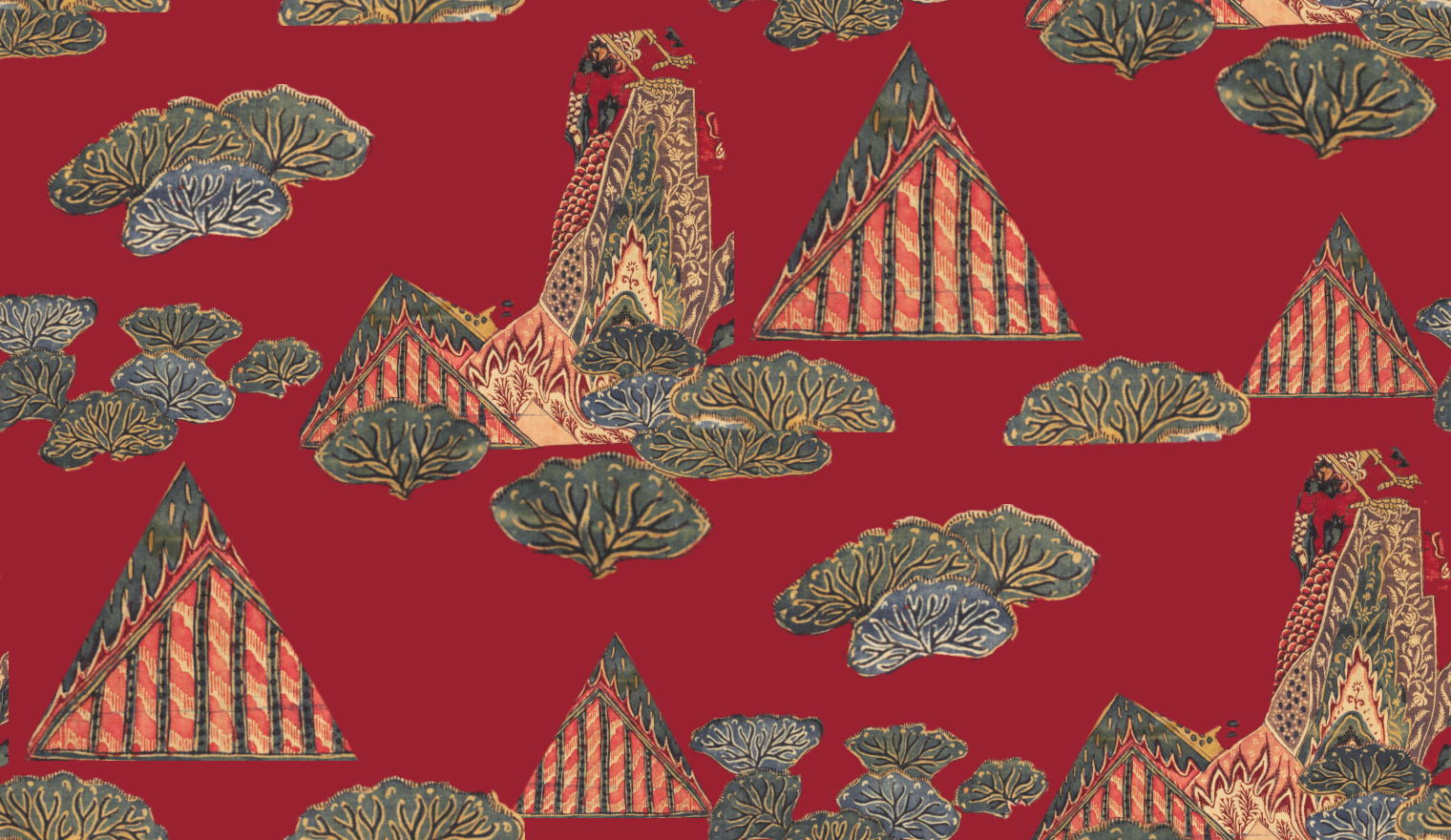
2The pine clustersThen the pine clusters in the field. Round clumps of needles, blue and grey-green, drawn on a yellow branch.
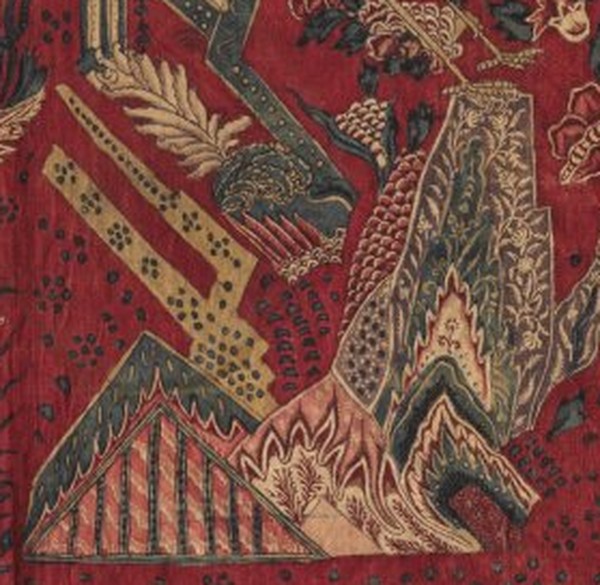
The striped rocks
3The striped rocksThe striped rocks. A triangle of pink and cream stripes with a dark serrated cap, and the tall patterned cliff beside it.
The end border
4The end borderThe end border. Five heads in a row: two rayed peonies, a chrysanthemum, a scaled bud with lotus-like buds, and a peony in the corner.
The serrated leaves
5The serrated leavesAnd the serrated leaves, blue with a cream edge, all along the borders.

5 prints, each from a different part

Each print starts from a part of the source

The palette

Every colour here was already in the source.
#992130Madder red ground · from the source
#652026Dark red (the shading and outlines in the red) · from the source
#464749Indigo blue · from the source
#616561Light blue (the faded indigo of the pines and petals) · from the source
#8B8A7CGrey-green (indigo over yellow) · from the source
#DFBA88Cream (the undyed cotton) · from the source
#B5834BYellow (the branches) · from the source
#D86154Pink (the lighter red of the rock stripes and petals) · from the source
#7E564DBrown · from the source
#31282CBlack line and the purple of the star leaves · from the source

Why now

Madder red, indigo and cream, the cloth's own colours, for AW27 dress material, resort shirting and saree border development; the cream colourway for summer.

Previous storyFlower Work, Counted From the BackAll storiesBack to Inspiration

Source: Chintz Bed Cover or Hanging with a Japanese-inspired Pattern, Right Half, India, Coromandel Coast, 1700 to 1750 (first half of the 18th century), Cotton: drawn resist, painted mordants, dyed. The Cleveland Museum of Art, Chintz Bed Cover or Hanging with a Japanese-inspired Pattern, Right Half, 1700 to 1750. India, Coromandel Coast, first half of the 18th century. Cotton: drawn resist, painted mordants, dyed (2 reds, 2 blues, purple, brown, green); overall: 284.5 x 136 cm. The Cleveland Museum of Art, John L. Severance Fund, 2003.43. CC0., object Cleveland Museum of Art accession 2003.43 (web id 163006). CC0. View the object.

Facts from: clevelandart.org, collectionstories.museum.gwu.edu.