Inside the Story · No. 16 · Monday 19 October 2026 · Craft · South Asia
Flower Work, Counted From the Back
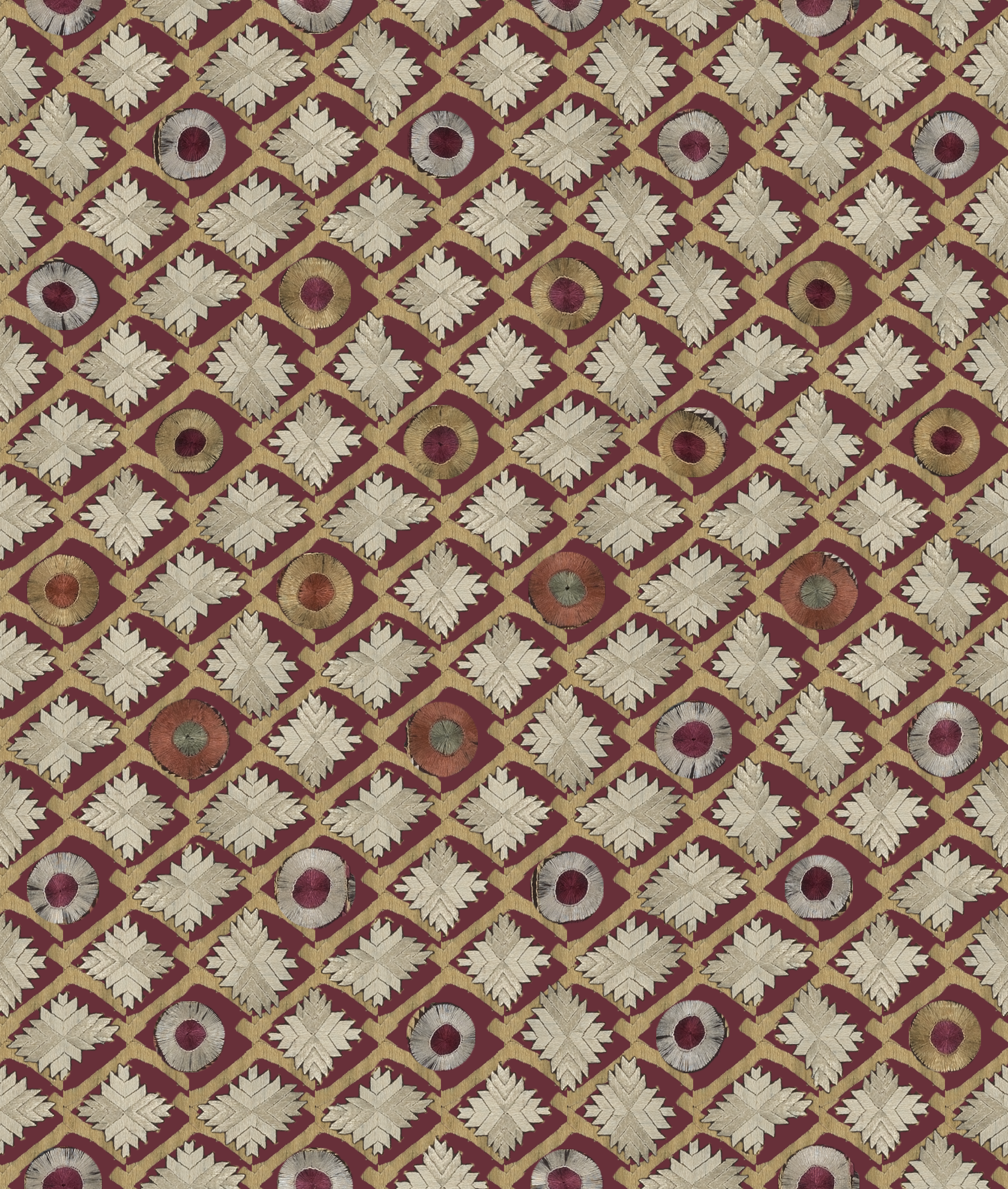
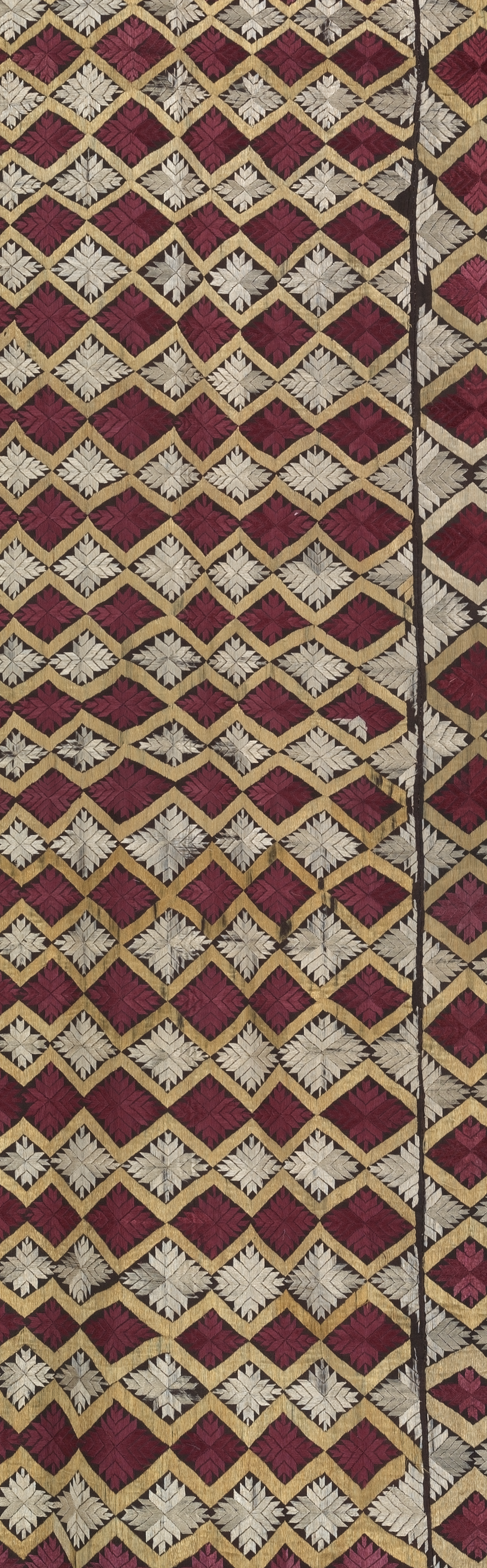
This lozenge lattice comes from a phulkari hanging embroidered in Punjab in the late 1800s: floss silk on cotton, worked in darning stitch from the back of the cloth by counting threads.
The inside story of a design inspired by a phulkari hanging embroidered in Punjab in the late 1800s, in The Cleveland Museum of Art.
The source
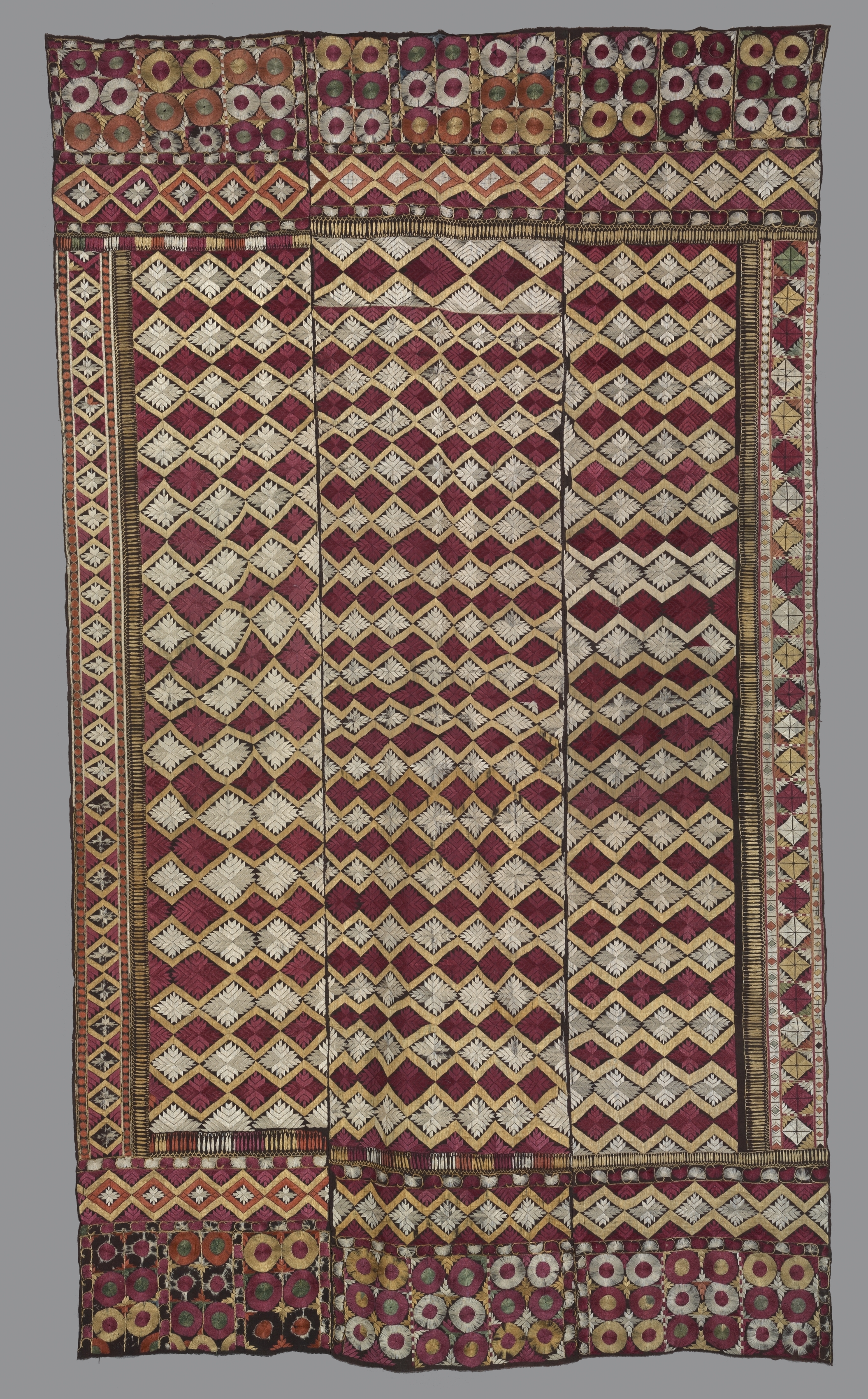
Hanging (Phulkari work)embroidered silk on cotton · India, Punjab, c. 1875 to 1900 (record range 1875 to 1900; "Late 19th century") · Overall: 254 x 147.3 cm (100 x 58 in.)The Cleveland Museum of Art · Hanging (Phulkari work), c. 1875 to 1900. India, Punjab, Late 19th century. Embroidered silk on cotton; overall: 254 x 147.3 cm (100 x 58 in.). The Cleveland Museum of Art, Gift of Mrs. J. Livingstone Taylor, 1942.367. CC0. · object Cleveland Museum of Art accession 1942.367 (web id 122078) · CC0View at The Cleveland Museum of Art ↗The Textile Research Centre in Leiden describes phulkari as a counted-thread embroidery of the Punjab whose name literally means flower working: floss silk (pat) on a cotton ground (khaddar), worked in darning stitch on the reverse side of the cloth, from the centre outwards. It was used for shawls, head coverings (odini) and dupattas; a garment totally covered in embroidery was called a bagh, a garden. The Cleveland record gives no description of this hanging beyond its tombstone.
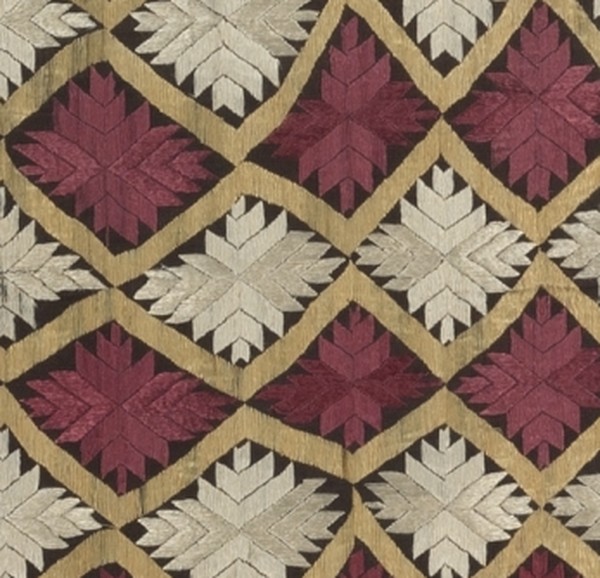
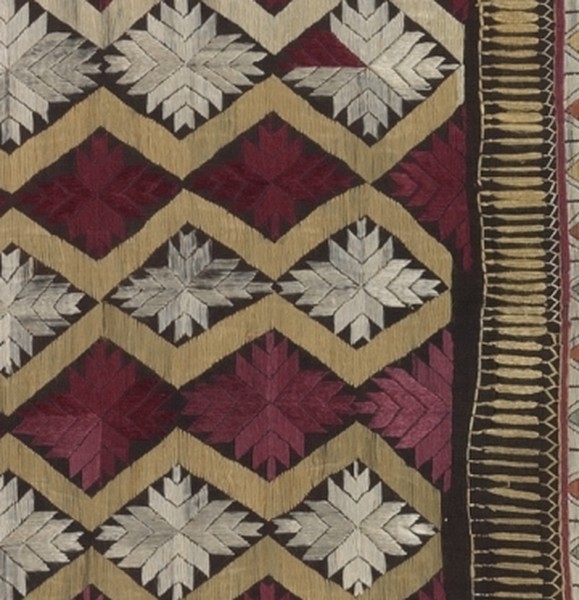
1The lozenge latticeFirst, the lozenge lattice of the left panel. Gold ribbons crossing, and a floret with four stepped arms in every lozenge, cream and magenta in turn.
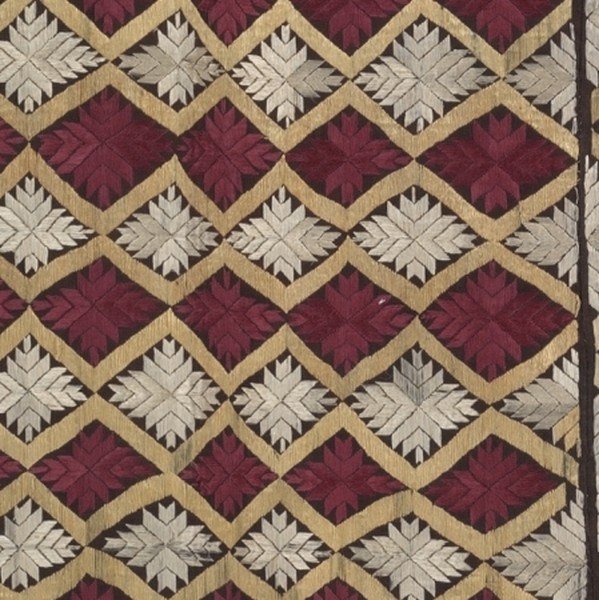
2The centre panelThen the centre panel: the same lattice, smaller and tighter, with a floret in every cell.
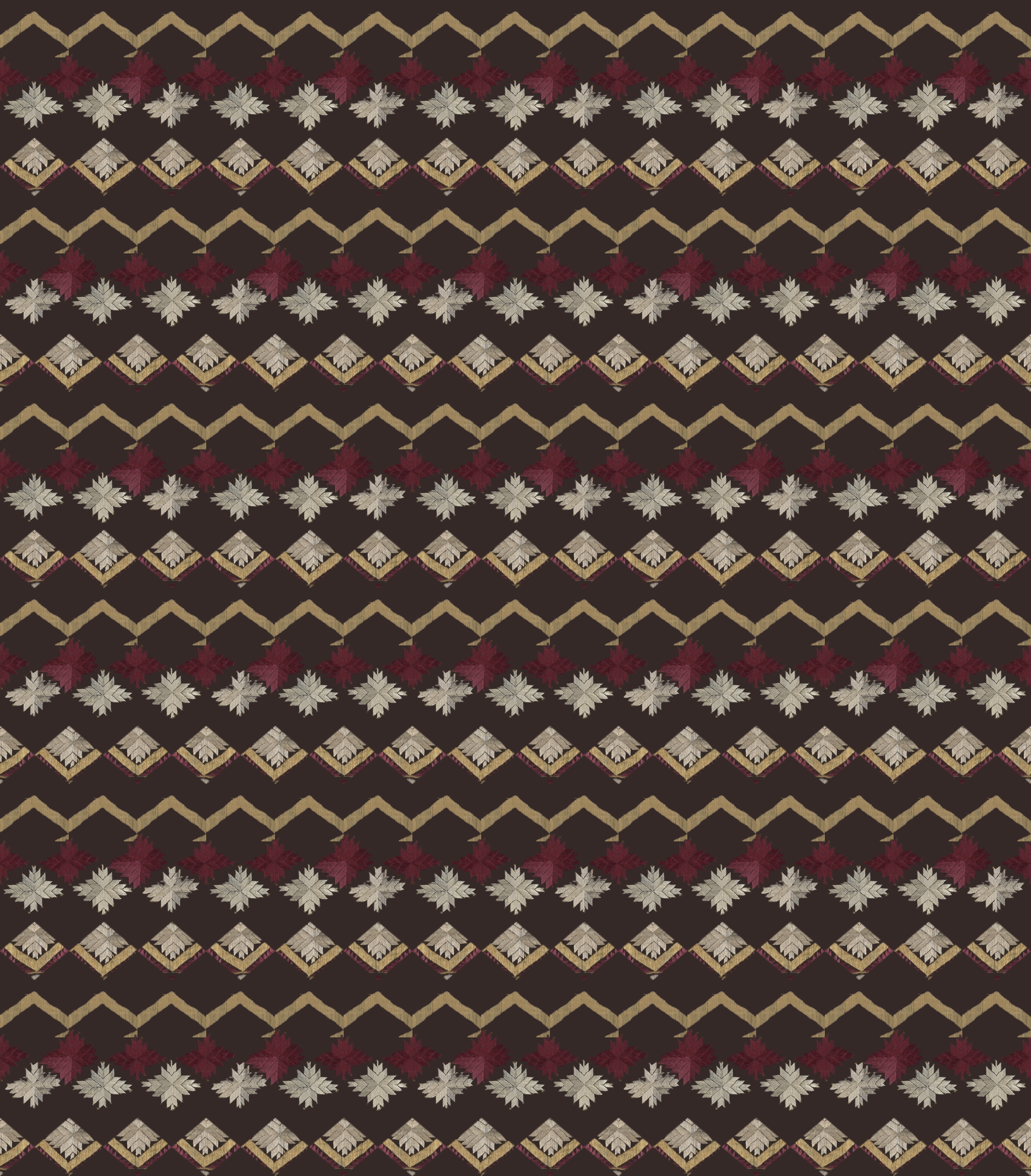
3The chevron panelOn the right, chevrons. Fifteen rows of gold zigzag, three magenta chevrons hanging from each, with a cream cross between.
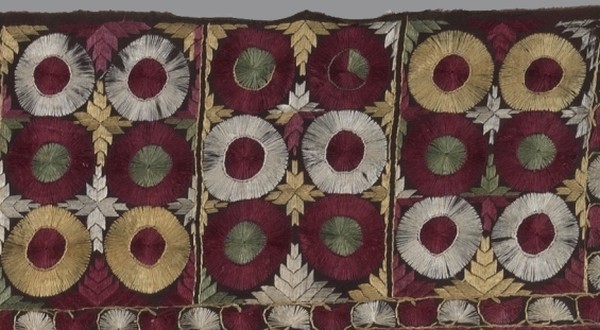
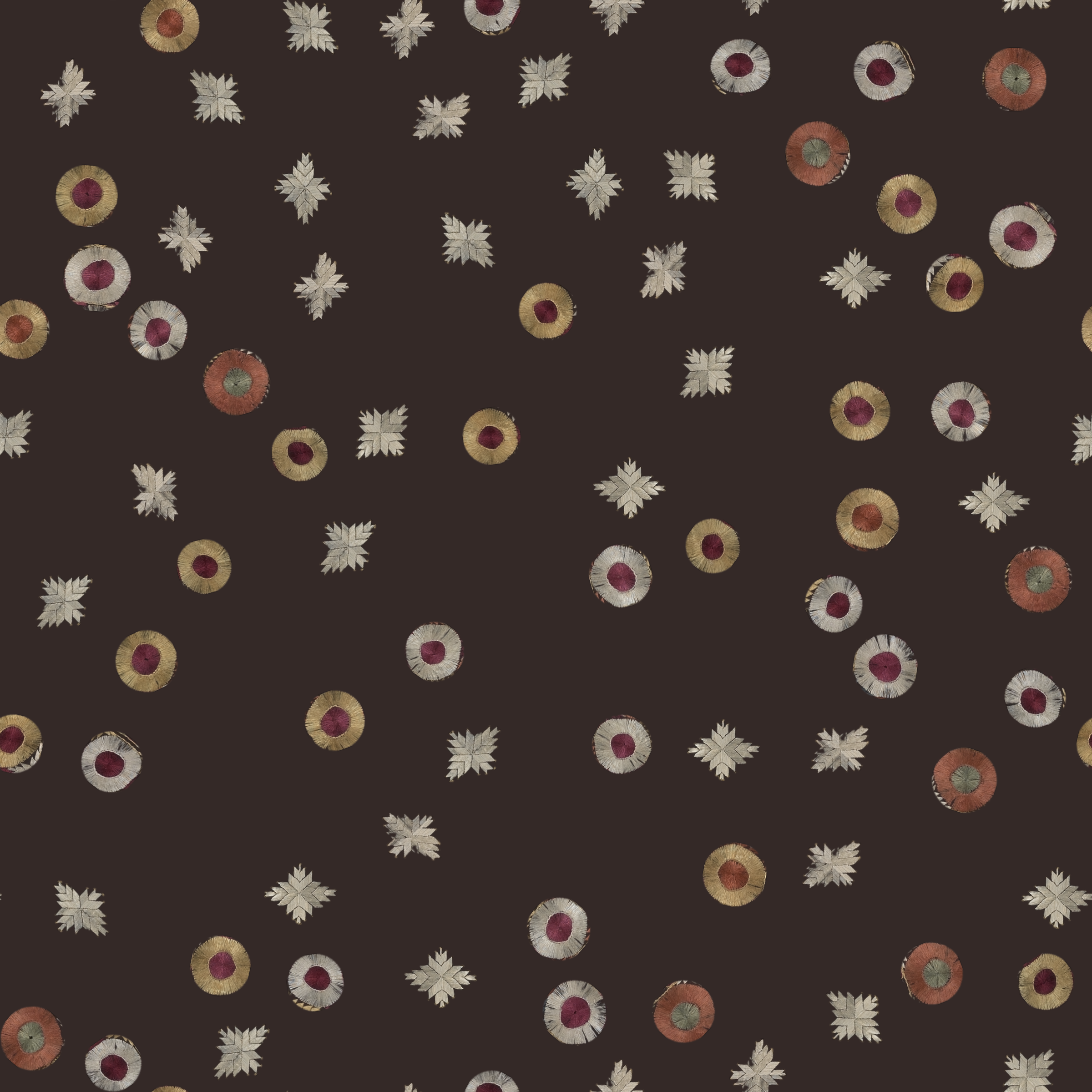
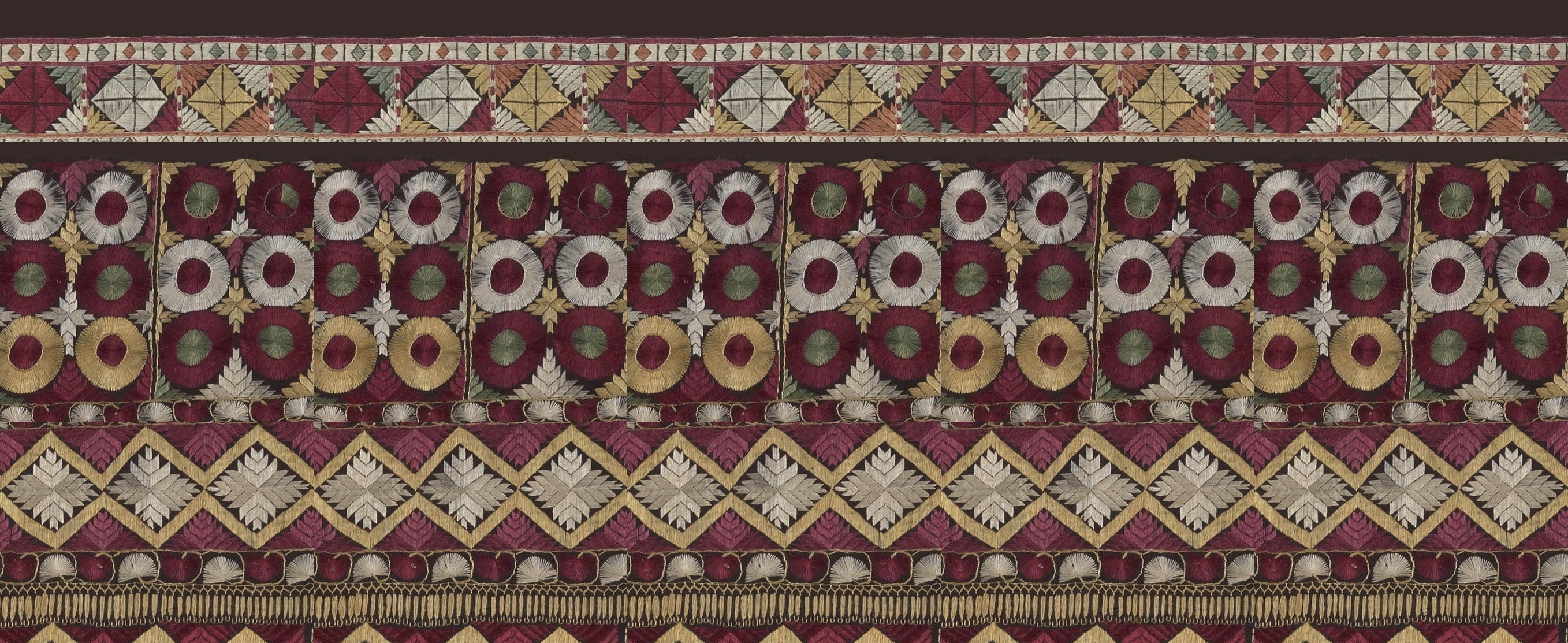
4The disc borderAlong the top and bottom, blocks of discs: rings of floss, six to seven centimetres across, each with a centre of another colour, and small cream stars between.
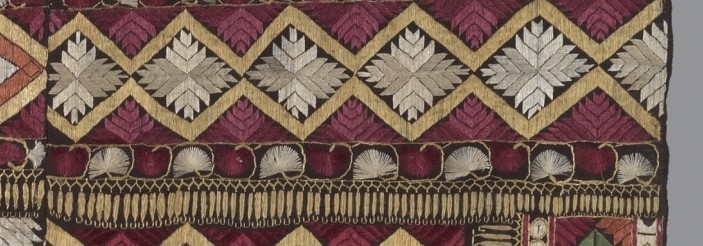
5The band and the edgeUnder the discs, a band: a chain of small lozenges between rows of scallops and a fringe of tassels. And down the right edge, a column of squares, each cut into four triangles.
#342927Dark khaddar ground (the cotton between the stitches) · from the source
#673039Magenta floss (the maroon of the field) · from the source
#7E3B46Bright magenta floss (the brightest class, chevrons and discs) · from the source
#BFB6A3Cream floss · from the source
#B2986AGold floss · from the source
#93634EOrange floss (disc border, zigzag band, side columns) · from the source
#727360Green floss (disc centres and the triangle column) · from the source
Magenta, gold and cream on the cloth's own dark ground, with a cream colourway, for the November to February wedding season: a lattice for dress material, a stripe for men's kurtas, a toss, a dupatta border and a pallu panel.
Source: Hanging (Phulkari work), India, Punjab, c. 1875 to 1900 (record range 1875 to 1900; "Late 19th century"), embroidered silk on cotton. The Cleveland Museum of Art, Hanging (Phulkari work), c. 1875 to 1900. India, Punjab, Late 19th century. Embroidered silk on cotton; overall: 254 x 147.3 cm (100 x 58 in.). The Cleveland Museum of Art, Gift of Mrs. J. Livingstone Taylor, 1942.367. CC0., object Cleveland Museum of Art accession 1942.367 (web id 122078). CC0. View the object.
Facts from: clevelandart.org, trc-leiden.nl.