Inside the Story · No. 15 · Thursday 15 October 2026 · Craft · South Asia and Western

The Red That Stands Up

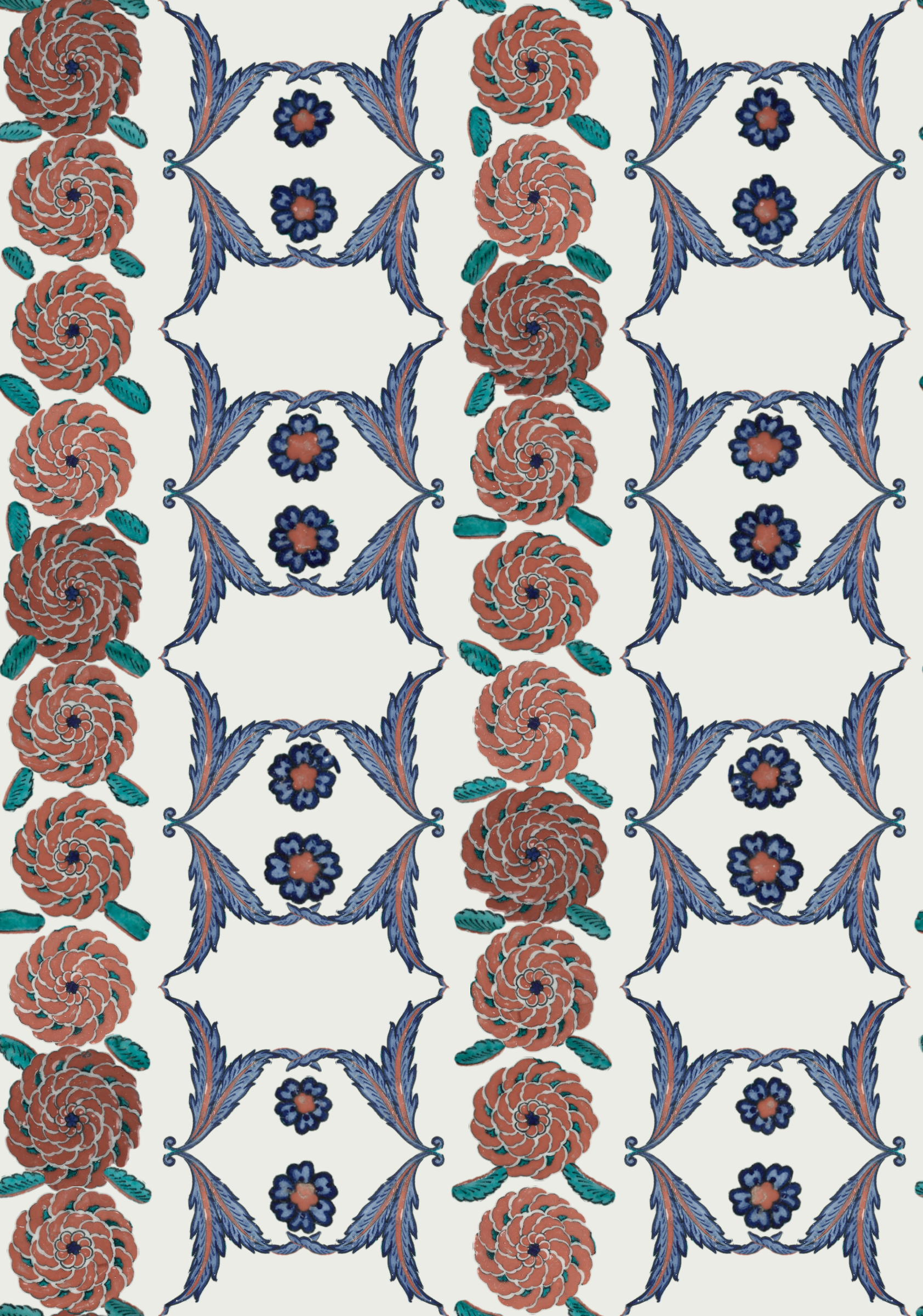
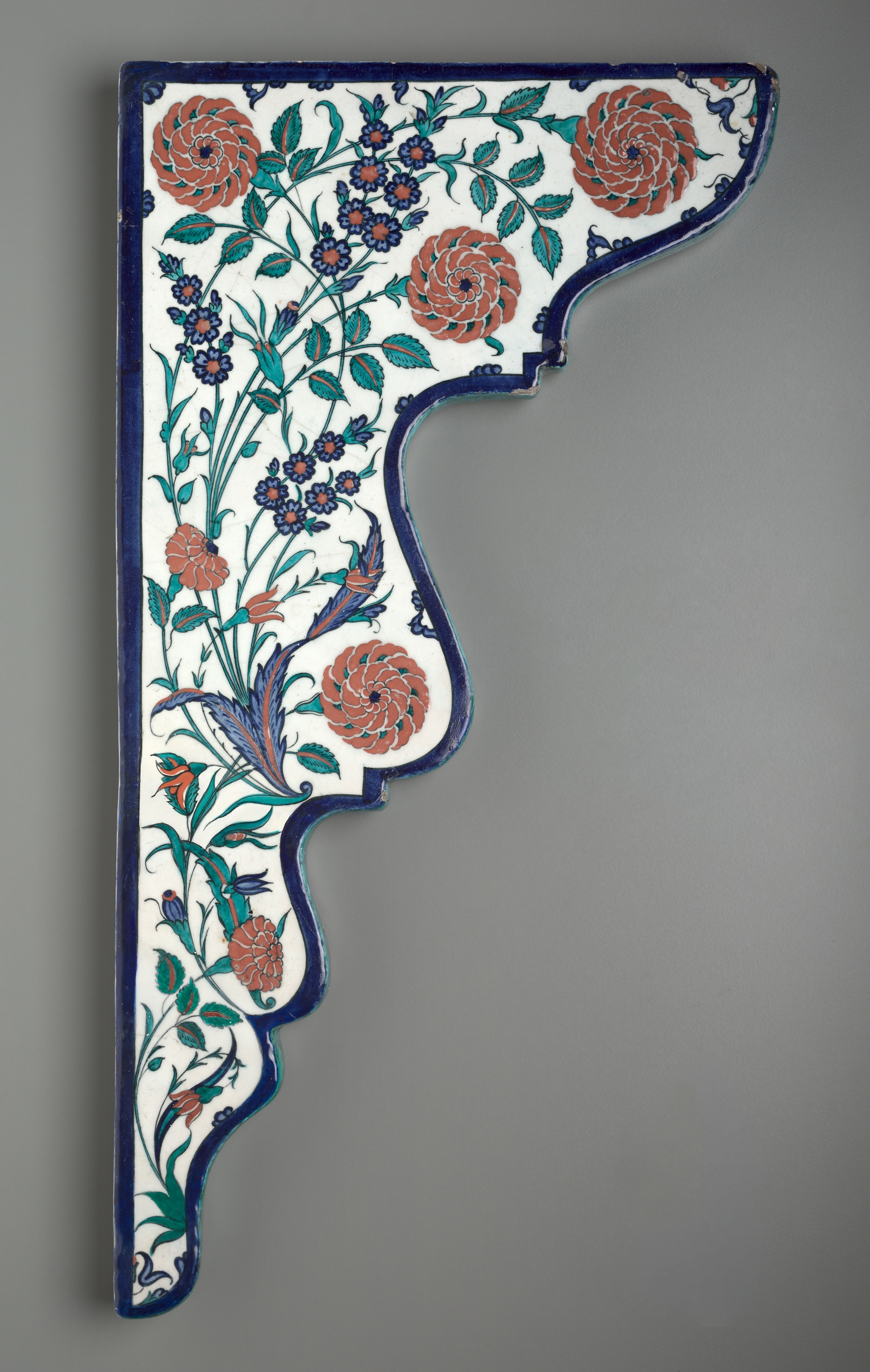
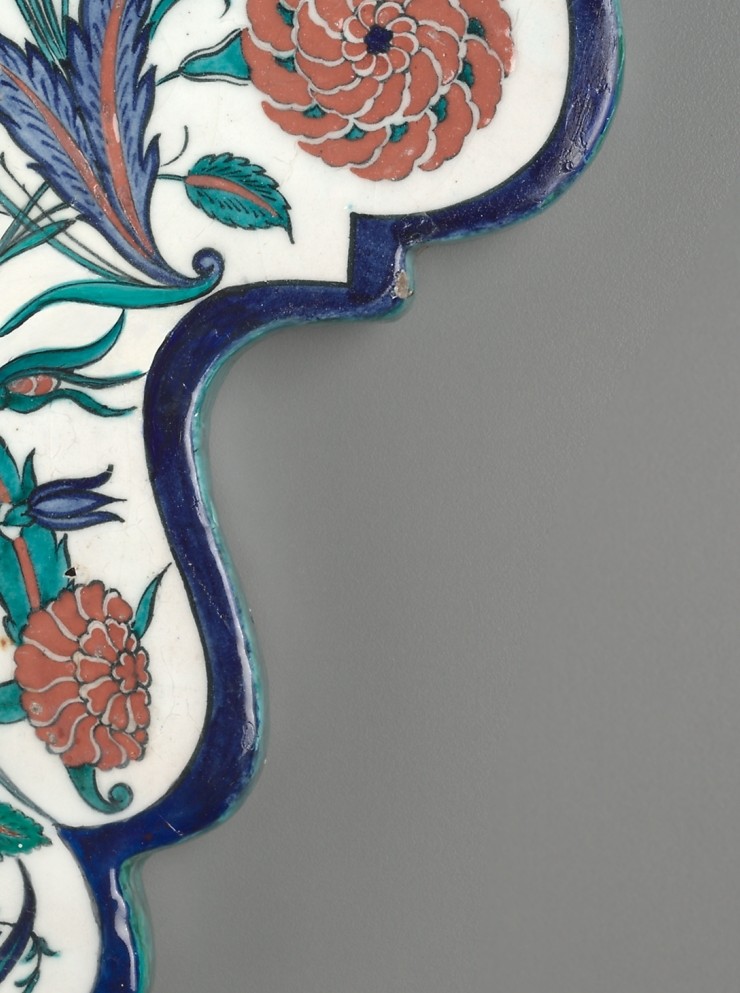
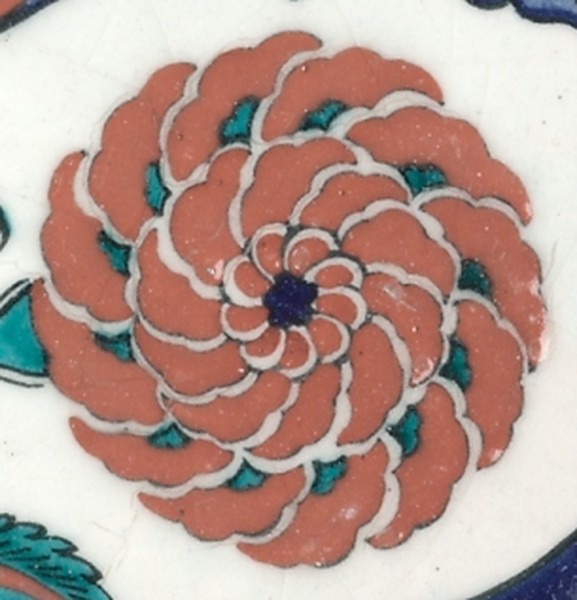
This spiral rose comes from an Iznik tile of the 1570s that framed a niche, a window or a door in Ottoman Turkey. Its red is a clay slip so thick it stands up from the glaze.

The inside story of a design inspired by an Iznik tile spandrel of the 1570s in The Cleveland Museum of Art.

Tile Spandrel with Floral Sprays, The Cleveland Museum of Art
The source
Tile Spandrel with Floral SpraysFritware with red slip and underglaze design · Turkey, Iznik, Ottoman period, c. 1570 to 1575 (museum range 1565 to 1580) · Overall: 76 x 29.9 x 2.5 cm (29 15/16 x 11 3/4 x 1 in.)The Cleveland Museum of Art · Tile Spandrel with Floral Sprays, c. 1570 to 75. Turkey, Iznik, Ottoman period (1299 to 1922). Fritware with red slip and underglaze design; overall: 76 x 29.9 x 2.5 cm. The Cleveland Museum of Art, Dudley P. Allen Fund, 2004.70. CC0. · object Cleveland Museum of Art accession 2004.70 (web id 163512) · CC0View at The Cleveland Museum of Art ↗

The museum says this spandrel, with its missing right half, would have formed a decorative archway over a niche, window or door. Craftspeople in Iznik, in northwest Turkey, made brilliantly coloured tiles for the Ottoman sultans. The intense red was a technical triumph: a thick, iron-rich clay slip, applied thickly, the V&A adds, so the decoration would not run under the glaze in the kiln.

What we saw

Five parts, traced from the photograph
The spiral roses
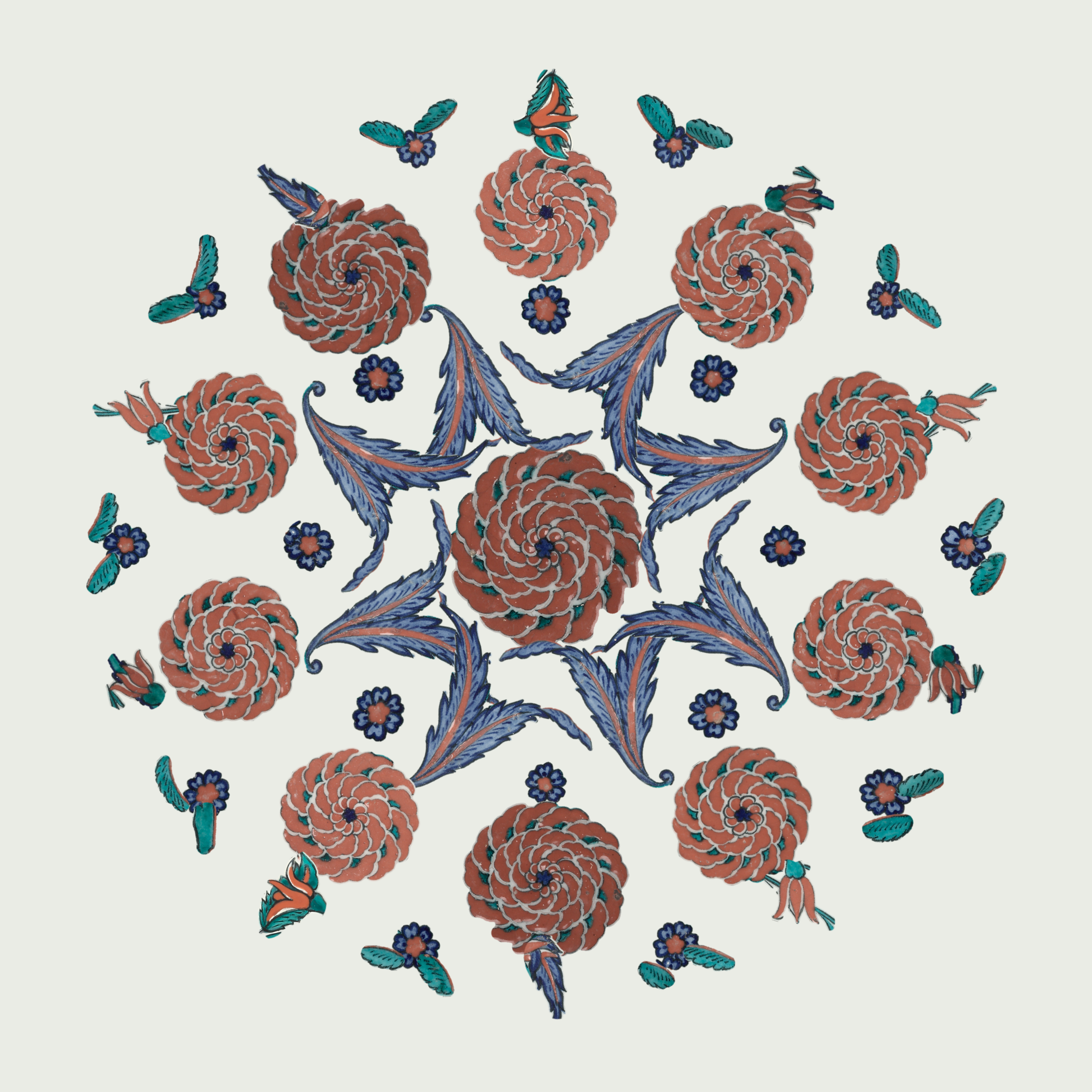
1The spiral rosesFirst, the spiral roses. Four on the tile, each a whorl of red petals round a cobalt dot, about seven centimetres across.
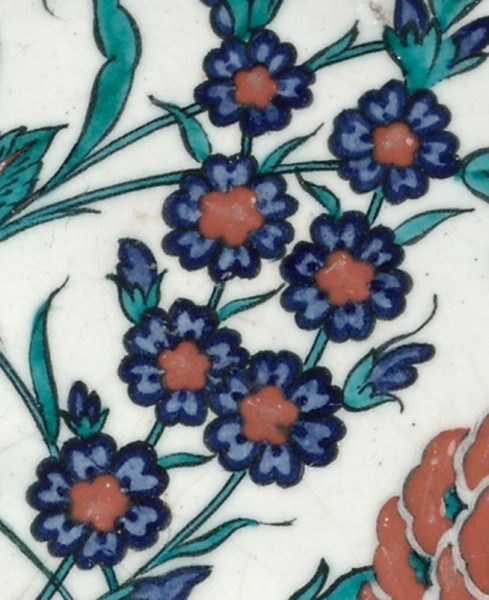
The blue flowers
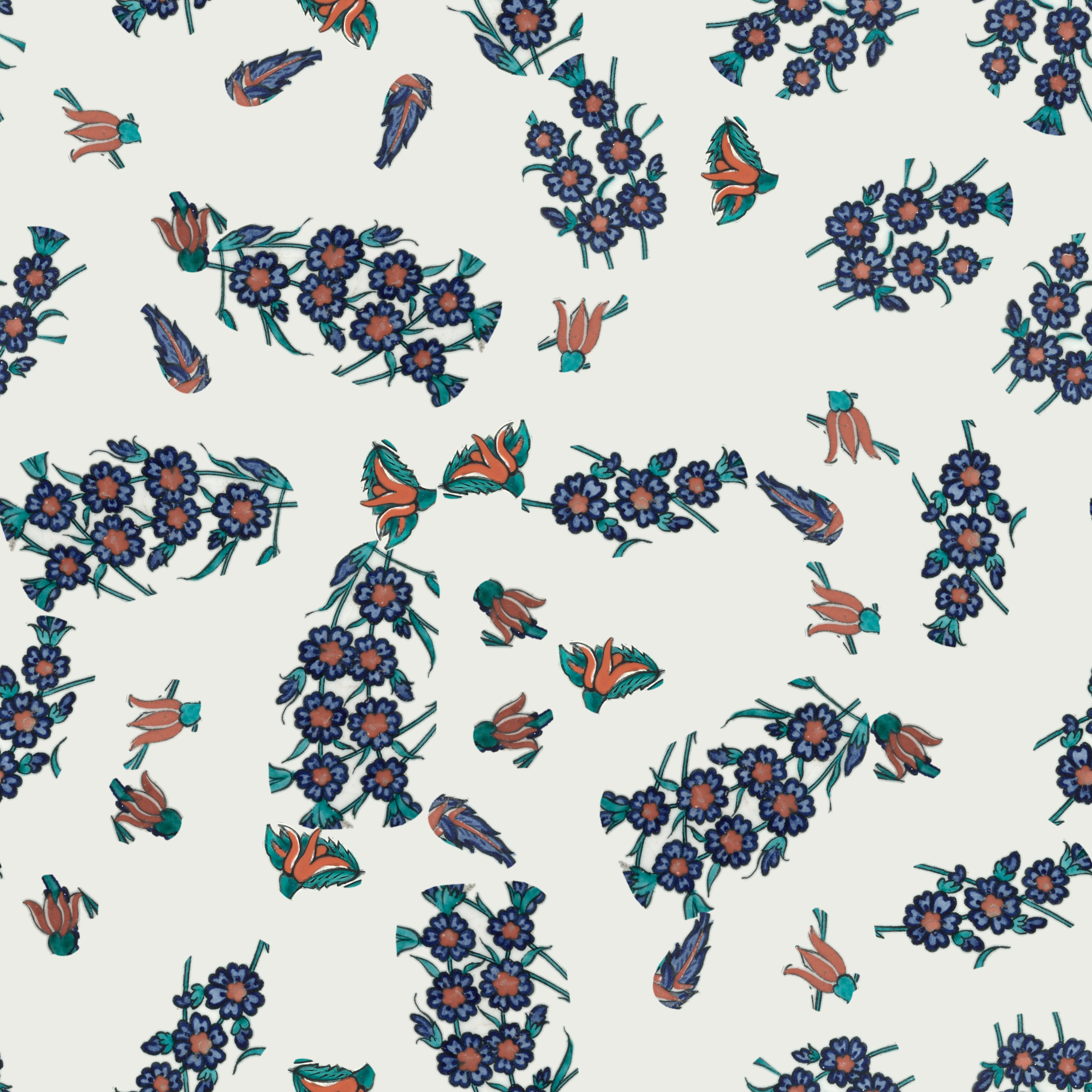
2The blue flowersThen the small blue flowers with red centres. Sixteen of them, in three sprays. Seven in the biggest.
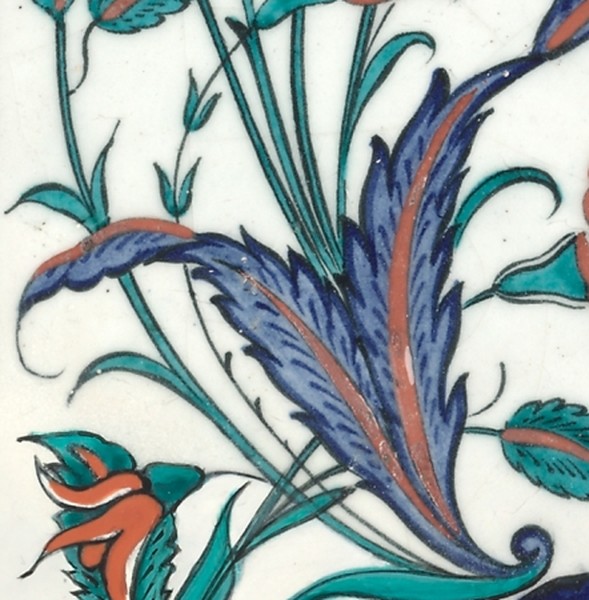
The saz leaf
3The saz leafA long serrated leaf, the saz leaf. Blue with a red spine, curling at its foot.
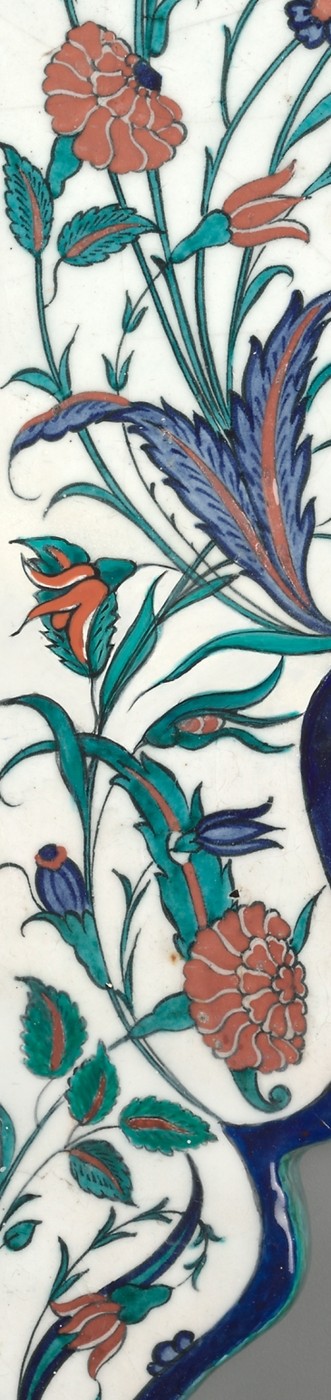
The heads and buds on the lower stem
4The heads and buds on the lower stemDown the lower stem, two carnation heads in profile, and five red buds in green calyxes.
The scalloped arch edge
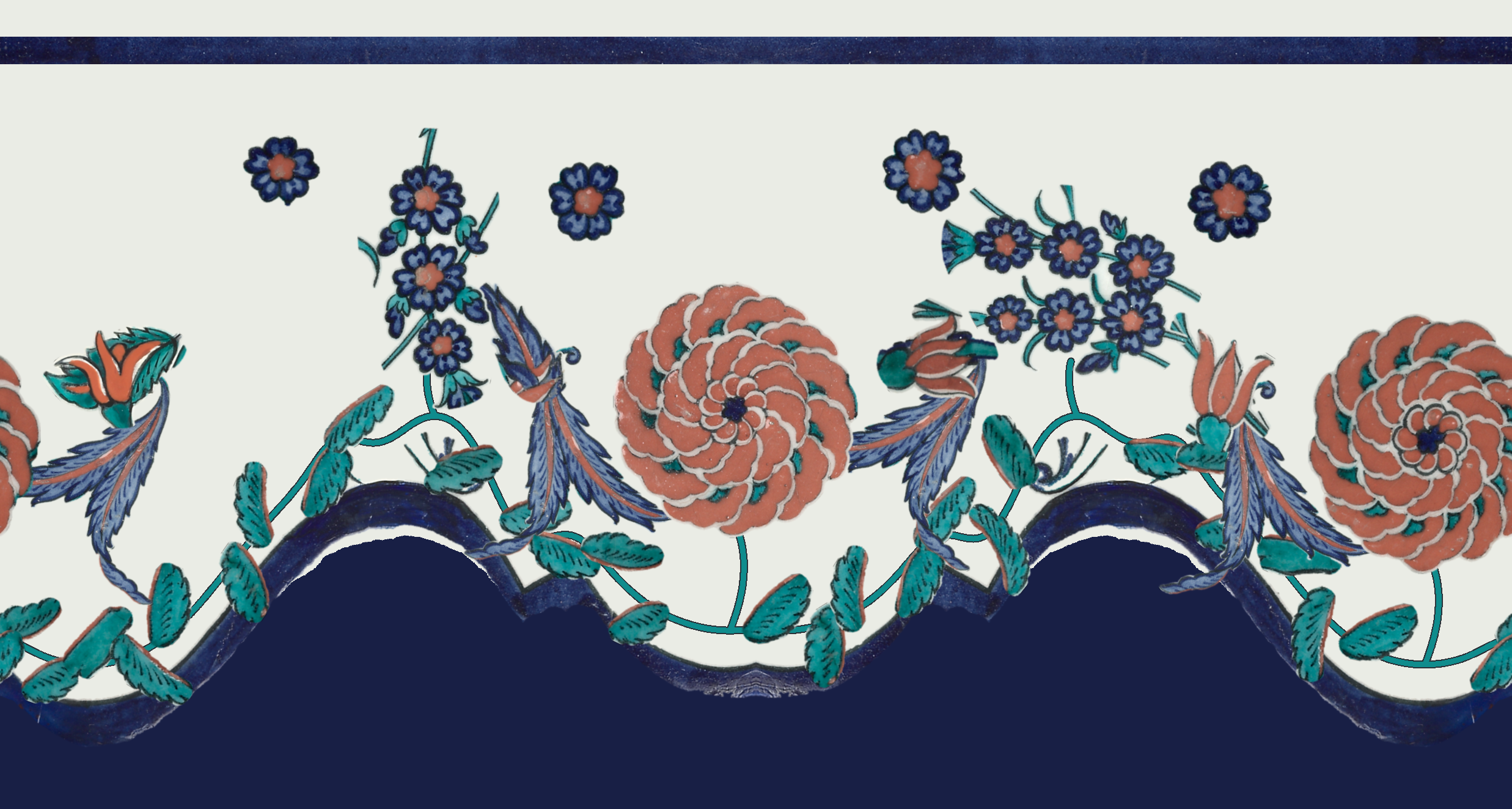
5The scalloped arch edgeAnd the edge itself. A scalloped cobalt band with a black line, and small blue tufts at the curves.

5 prints, each from a different part

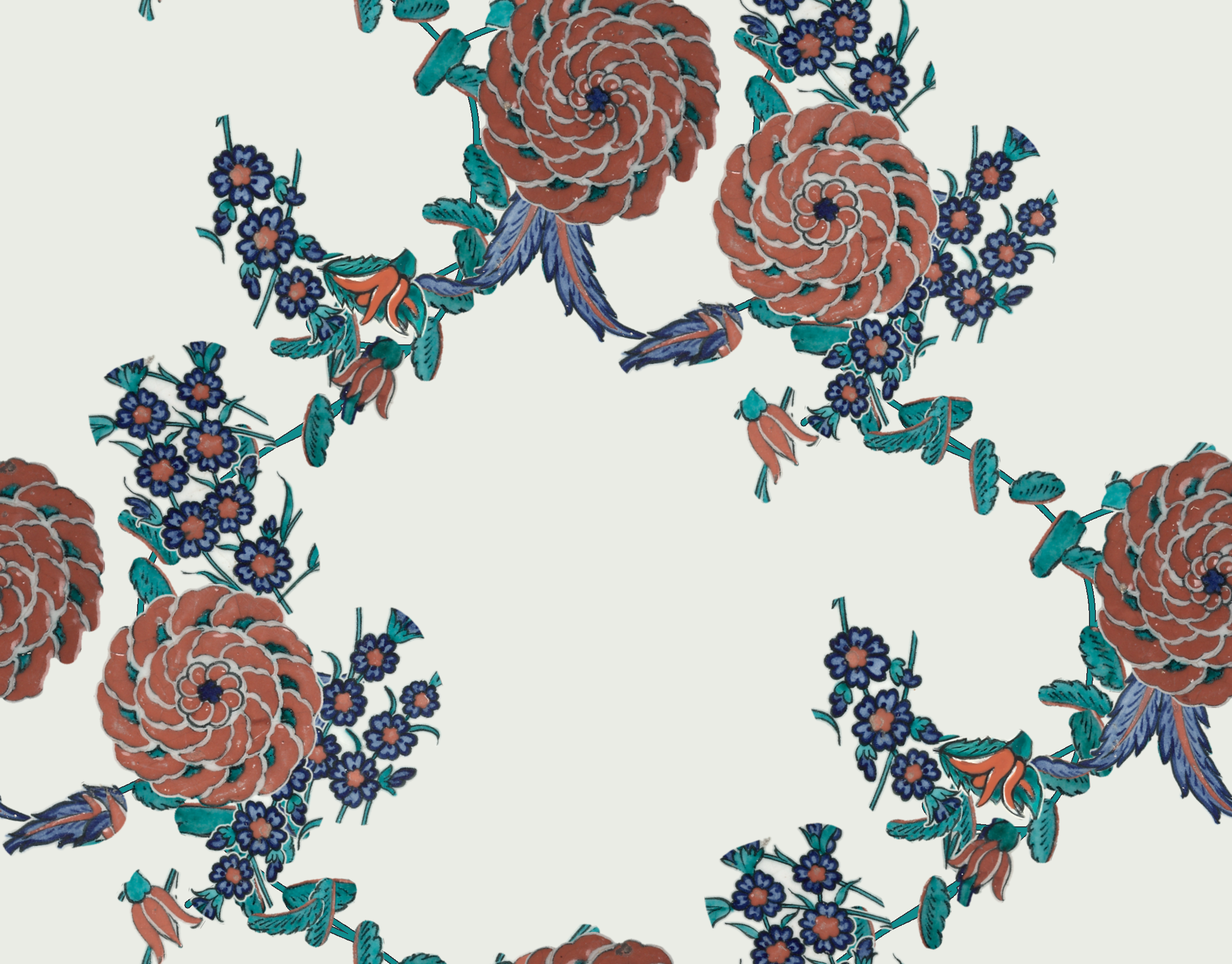
Each print starts from a part of the source

The palette

Every colour here was already in the source.
#EAECE5White ground · from the source
#A95D4CBole red (the thick iron-rich slip) · from the source
#181F45Cobalt blue · from the source
#0F8C8DTurquoise green · from the source
#2A3239Black outline · from the source

Why now

Bole red, cobalt and turquoise on white, in the tile's own five colours, for AW27 dress, shirting and border development; the cobalt colourway for AW shirting.

Previous storyTied Before the DyeAll storiesBack to Inspiration

Source: Tile Spandrel with Floral Sprays, Turkey, Iznik, Ottoman period, c. 1570 to 1575 (museum range 1565 to 1580), Fritware with red slip and underglaze design. The Cleveland Museum of Art, Tile Spandrel with Floral Sprays, c. 1570 to 75. Turkey, Iznik, Ottoman period (1299 to 1922). Fritware with red slip and underglaze design; overall: 76 x 29.9 x 2.5 cm. The Cleveland Museum of Art, Dudley P. Allen Fund, 2004.70. CC0., object Cleveland Museum of Art accession 2004.70 (web id 163512). CC0. View the object.

Facts from: clevelandart.org.