Inside the Story · No. 14 · Monday 12 October 2026 · Craft · South Asia

Tied Before the Dye

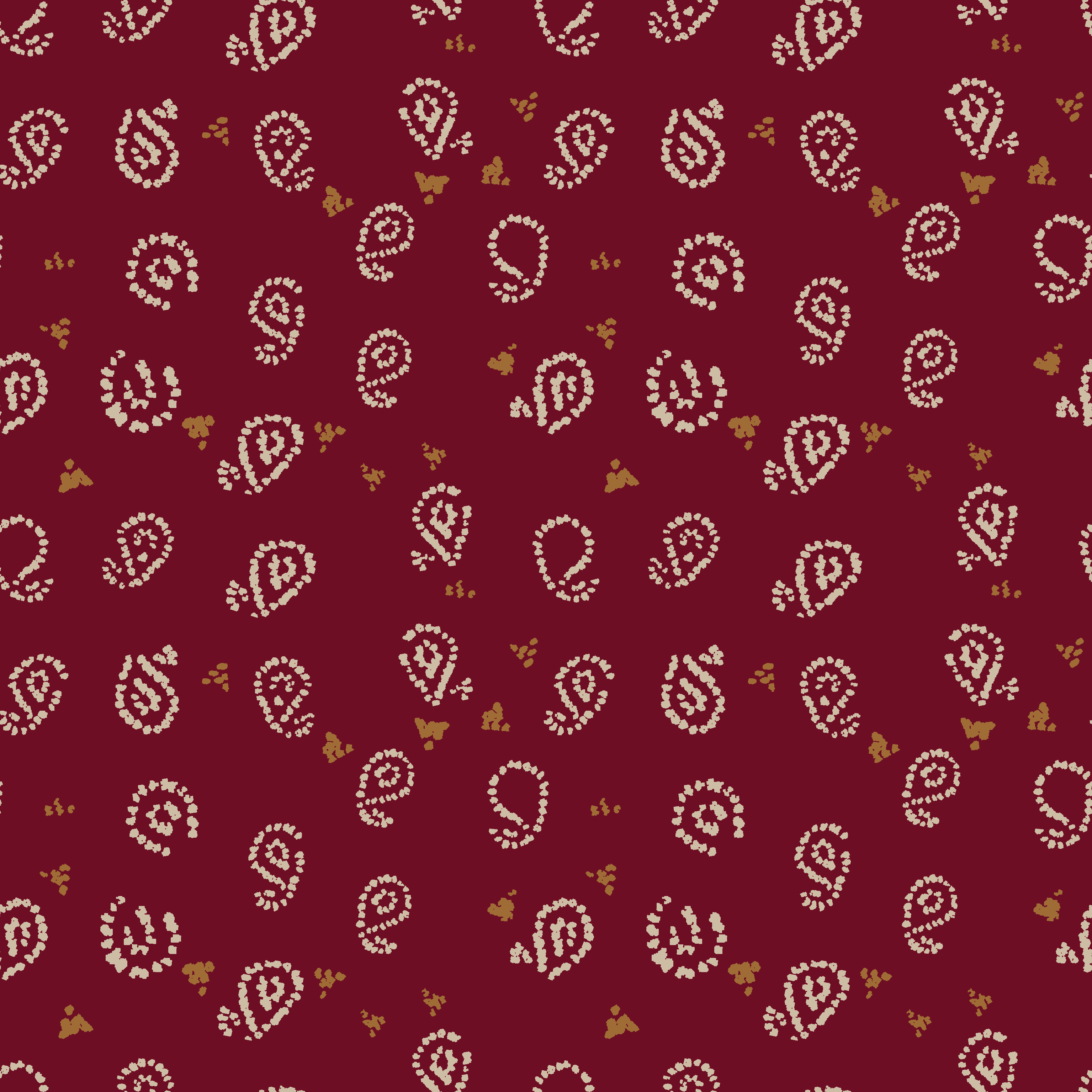
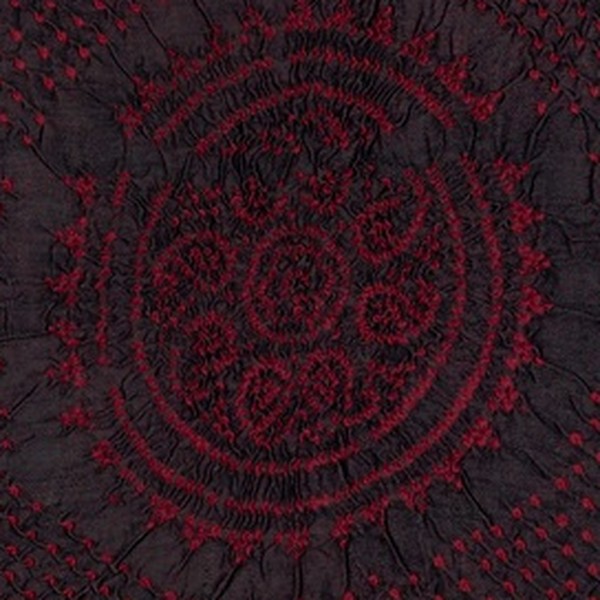
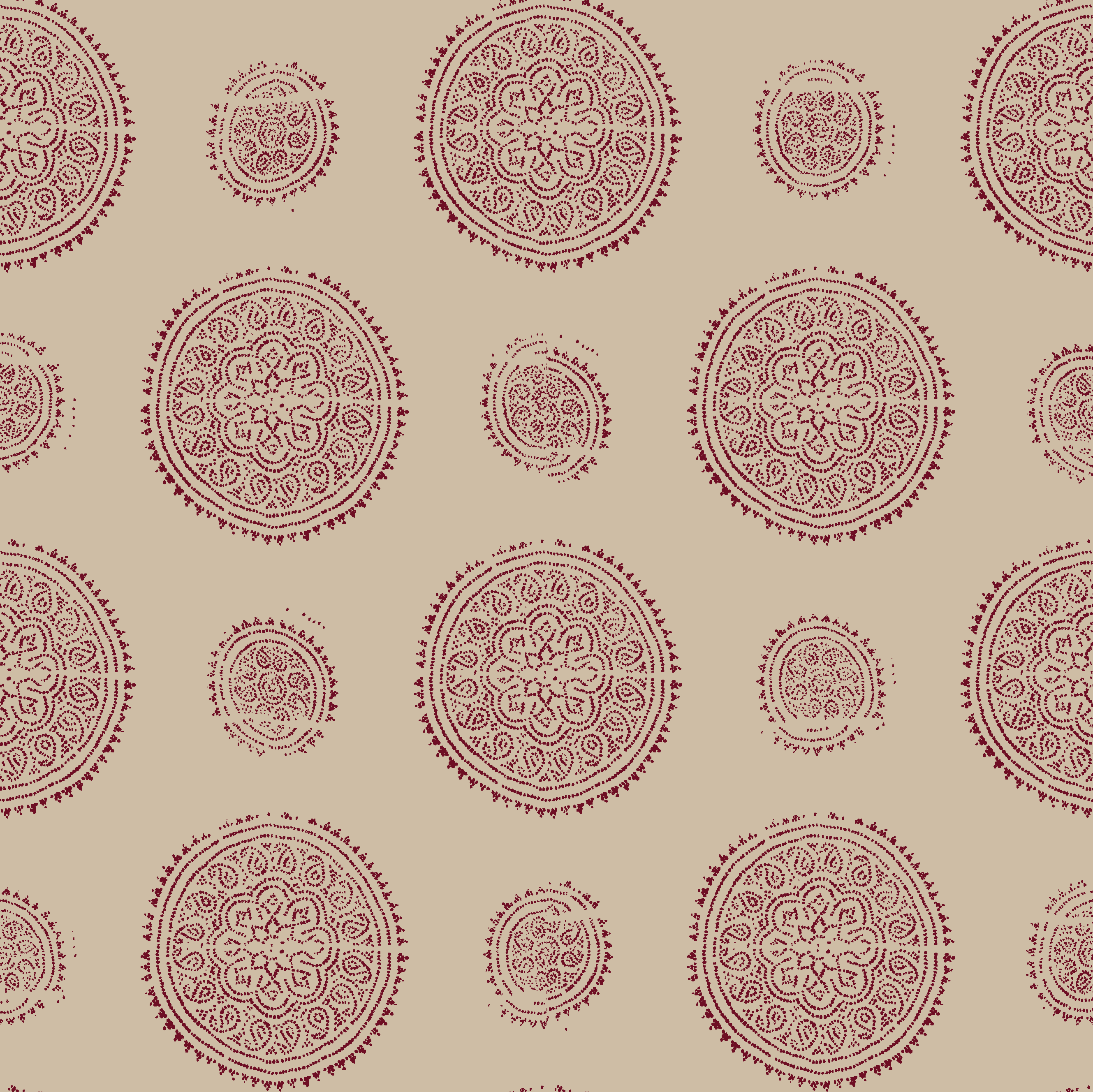
This dotted medallion was never printed. Every dot is a knot, tied by hand before the silk went into the dye, on a Kutch odhani of the early 1900s.

The inside story of a design inspired by a silk odhani tied and dyed in Kutch in the early 1900s.

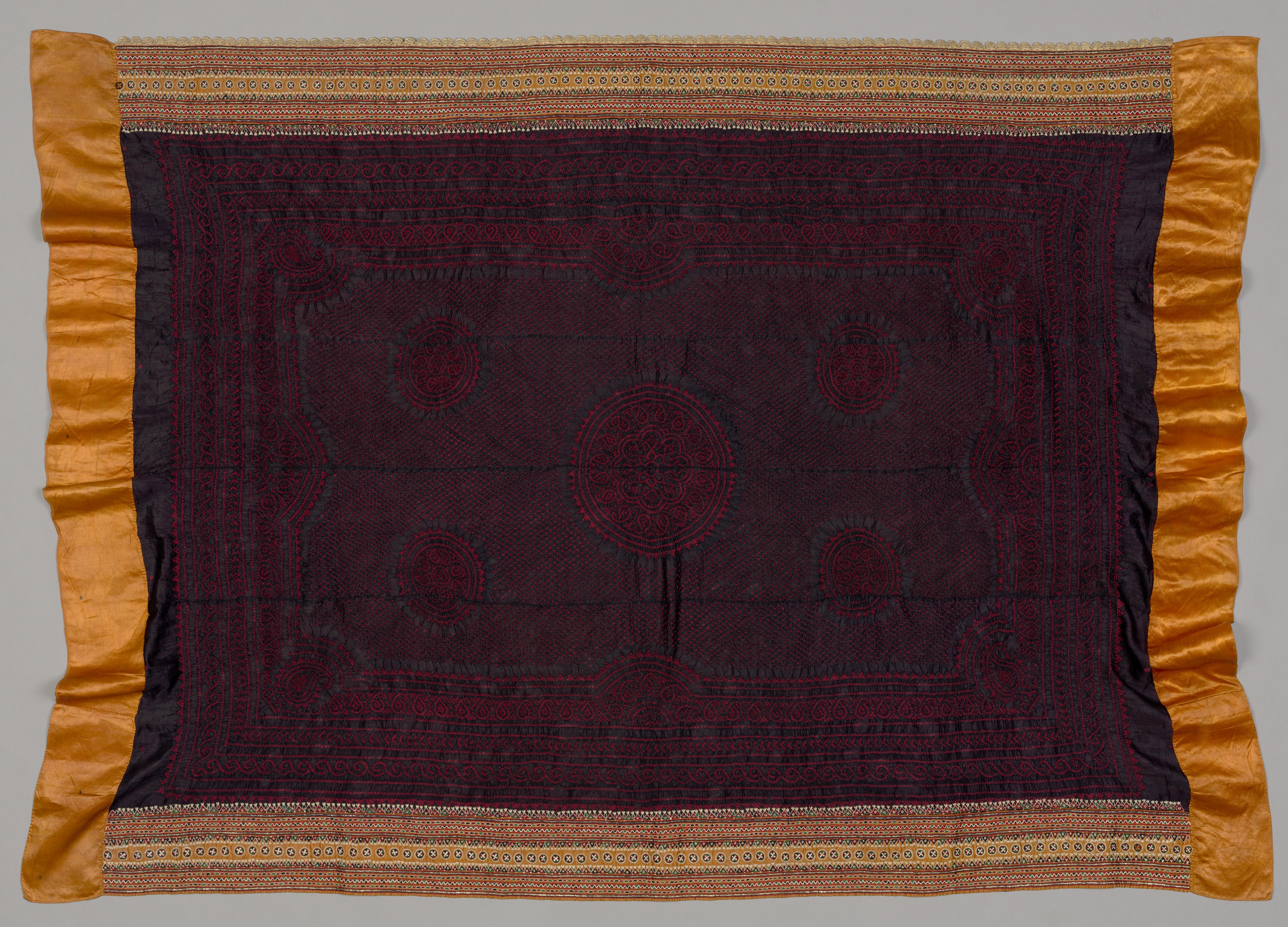
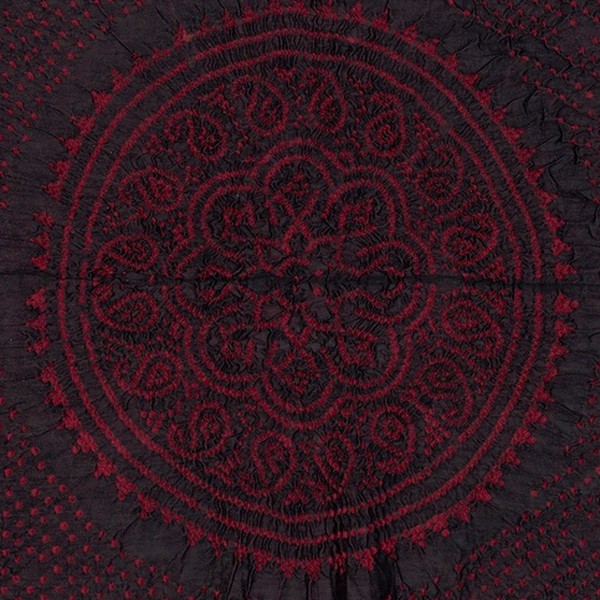
Odhani or Bandhani (Veil worn over Head), The Cleveland Museum of Art
The source
Odhani or Bandhani (Veil worn over Head)silk, tie-dyed (but not ironed flat) and embroidered with polychrome silk and flat strips of silver plaited with silk thread · Western India, Gujarat, Kachchh, early 1900s · Overall: 144.8 x 111.8 cm (57 x 44 in.)The Cleveland Museum of Art · Odhani or Bandhani (Veil worn over Head), early 1900s. Western India, Gujarat, Kachchh. Silk, tie-dyed (but not ironed flat) and embroidered with polychrome silk and flat strips of silver plaited with silk thread; overall: 144.8 x 111.8 cm (57 x 44 in.). The Cleveland Museum of Art, Purchase from the J. H. Wade Fund, 1925.513. CC0. · object Cleveland Museum of Art accession 1925.513 (web id 107887) · CC0View at The Cleveland Museum of Art ↗

The Cleveland Museum of Art calls it an odhani, a veil worn over the head: silk, tie-dyed and embroidered with coloured silk and flat strips of silver, from Kachchh in Gujarat, early 1900s. The museum left it un-ironed, so the puckers of the tying are still in the cloth. Kutch is home to many of bandhani's most prolific artists, most of them from Khatri families; women do the tying and men usually the dyeing.

What we saw

Five parts, traced from the photograph
The central medallion
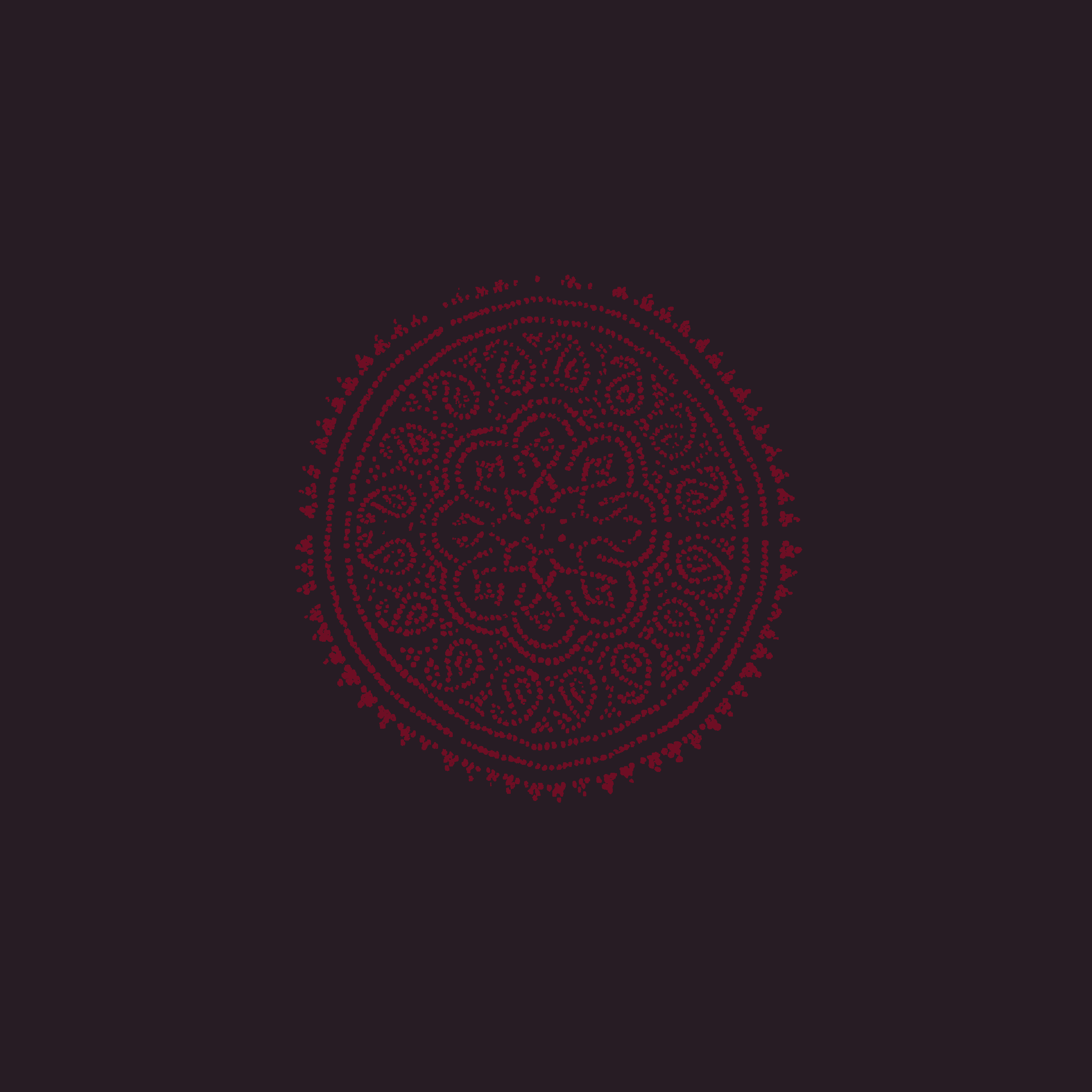
1The central medallionFirst, the medallion at the centre. A flower of dots in the middle, a ring of lobes, a ring of paisleys, rings of dots, and a fringe of small triangles.
The field roundels
2The field roundelsAround it, four smaller roundels, each with its own paisleys inside and its own fringe. Four half roundels hang from the inner border.
The puckered dot ground
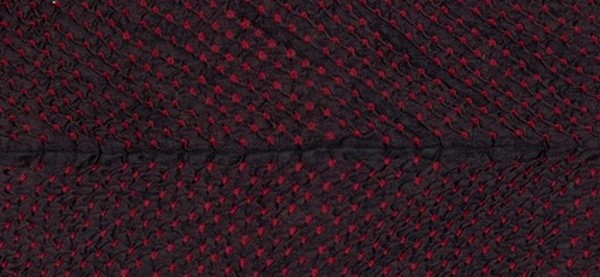
3The puckered dot groundBetween the motifs, the ground: row after row of small dots, each one a tie, none of them quite in line.
The dotted paisley border
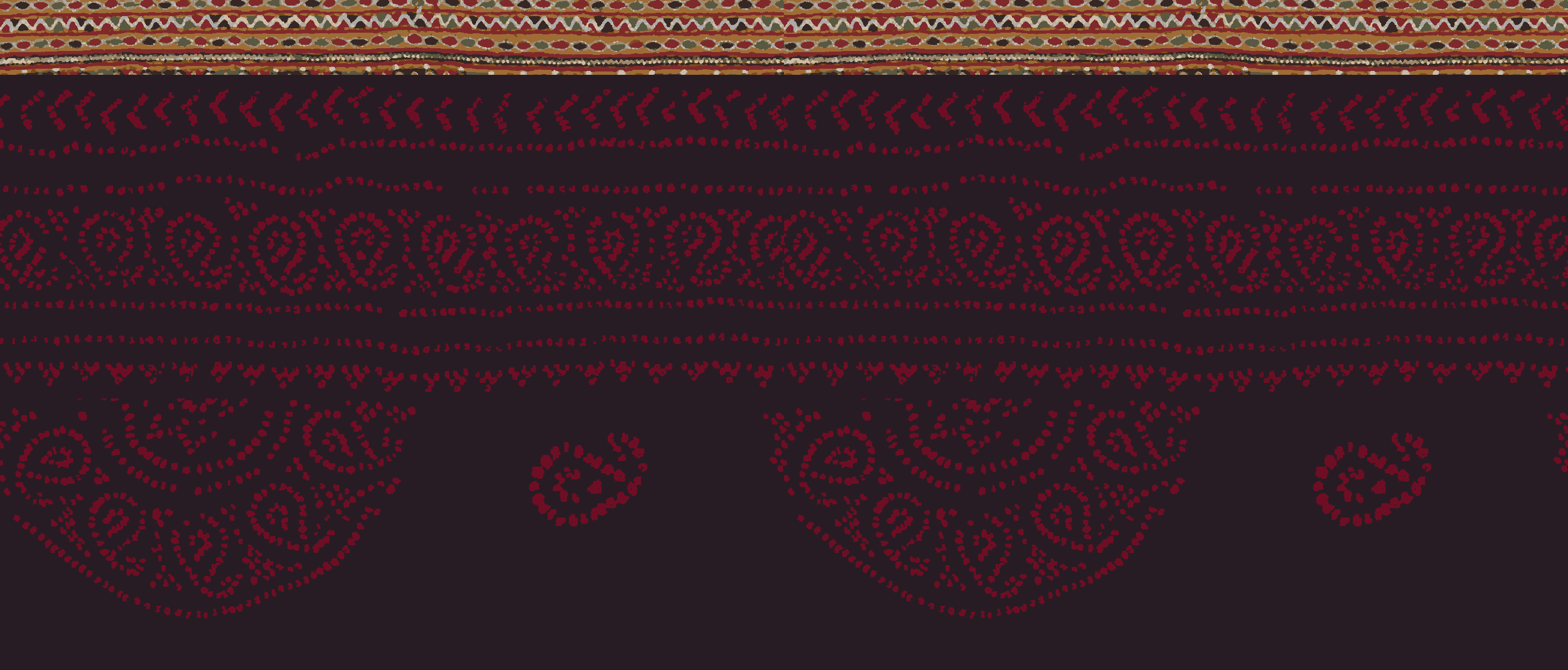
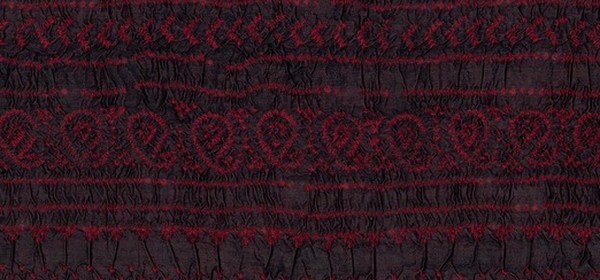
4The dotted paisley borderAlong the edge, a band: a row of chevrons, lines of dots, a chain of paisleys, more dot lines, and a fringe of triangles.
The embroidered end band
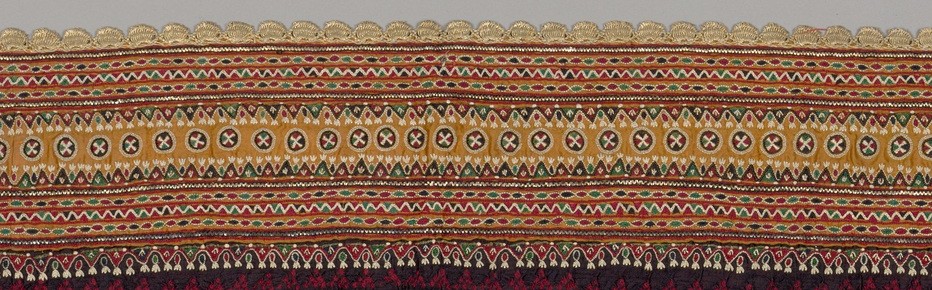
5The embroidered end bandAnd at the ends, embroidery on yellow silk: rows of zigzags, a row of ringed rosettes, triangles, a scalloped metal edge and a hanging fringe.

5 prints, each from a different part

Each print starts from a part of the source

The palette

Every colour here was already in the source.
#271C24Aubergine ground · from the source
#6E0E24Lac red dot · from the source
#B86F26Orange silk selvedge · from the source
#9F6C36Band yellow-orange silk · from the source
#80292BBand red thread · from the source
#CEBDA5Band cream thread · from the source
#5A5840Band green thread · from the source
#ACA9A6Band silver strip · from the source
#CEBDA5Cream · from the source
#9F6C36Yellow silk (print B sprigs) · from the source

Why now

Diwali falls on 8 November 2026 and the wedding season runs November to February; bandhani is festive wear in Gujarat, and these are the dots, the border and the hem band for it.

Previous storyOne Yellow BotehAll storiesBack to Inspiration

Source: Odhani or Bandhani (Veil worn over Head), Western India, Gujarat, Kachchh, early 1900s, silk, tie-dyed (but not ironed flat) and embroidered with polychrome silk and flat strips of silver plaited with silk thread. The Cleveland Museum of Art, Odhani or Bandhani (Veil worn over Head), early 1900s. Western India, Gujarat, Kachchh. Silk, tie-dyed (but not ironed flat) and embroidered with polychrome silk and flat strips of silver plaited with silk thread; overall: 144.8 x 111.8 cm (57 x 44 in.). The Cleveland Museum of Art, Purchase from the J. H. Wade Fund, 1925.513. CC0., object Cleveland Museum of Art accession 1925.513 (web id 107887). CC0. View the object.

Facts from: clevelandart.org, clevelandart.org.