Inside the Story · No. 13 · Saturday 10 October 2026 · Craft · South Asia

One Yellow Boteh

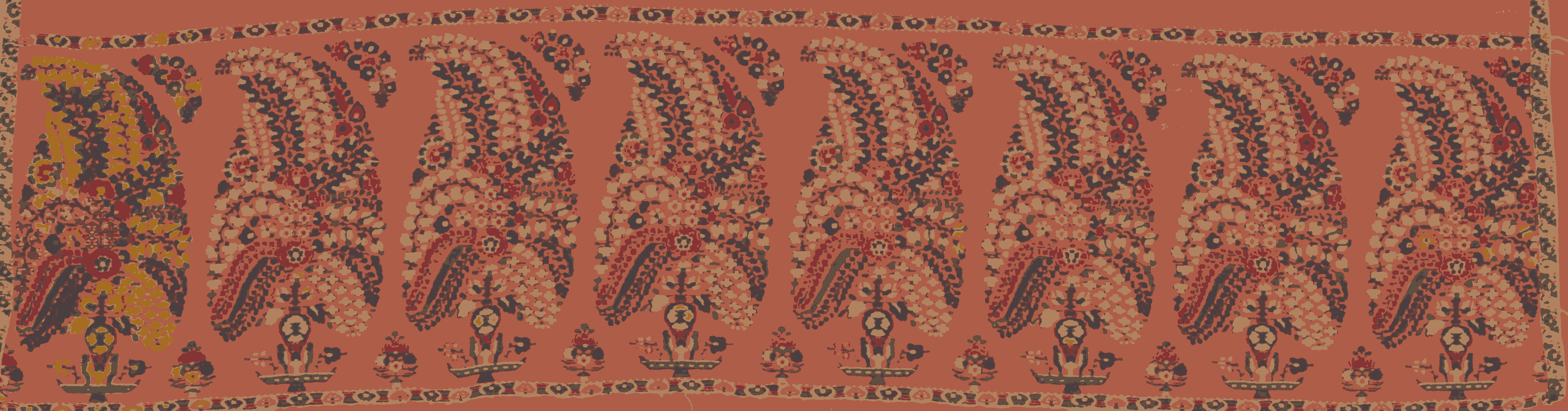
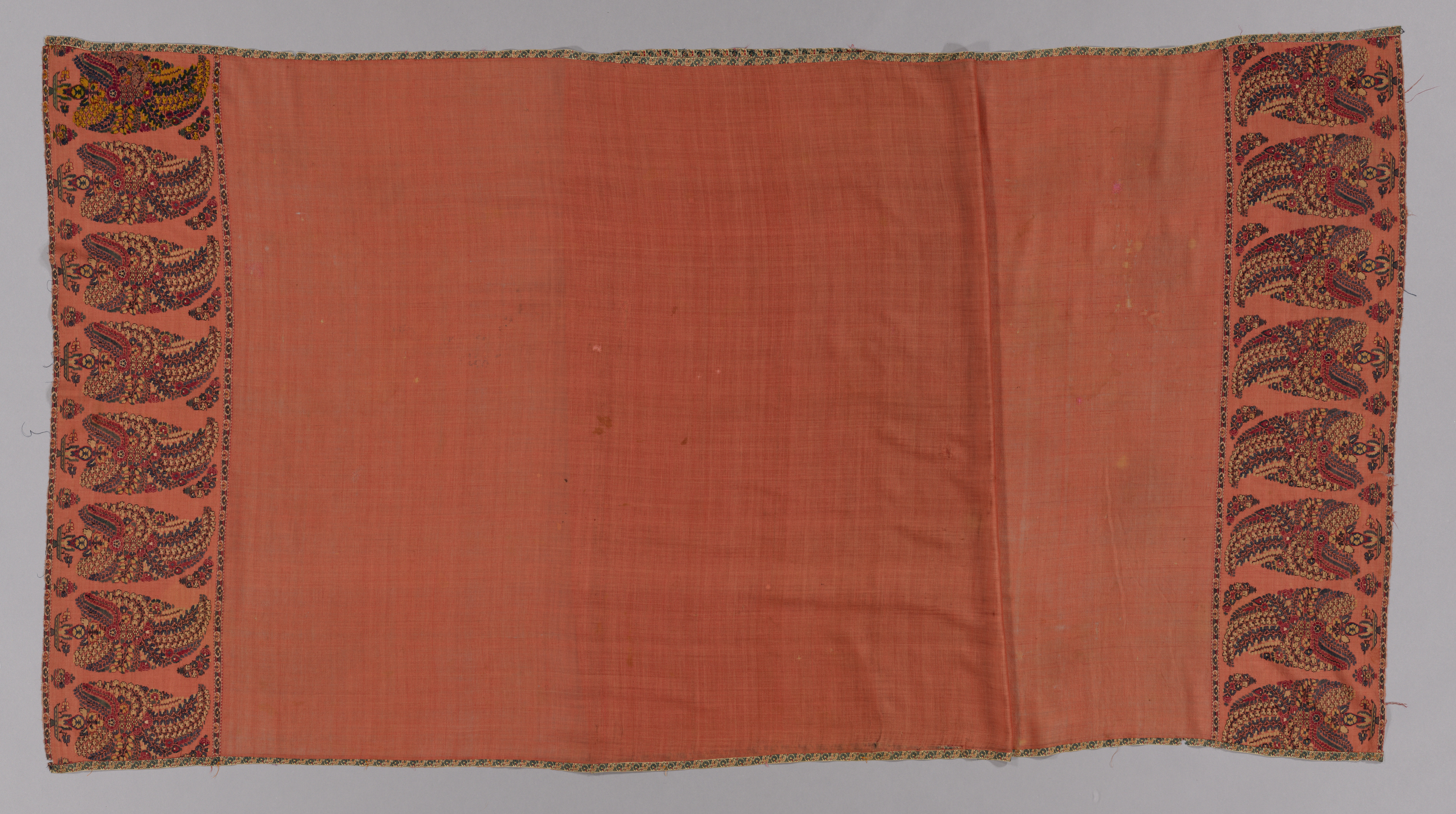
This paisley was woven, not printed: eight botehs on each end of a Kashmir shawl from the 1790s, and one of them is yellow.

The inside story of a design inspired by a Kashmir shawl woven between 1785 and 1800.

Apricot Long Shawl, The Cleveland Museum of Art
The source
Apricot Long Shawl2/2 twill tapestry weave, double interlocked; wool · India, Kashmir, Afghan period, 1785 to 1800 · Overall: 325 x 104.1 cm (127 15/16 x 41 in.)The Cleveland Museum of Art · Apricot Long Shawl, 1785 to 1800. India, Kashmir, Afghan period. 2/2 twill tapestry weave, double interlocked; wool. The Cleveland Museum of Art, Gift of Arlene C. Cooper, 2008.215. CC0. · object 2008.215 · CC0View at The Cleveland Museum of Art ↗

Kashmir shawls were woven in 2/2 twill tapestry, which the holding museum calls 'the equivalent of painting with colored weft threads'. Early ones had plain fields and plants at the ends, then vases of blossoming stems, then dense cone-shaped botehs of blossoms. Imitations woven in Paisley, Scotland, gave the motif its English name.

What we saw

Six parts, traced from the photograph
The boteh
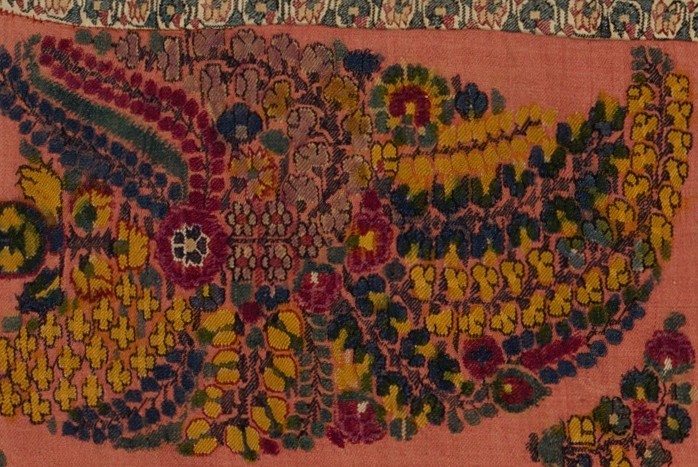
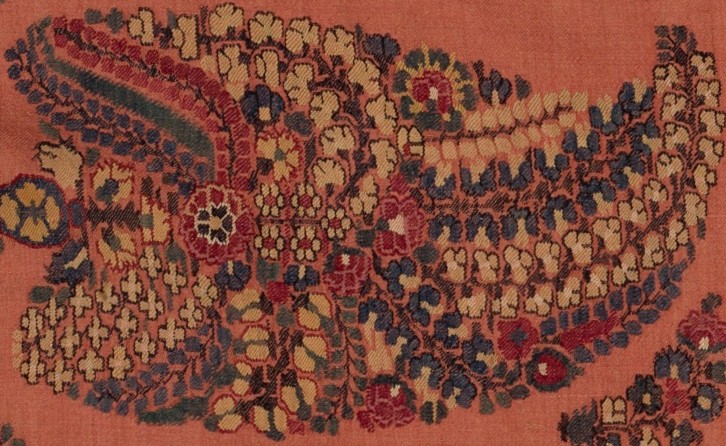
1The botehFirst, the boteh. A cone packed with blossoms, lying on its side, its tip curling over. Eight on each end.
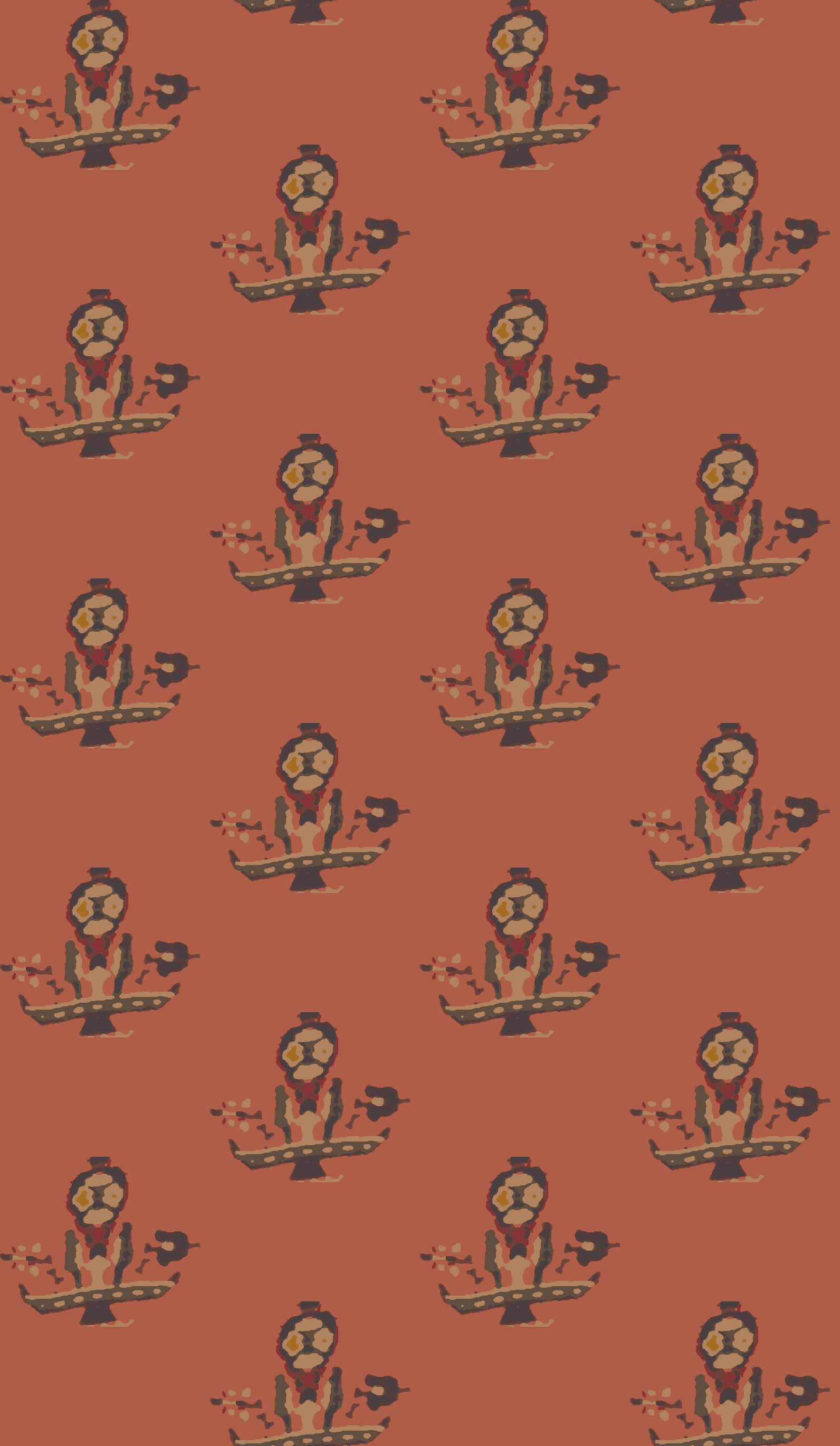
The vase on its stand
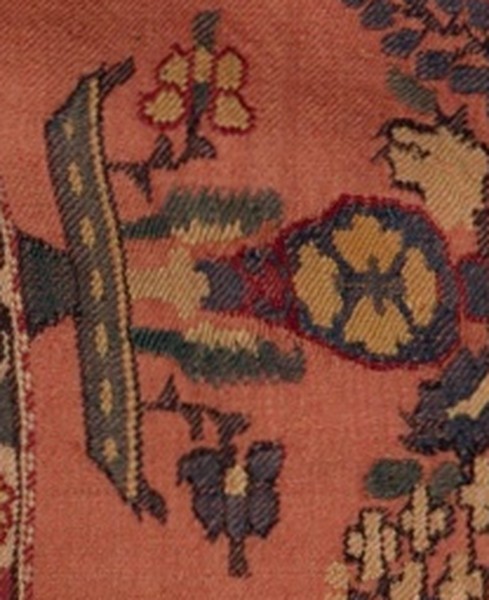
2The vase on its standAt the foot of every boteh, a small vase on a footed stand, a round four-petal blossom above it and a flower on either side.
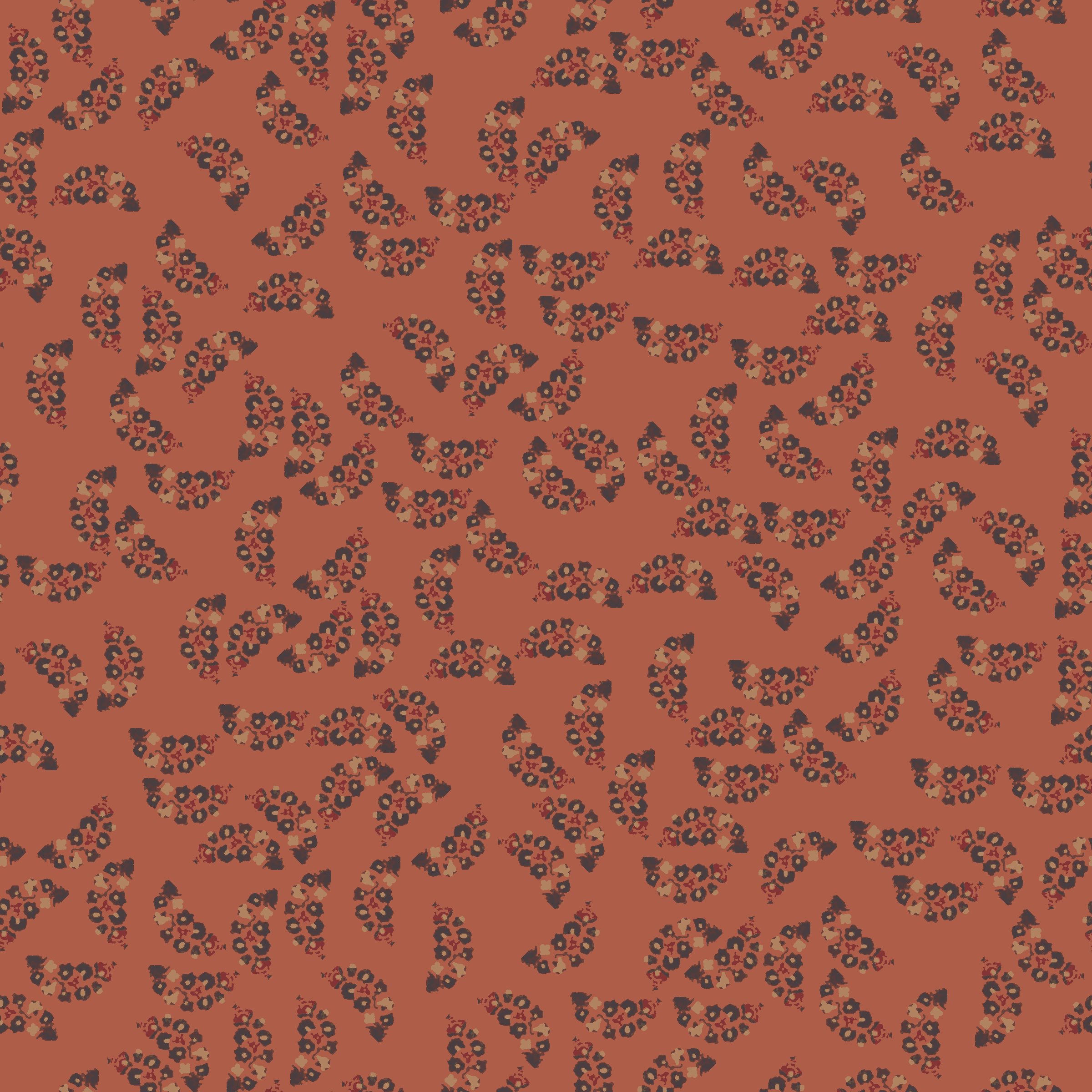
The blossom sprig
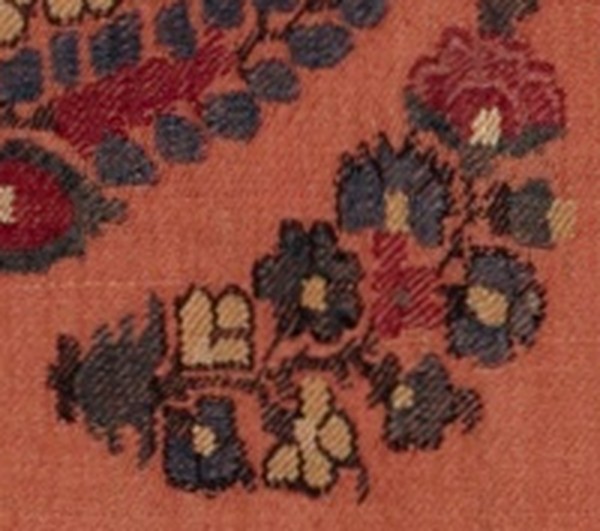
3The blossom sprigBetween the botehs, under each tip, a triangle of small blossoms: dark blue, cream, one crimson at the top.
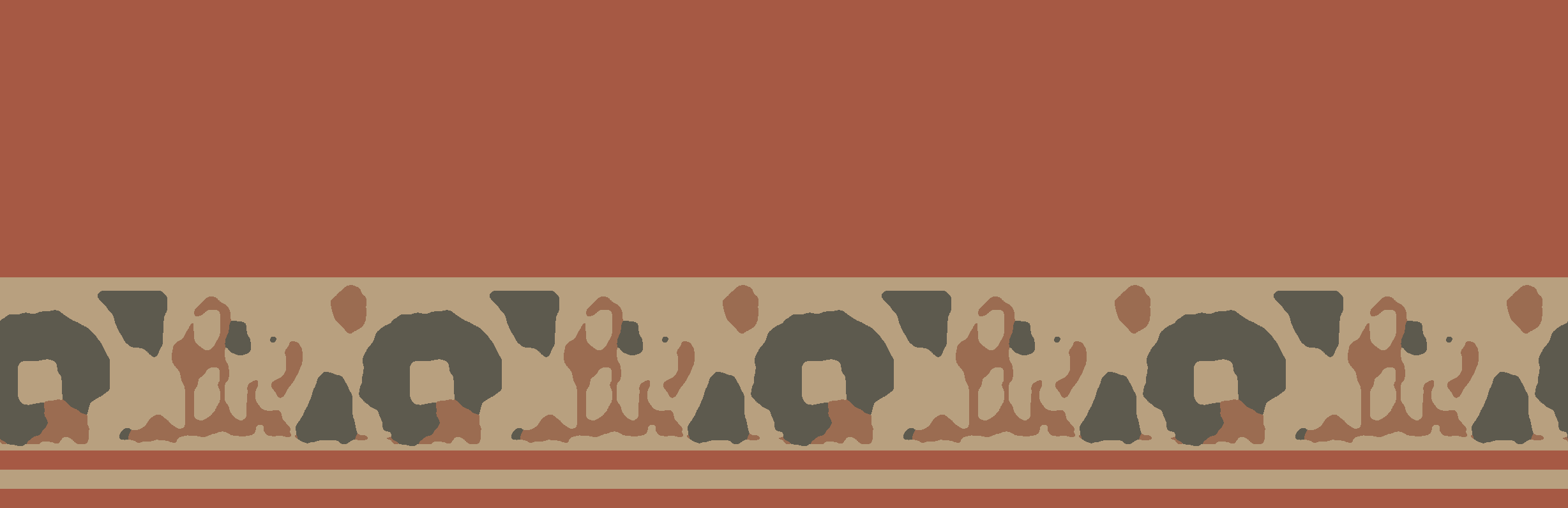
The edge border
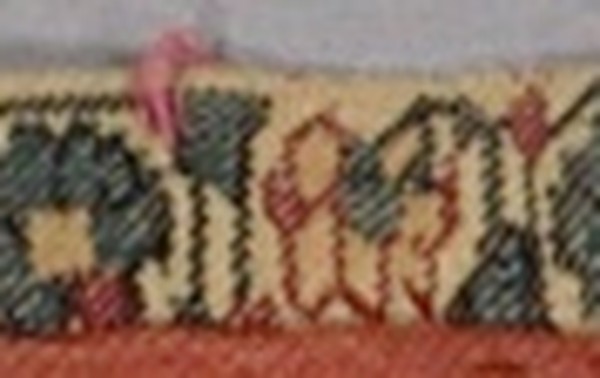
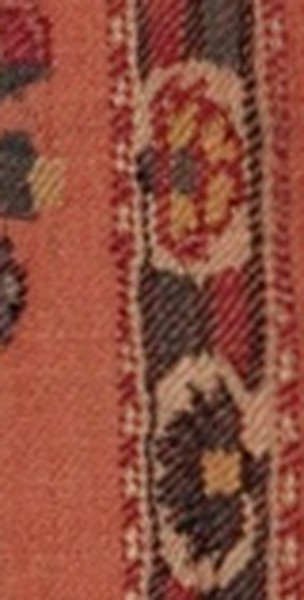
4The edge borderAlong both long edges, a narrow woven border: a blue-grey cup flower, then a pair of red-outlined buds, again and again.
The one yellow boteh
5The one yellow botehAnd at the top of one end, one boteh woven in yellow where all the others are cream.
The rosette chain
6The rosette chainFraming each end, a chain of small rosettes in cream rings on a dark ground.

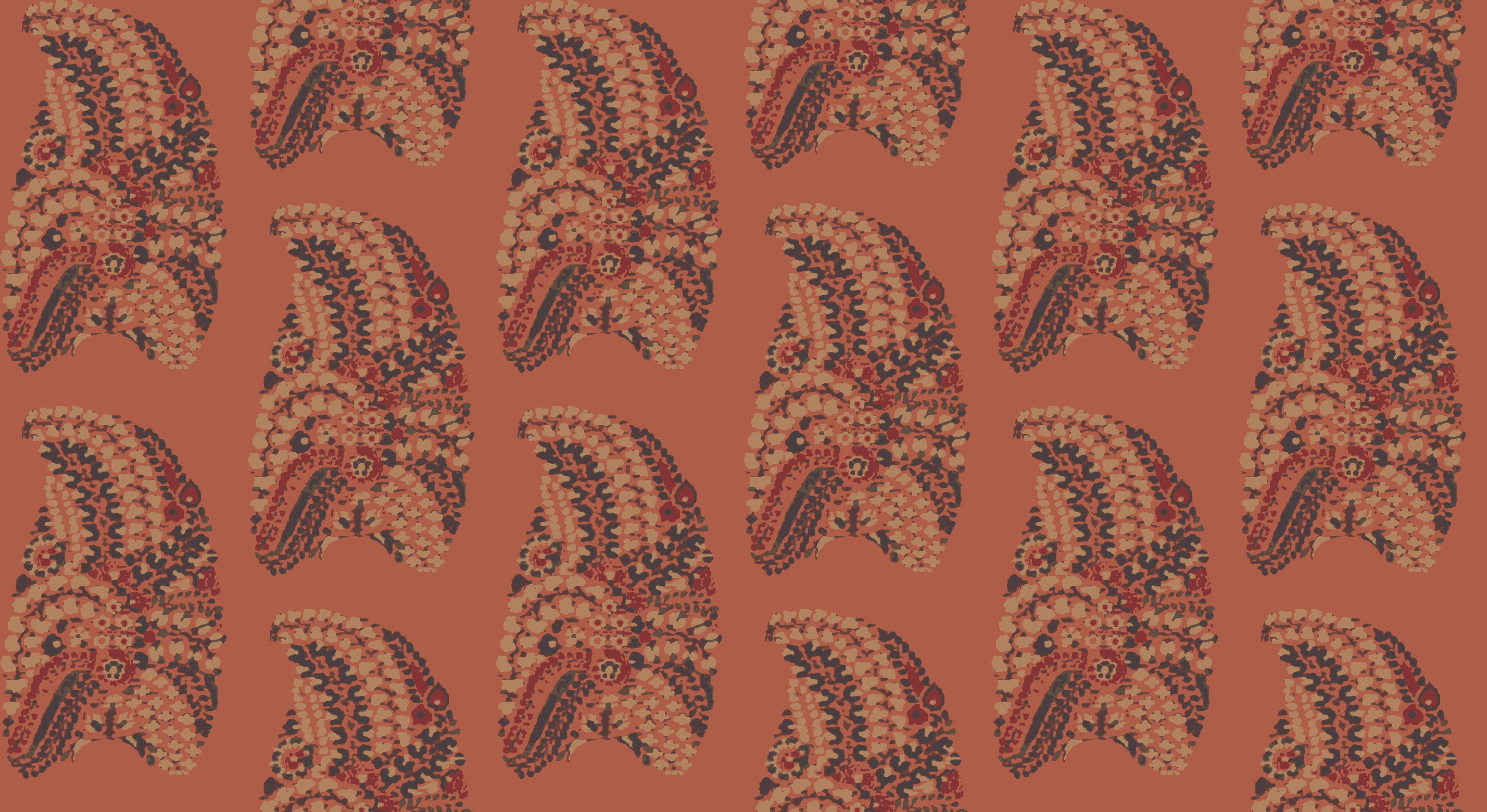
5 prints, each from a different part

Each print starts from a part of the source

The palette

Every colour here was already in the source.
#AE5D48Apricot · from the source
#B0825FWool cream · from the source
#6D433CMadder-brown outline · from the source
#563D3CWalnut black · from the source
#4A3E40Navy · from the source
#624E41Dark green · from the source
#853435Crimson · from the source
#A56D22Boteh yellow · from the source
#5D5A4EBorder blue-grey · from the source
#9B6C51Border red · from the source

Why now

Autumn and winter are shawl and stole season.

Previous storyGold on Black: the Bidri IrisAll storiesBack to Inspiration

Source: Apricot Long Shawl, India, Kashmir, Afghan period, 1785 to 1800, 2/2 twill tapestry weave, double interlocked; wool. The Cleveland Museum of Art, Apricot Long Shawl, 1785 to 1800. India, Kashmir, Afghan period. 2/2 twill tapestry weave, double interlocked; wool. The Cleveland Museum of Art, Gift of Arlene C. Cooper, 2008.215. CC0., object 2008.215. CC0. View the object.

Facts from: clevelandart.org, vam.ac.uk.