Inside the Story · No. 02 · Tuesday 29 September 2026 · Craft · South Asia

The Cloth Dyed Before It Was Woven

What if the pattern existed before the cloth did?

The inside story of a design inspired by a silk patola woven in 19th-century Gujarat.

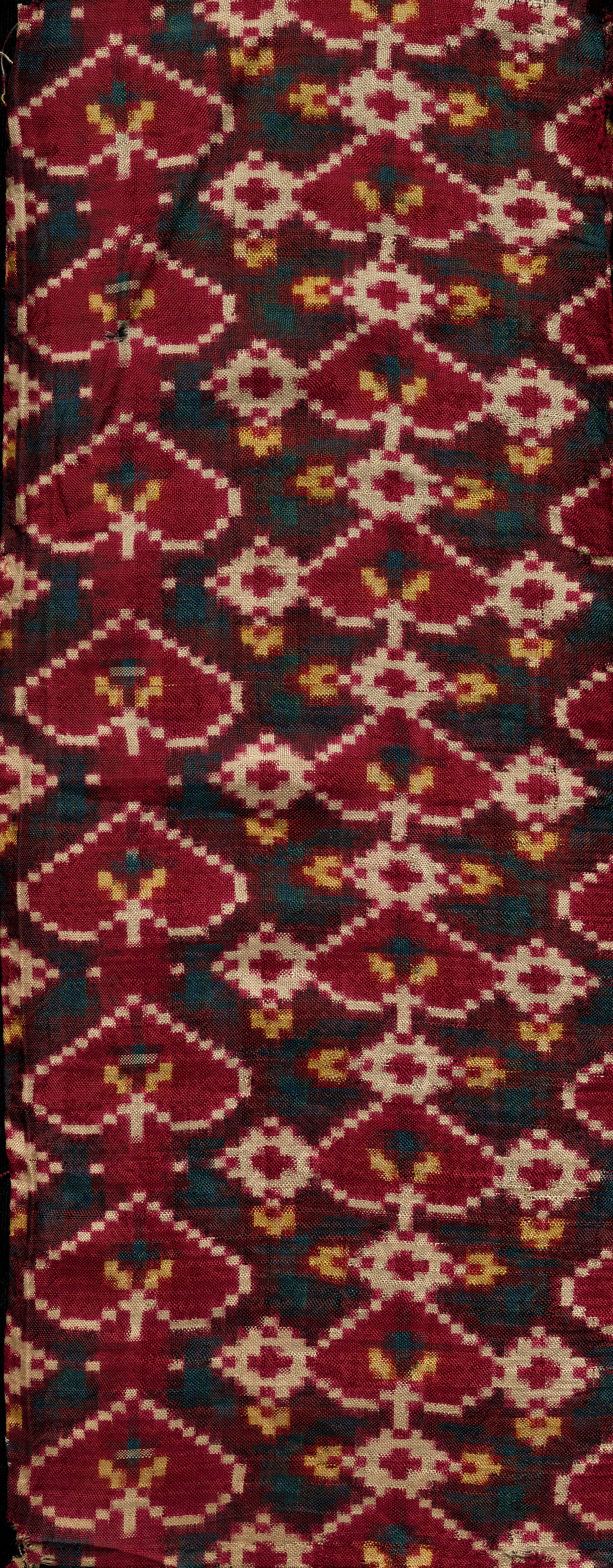
Fragment, The Cleveland Museum of Art
The source
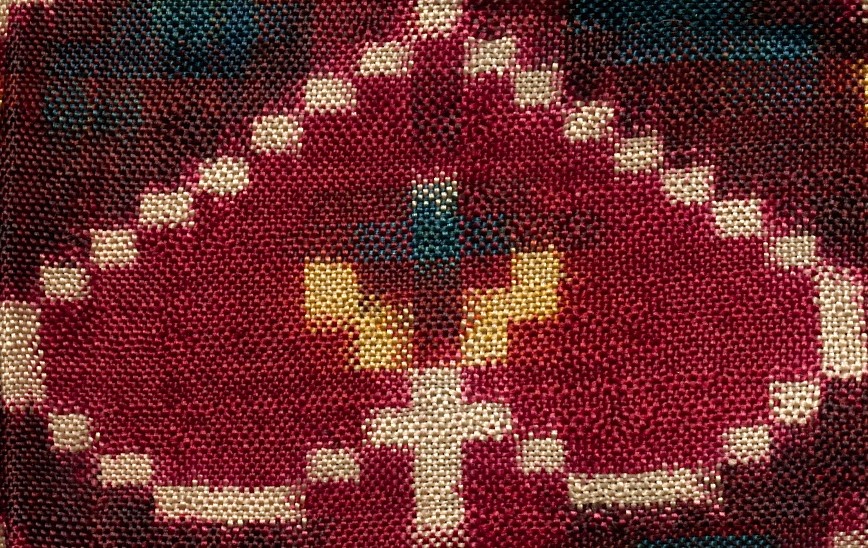
Fragmentpatola (double ikat) weaving; silk · India, Gujarat, 19th century, 1800s · Overall: 44.5 x 17.2 cm (17 1/2 x 6 3/4 in.)The Cleveland Museum of Art · Fragment, 1800s. India, Gujarat. Patola (double ikat) weaving; silk. The Cleveland Museum of Art, Gift of A. K. Coomaraswamy, 1926.30. CC0. · object 1926.30 · CC0View at The Cleveland Museum of Art ↗

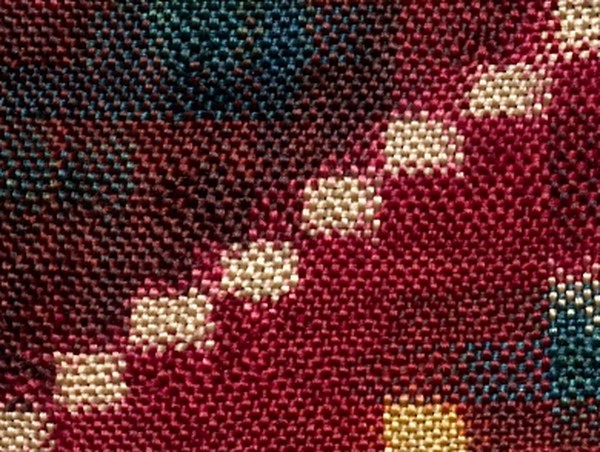
In double ikat, both sets of threads, the warp and the weft, are tied and dyed before the loom is set up. The pattern exists in the yarn first, and only appears when the two dyed sets cross, thread by thread. Where they miss by a thread, the edge blurs.

What we saw

Four parts, traced from the photograph
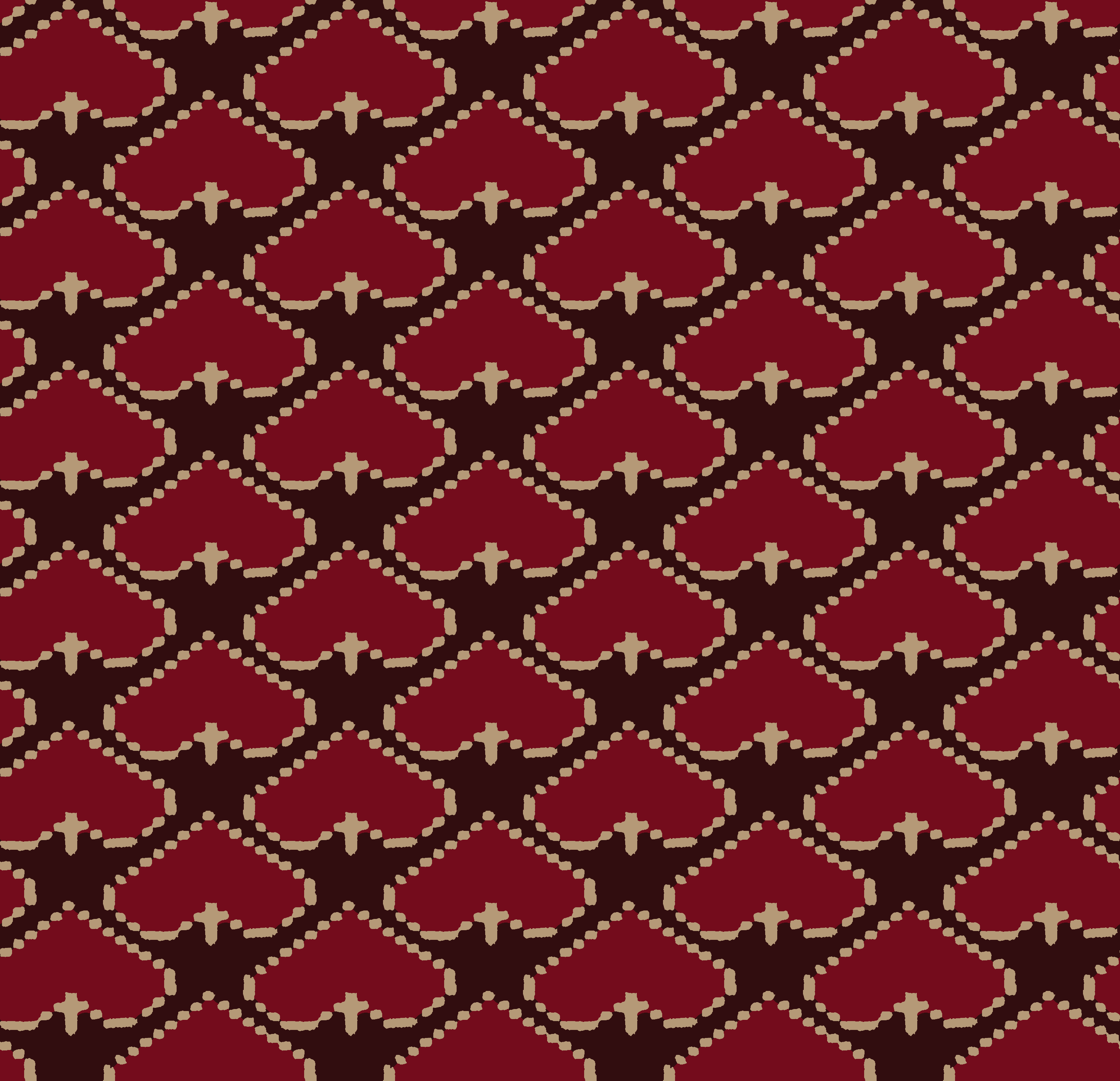
The pointed cell
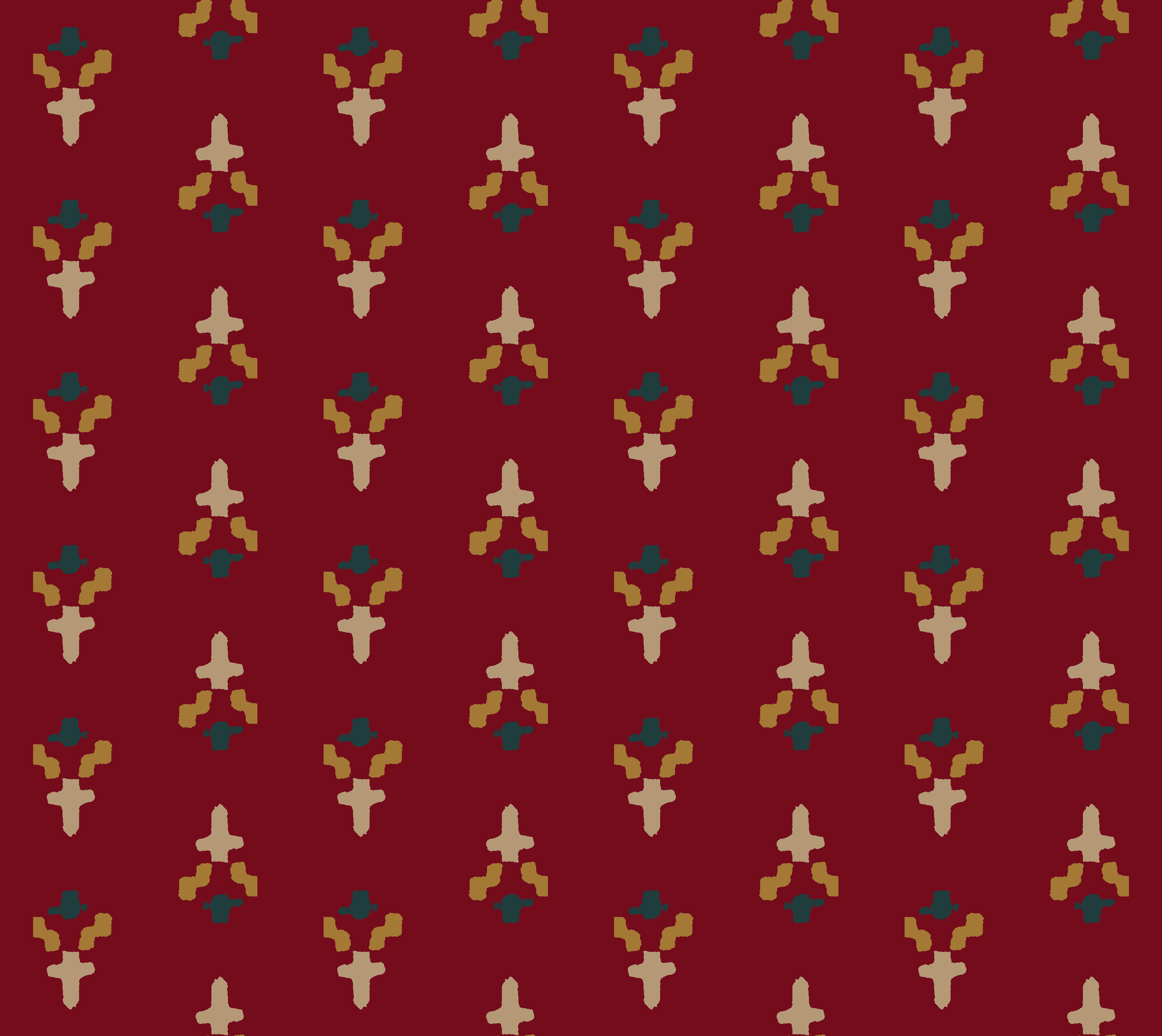
1The pointed cellFirst, the cell. A pointed top, a flat base, drawn in dyed steps.
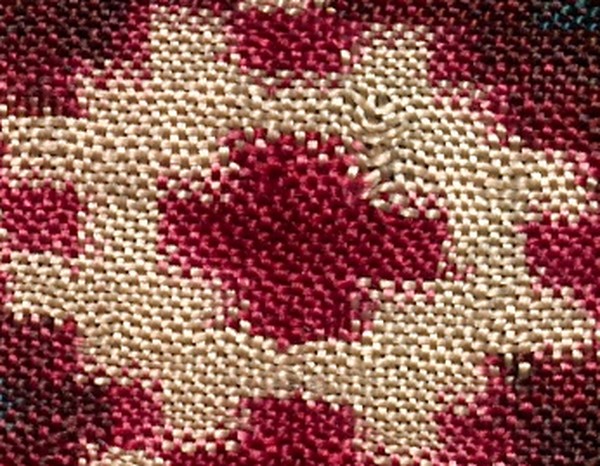
The stepped rosette
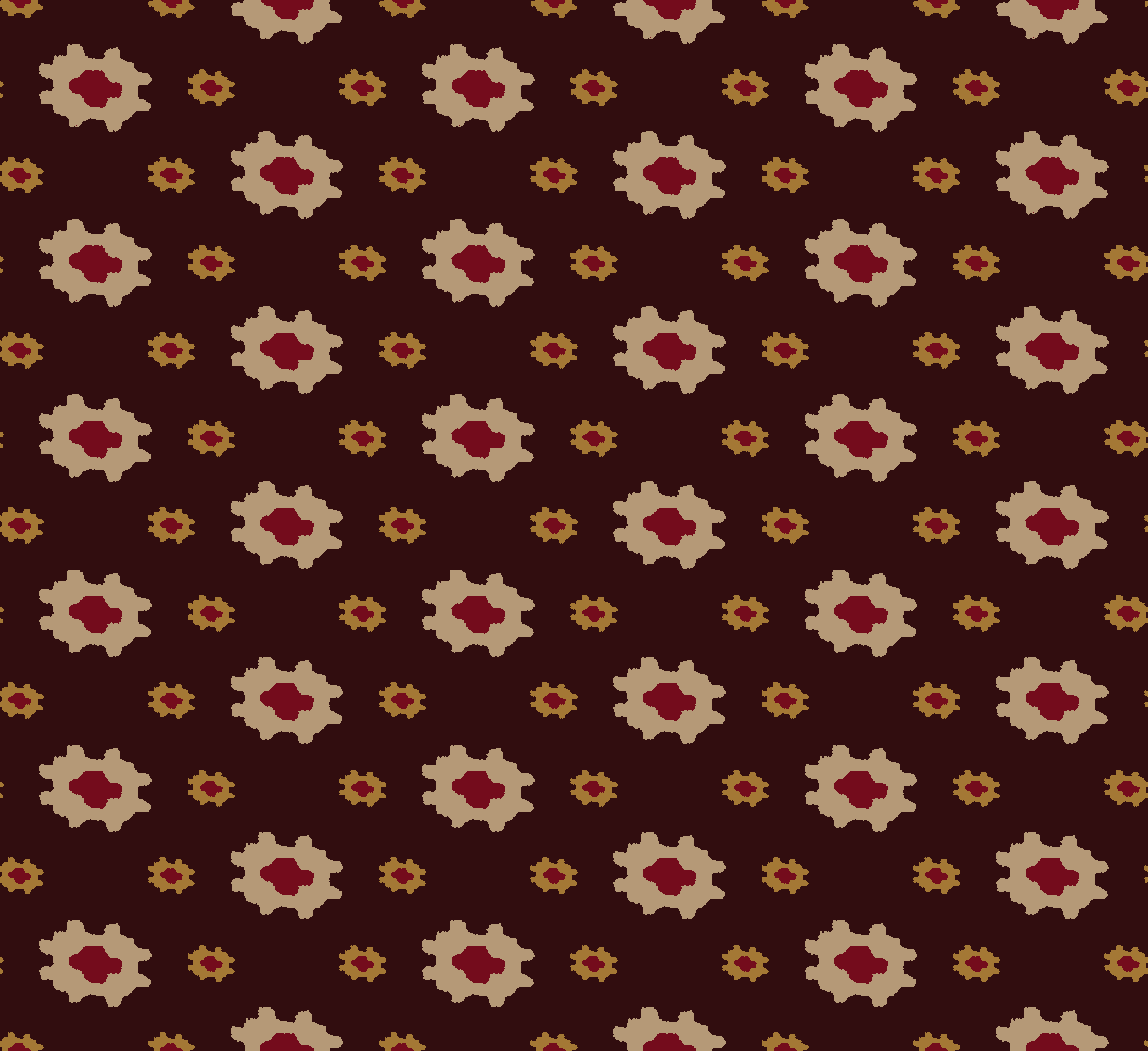
2The stepped rosetteBeside the cells, a rosette. A stepped cream ring around a madder centre. Twenty-two of them on this fragment.
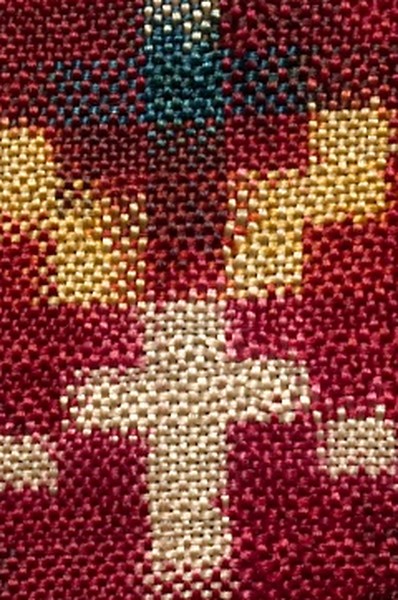
The sprig
3The sprigInside every cell, a sprig. A green bud, two turmeric petals, and a cross to stand on.
The ikat edge
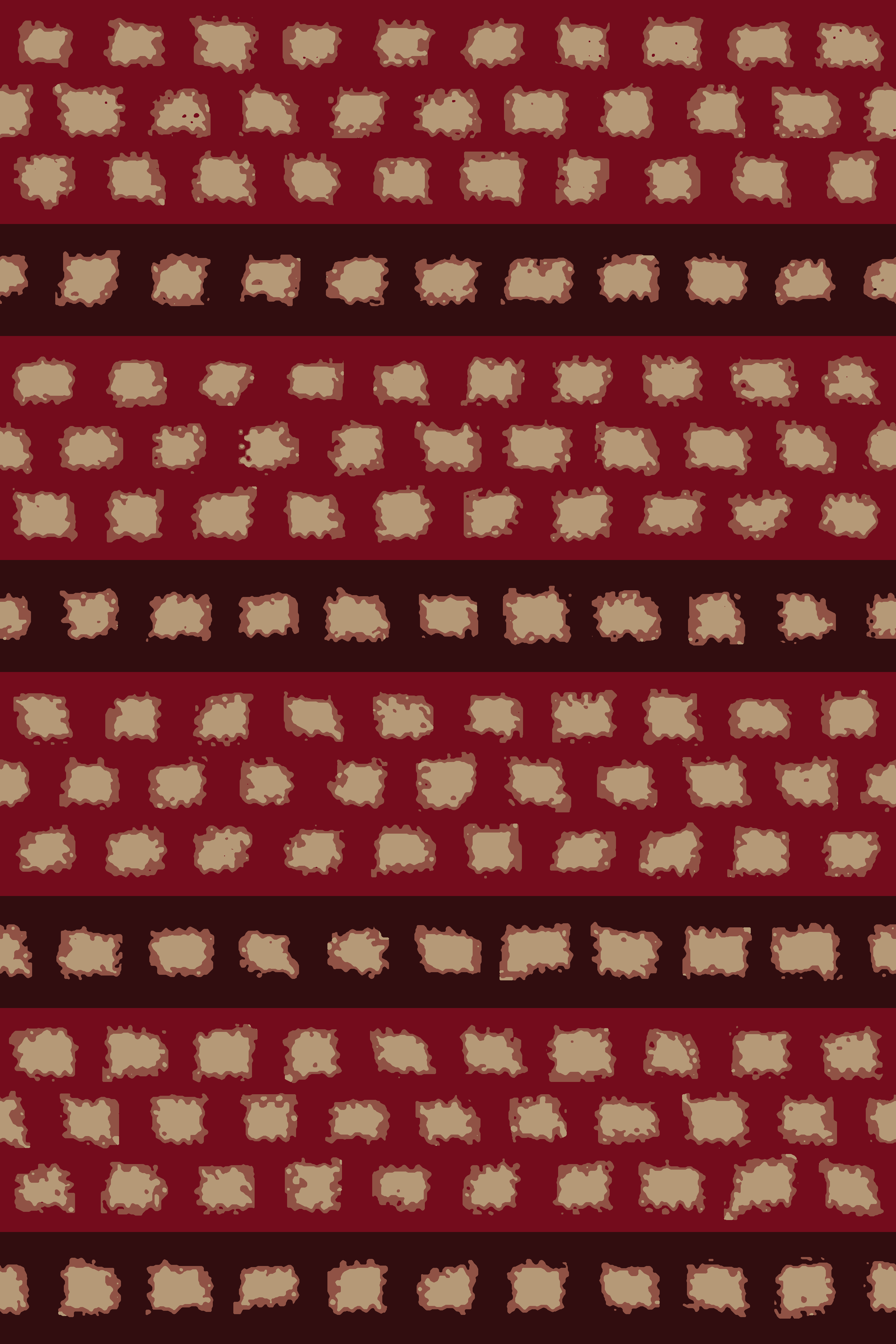
4The ikat edgeAnd the edge. Why is every step soft? Because two dyed threads never meet exactly.

4 prints, each from a different part

Each print starts from a part of the source

The palette

Every colour here was already in the source.
#740C1CMadder red · from the source
#310D0FNear-black maroon · from the source
#B59977Silk cream · from the source
#A47835Turmeric · from the source
#203D3EBottle green · from the source
#905245Ikat-edge pink · from the source

Why now

Navratri runs from 11 to 19 October 2026, and the wedding-saree season follows it.

Previous storyThe Jali That Cooled a Mughal CityAll storiesBack to Inspiration

Source: Fragment, India, Gujarat, 19th century, 1800s, patola (double ikat) weaving; silk. The Cleveland Museum of Art, Fragment, 1800s. India, Gujarat. Patola (double ikat) weaving; silk. The Cleveland Museum of Art, Gift of A. K. Coomaraswamy, 1926.30. CC0., object 1926.30. CC0. View the object.

Facts from: clevelandart.org, patanpatola.com.