Inside the Story · No. 06 · Saturday 3 October 2026 · Architecture · Western
A Carpet Made of Tiles
Where does a repeat begin?
The inside story of a design inspired by a field of Portuguese tiles from about 1600.
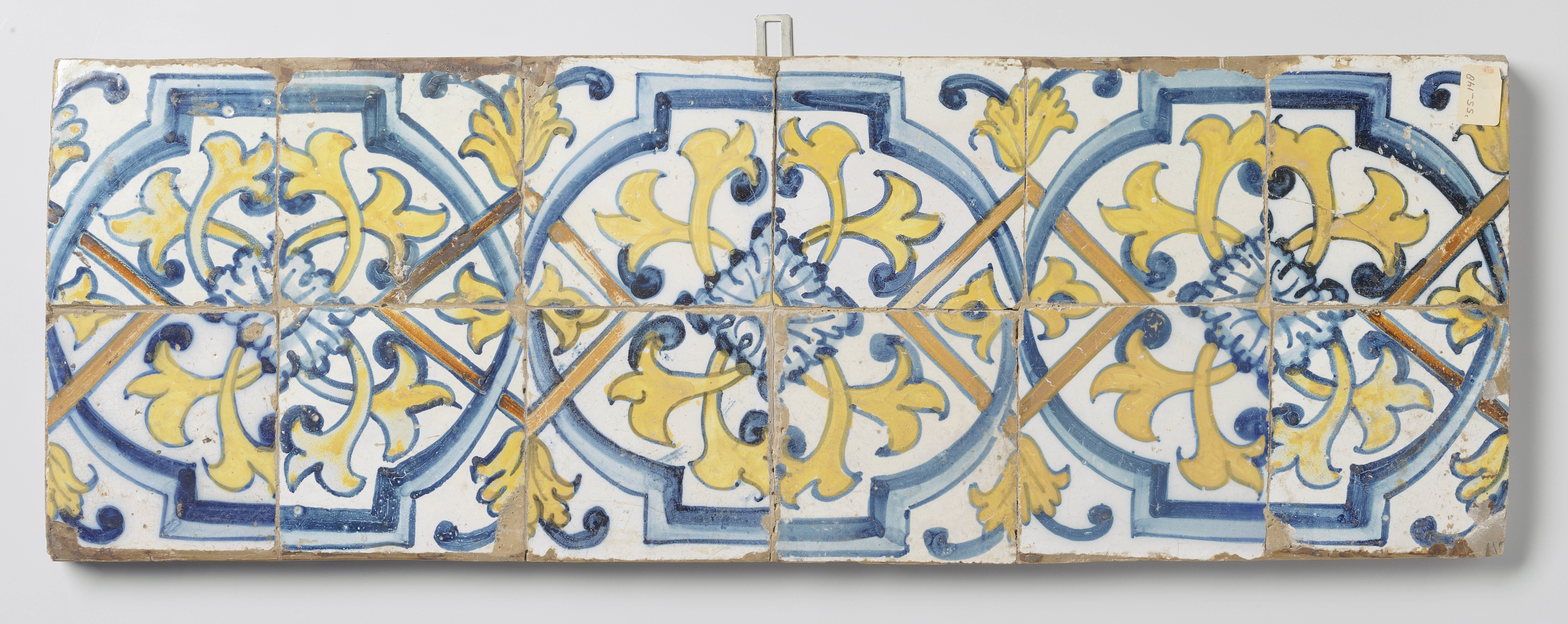
The source
Veld van twaalf veelkleurige tegels (Field of twelve polychrome tiles)Earthenware, tin glaze, painted (blue, yellow and brown) · Portugal, c. 1600 to c. 1625 · 27 x 79 x 3 cm overall; each tile 13.5 x 13.5 cm (2 x 6 tiles)Rijksmuseum, Amsterdam · Field of twelve polychrome tiles, Portugal, c. 1600 to 1625. Rijksmuseum, Amsterdam, BK-1955-148, gift of the heirs of A. Isaac, Amsterdam. Public domain (CC0). · object BK-1955-148 · CC0View at Rijksmuseum, Amsterdam ↗Portuguese workshops painted one tile and let the wall do the rest. Four tiles together make one design, and that design repeats until the wall is covered, like a carpet.
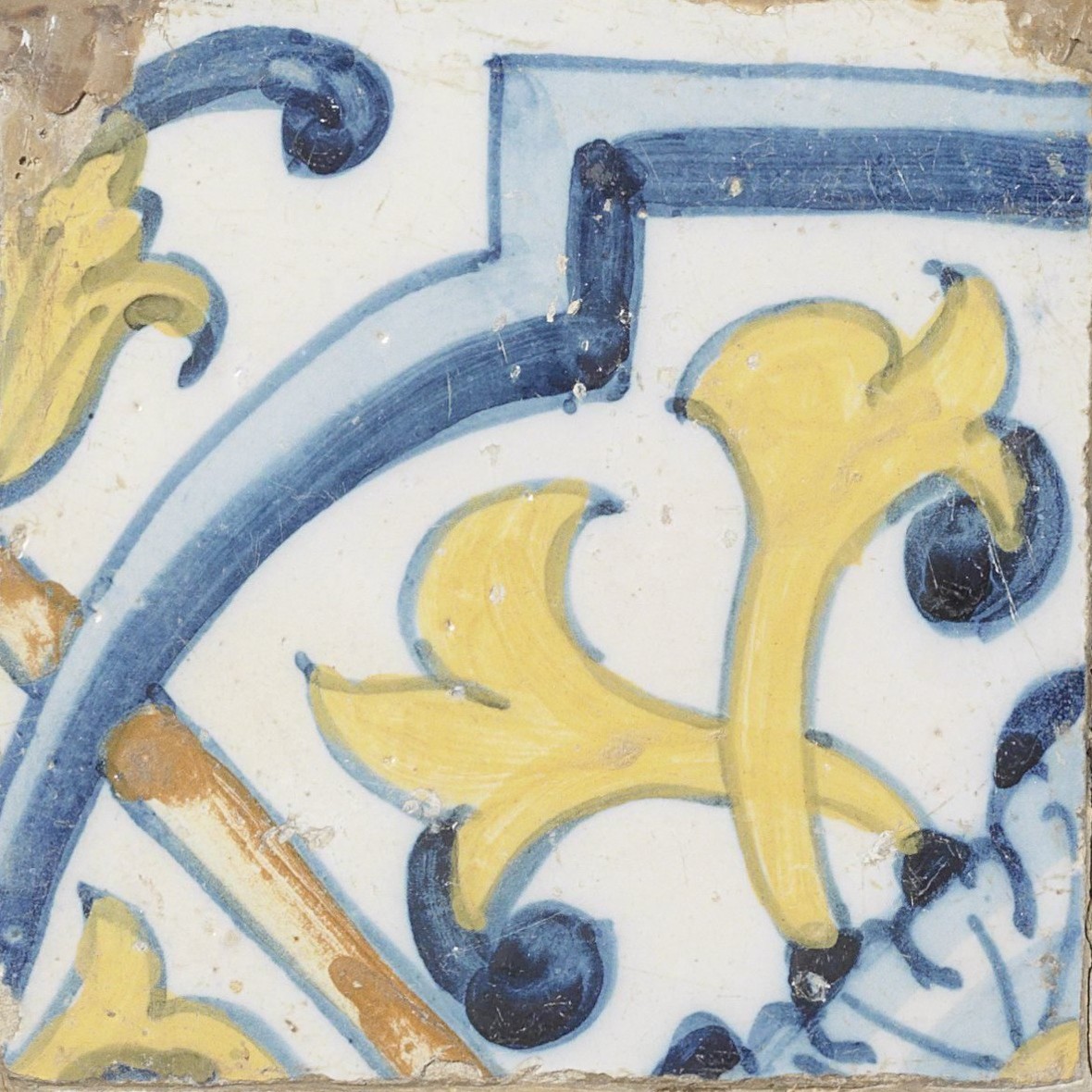
1The single tileOne tile, 13.5 cm square. On its own it is a quarter of something: a corner of a frame, two leaves, one diagonal.
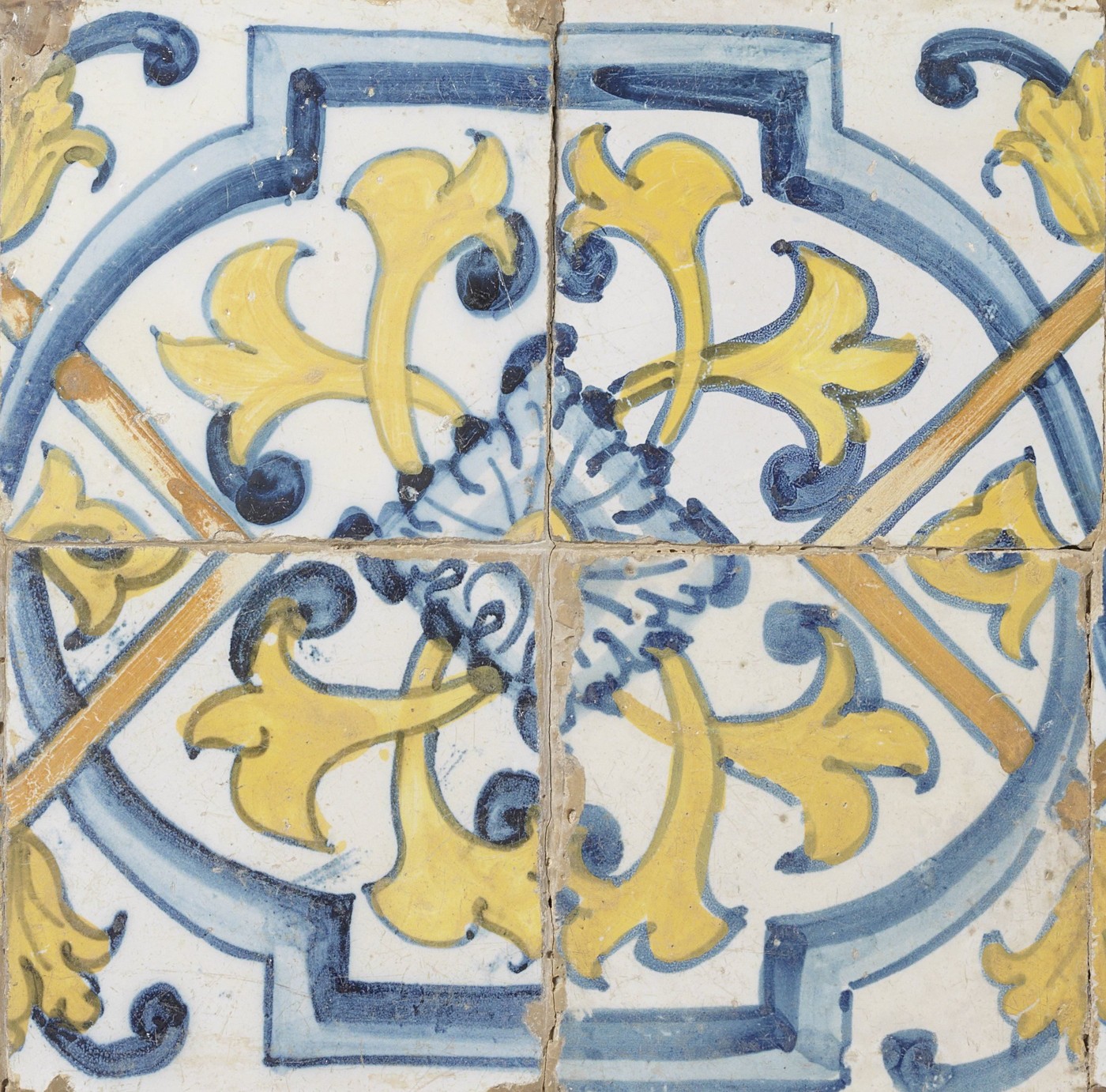
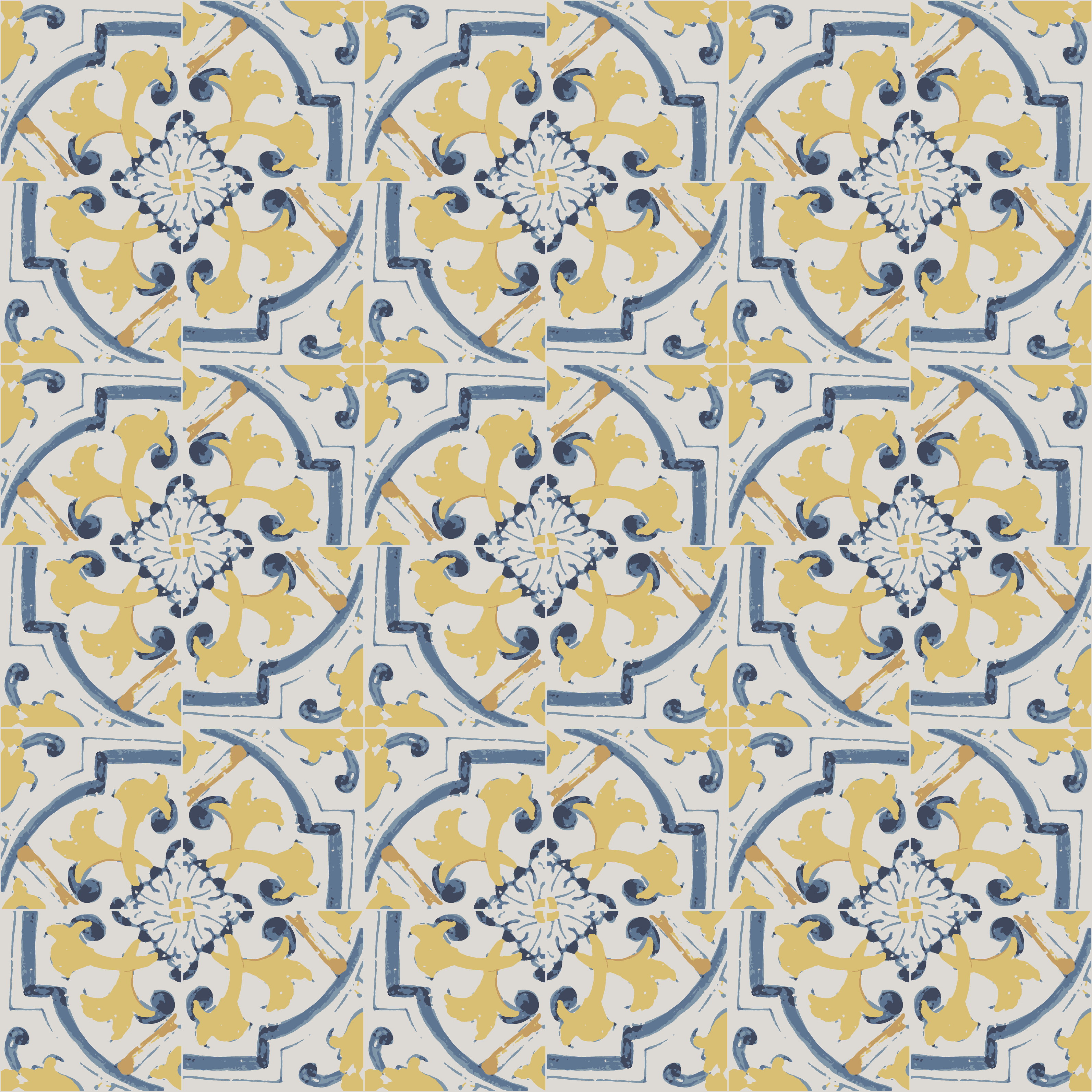
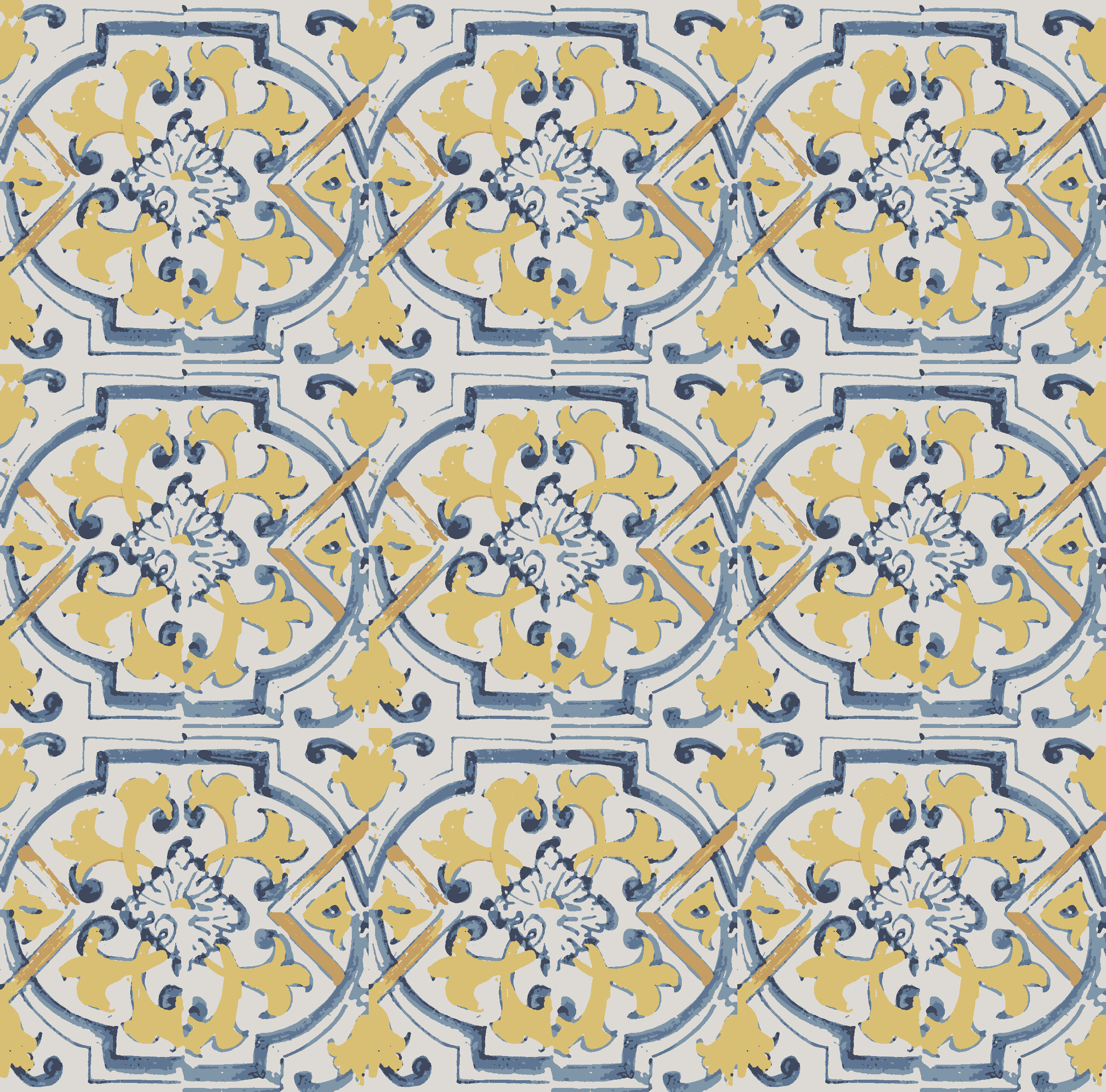
2The four-tile repeatPut four together and the design closes: an oval frame, a rosette at the centre, leaves turning round it. The four tiles are mirror images of one another.
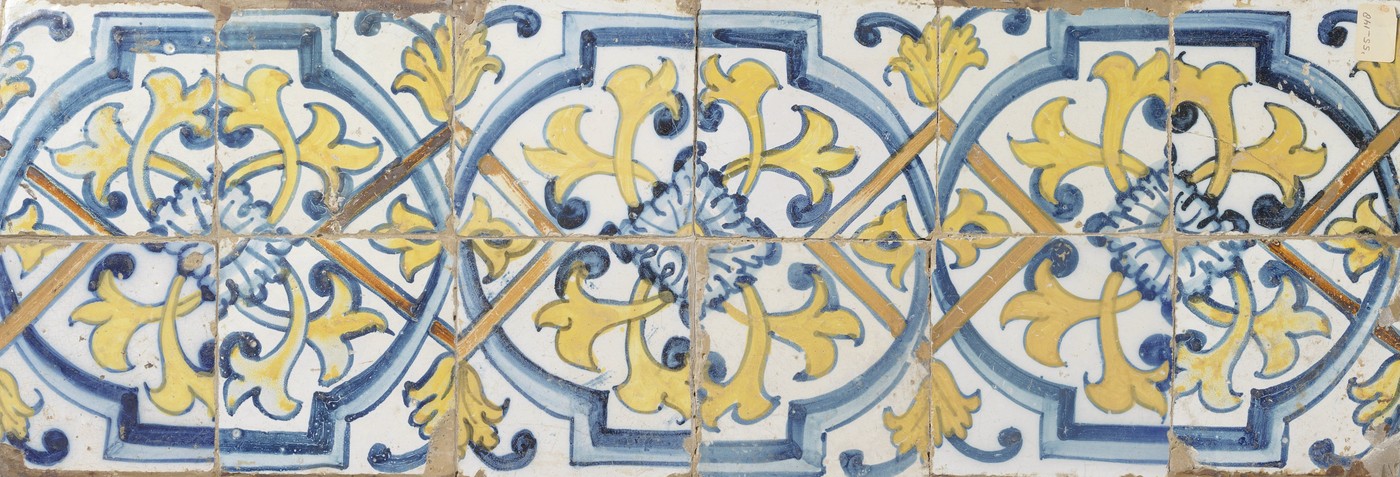
3The jointsBetween them, the joints. Hairlines about a millimetre wide, set by hand and never quite straight.
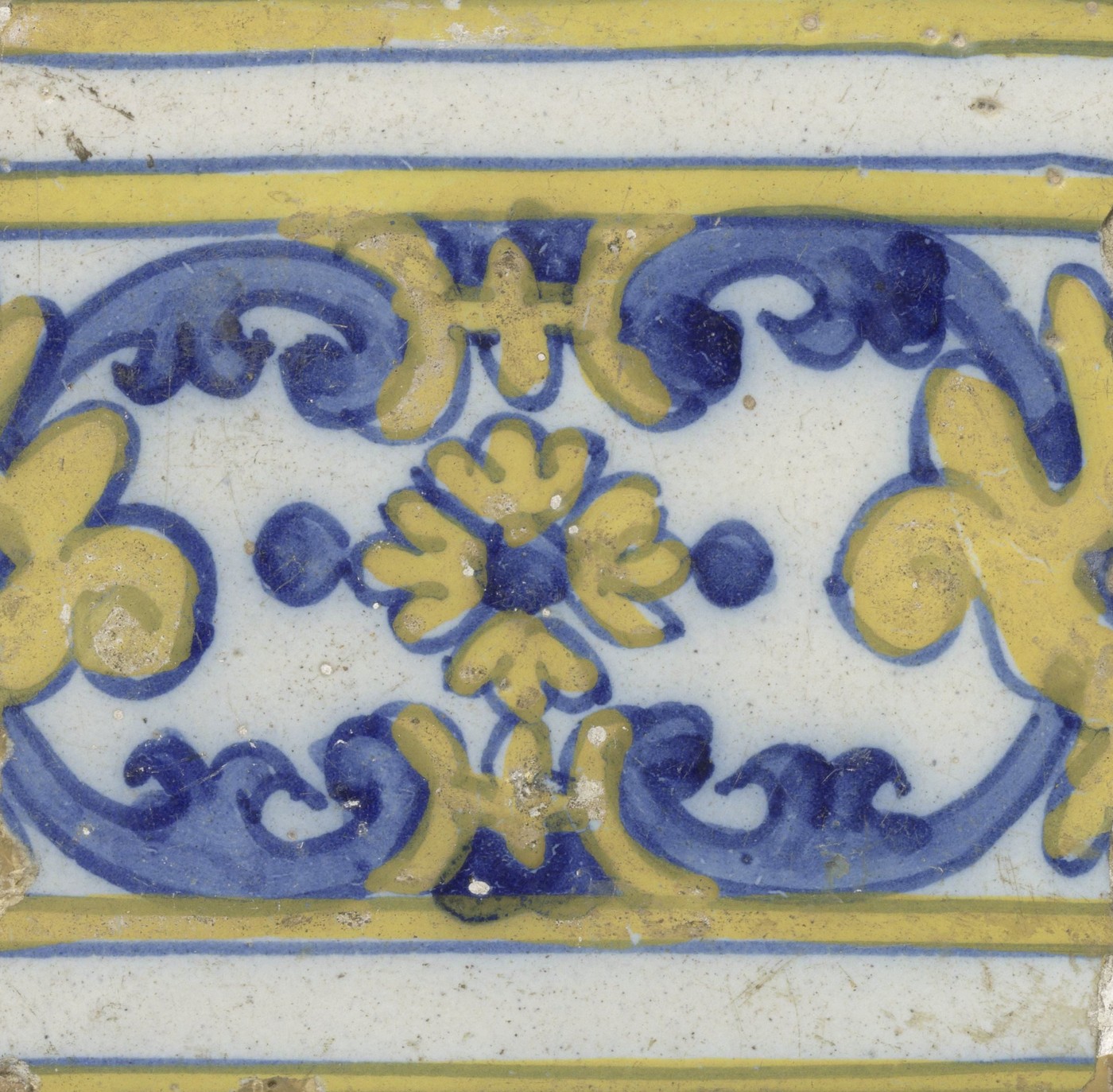
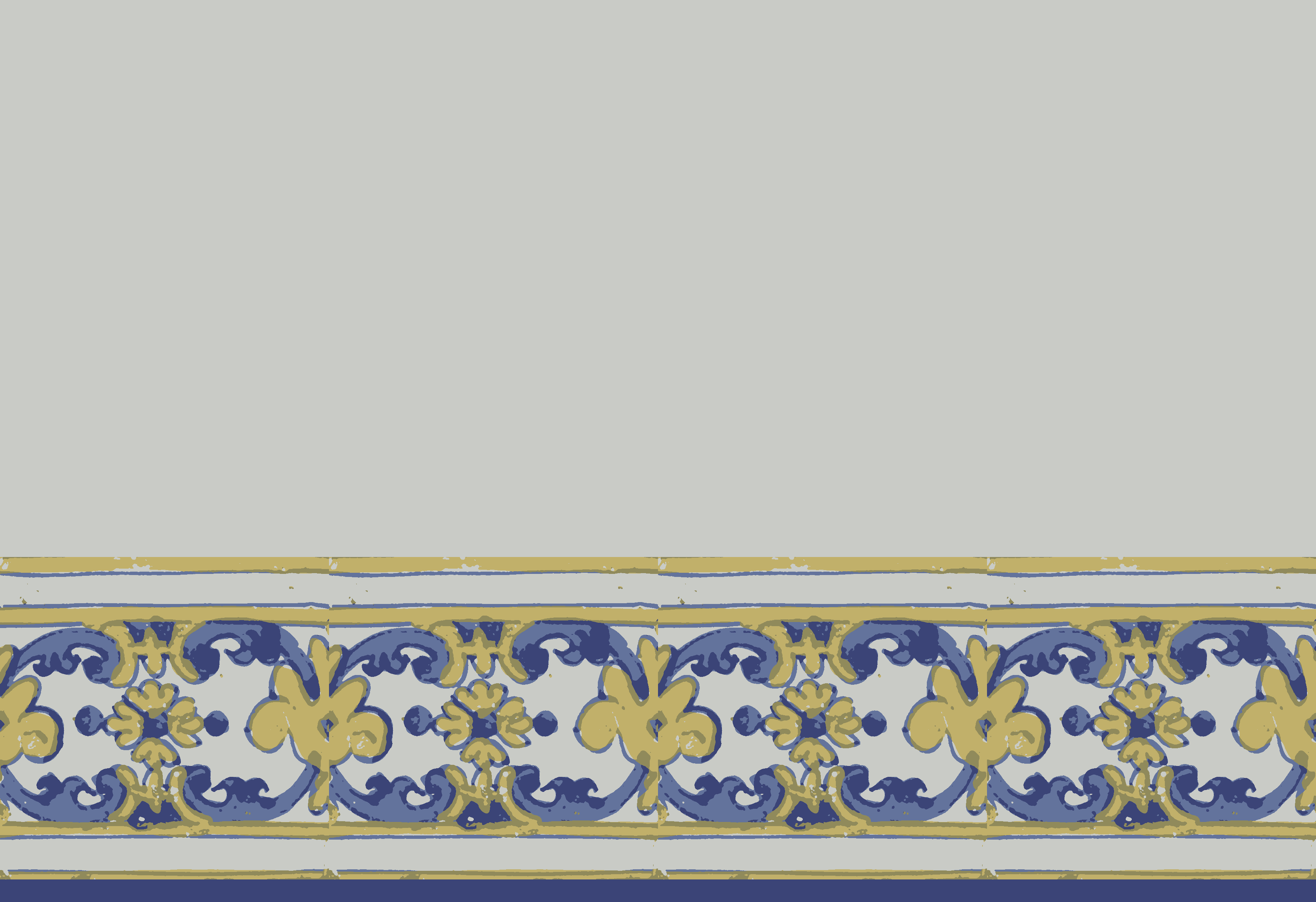
4The border tileCarpets like this were framed with border tiles: C-scrolls facing each other between two bands, meeting in a fleur at every join.
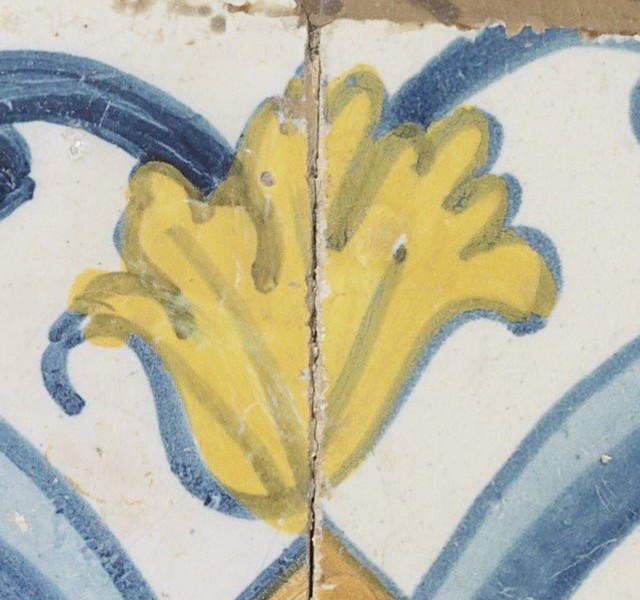
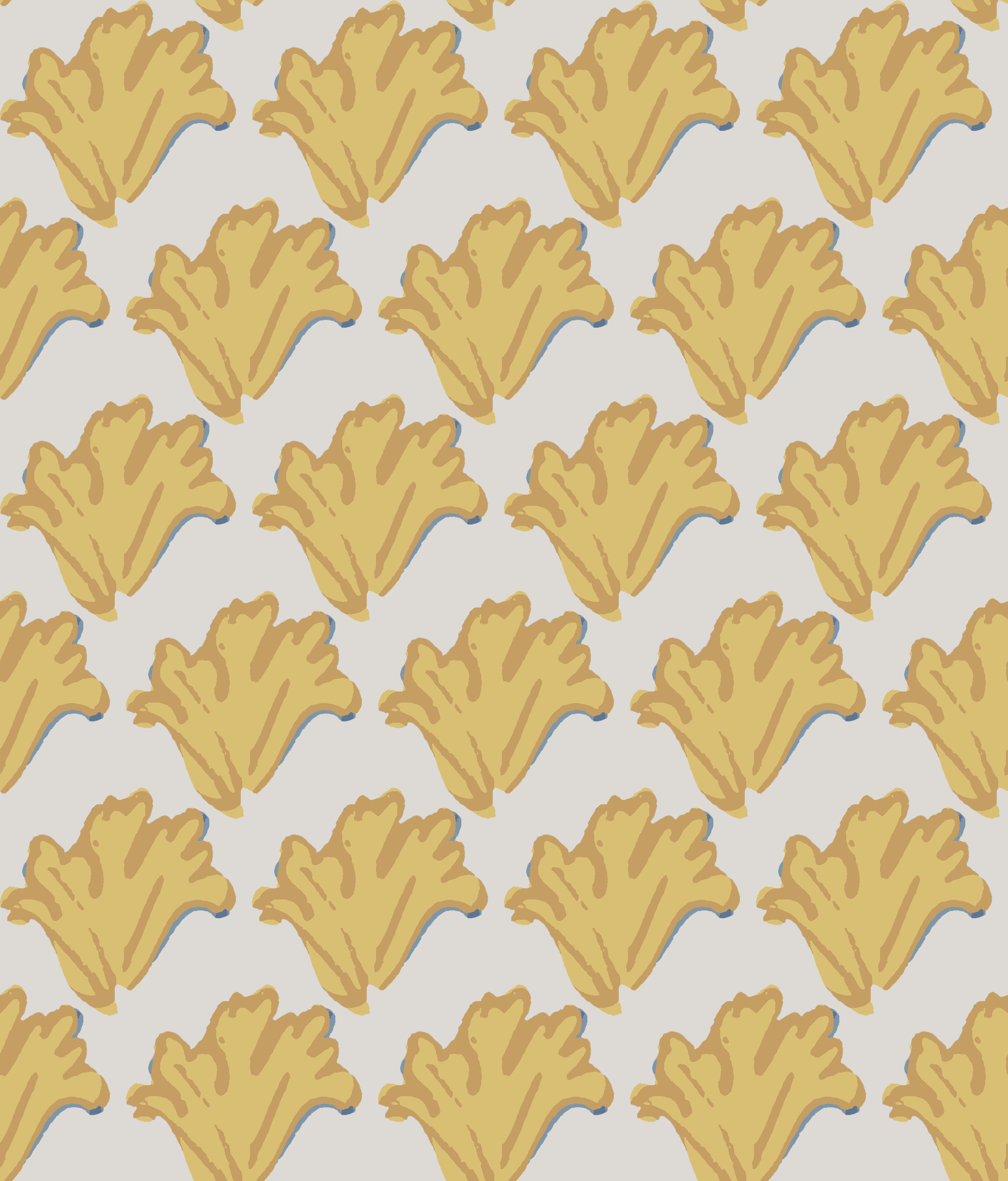
5The junction acanthusAnd where two repeats meet, an acanthus spray. Half is painted on one tile, half on the next. It only exists once the tiles are set.
Tile prints for spring and summer 2027 resort: dresses, scarves and shirts, with a shirting check, a hem border and a furnishing all-over from the same wall.
Source: Veld van twaalf veelkleurige tegels (Field of twelve polychrome tiles), Portugal, c. 1600 to c. 1625, Earthenware, tin glaze, painted (blue, yellow and brown). Rijksmuseum, Amsterdam, Field of twelve polychrome tiles, Portugal, c. 1600 to 1625. Rijksmuseum, Amsterdam, BK-1955-148, gift of the heirs of A. Isaac, Amsterdam. Public domain (CC0)., object BK-1955-148. CC0. View the object.
Facts from: rijksmuseum.nl, en.wikipedia.org.