Inside the Story · No. 05 · Friday 2 October 2026 · Folklore · South Asia

The Tortoise Ferries the Monkey

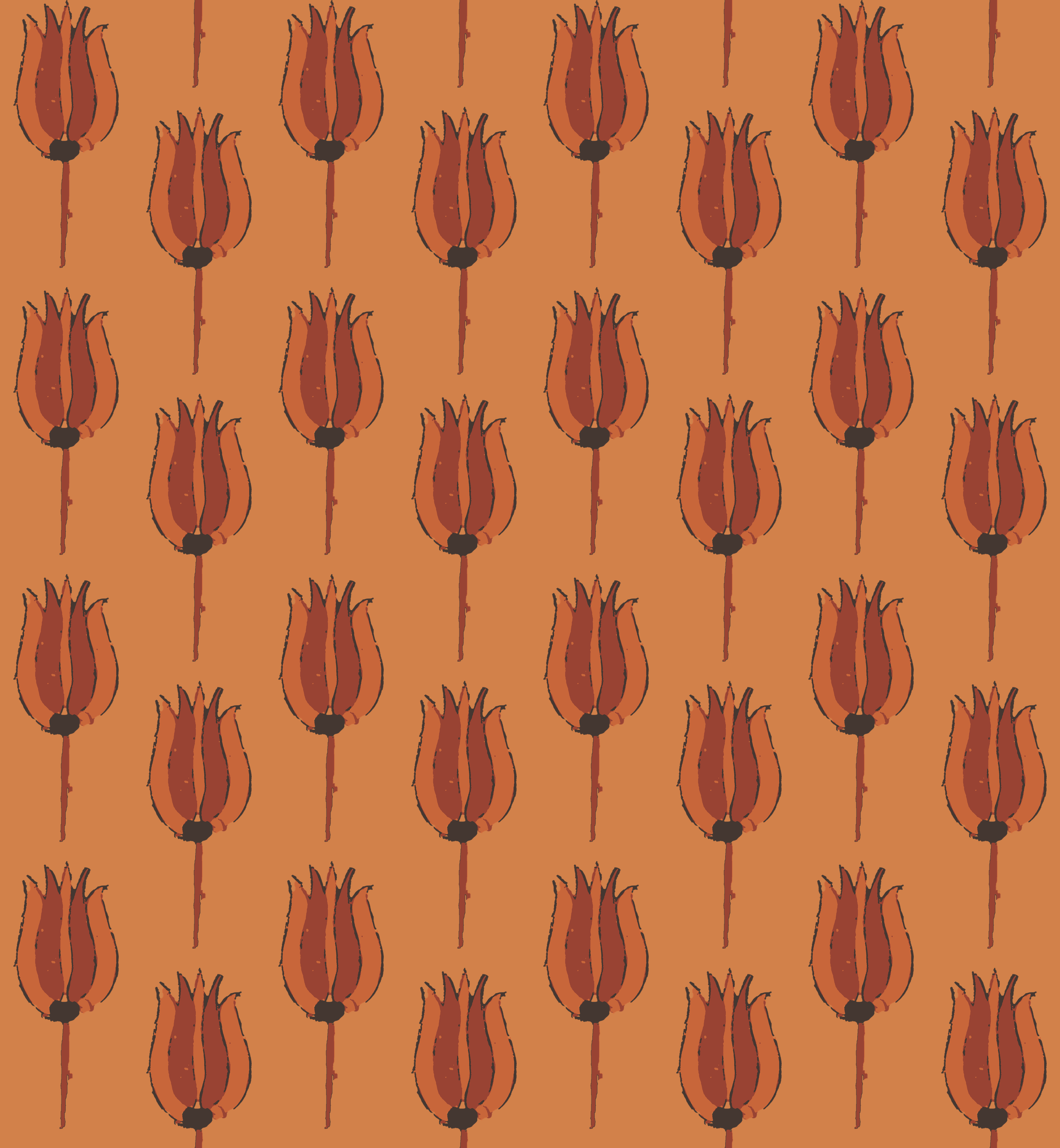
A flower taller than the trees.

The inside story of a design inspired by a 16th-century fable painting attributed to Gujarat.

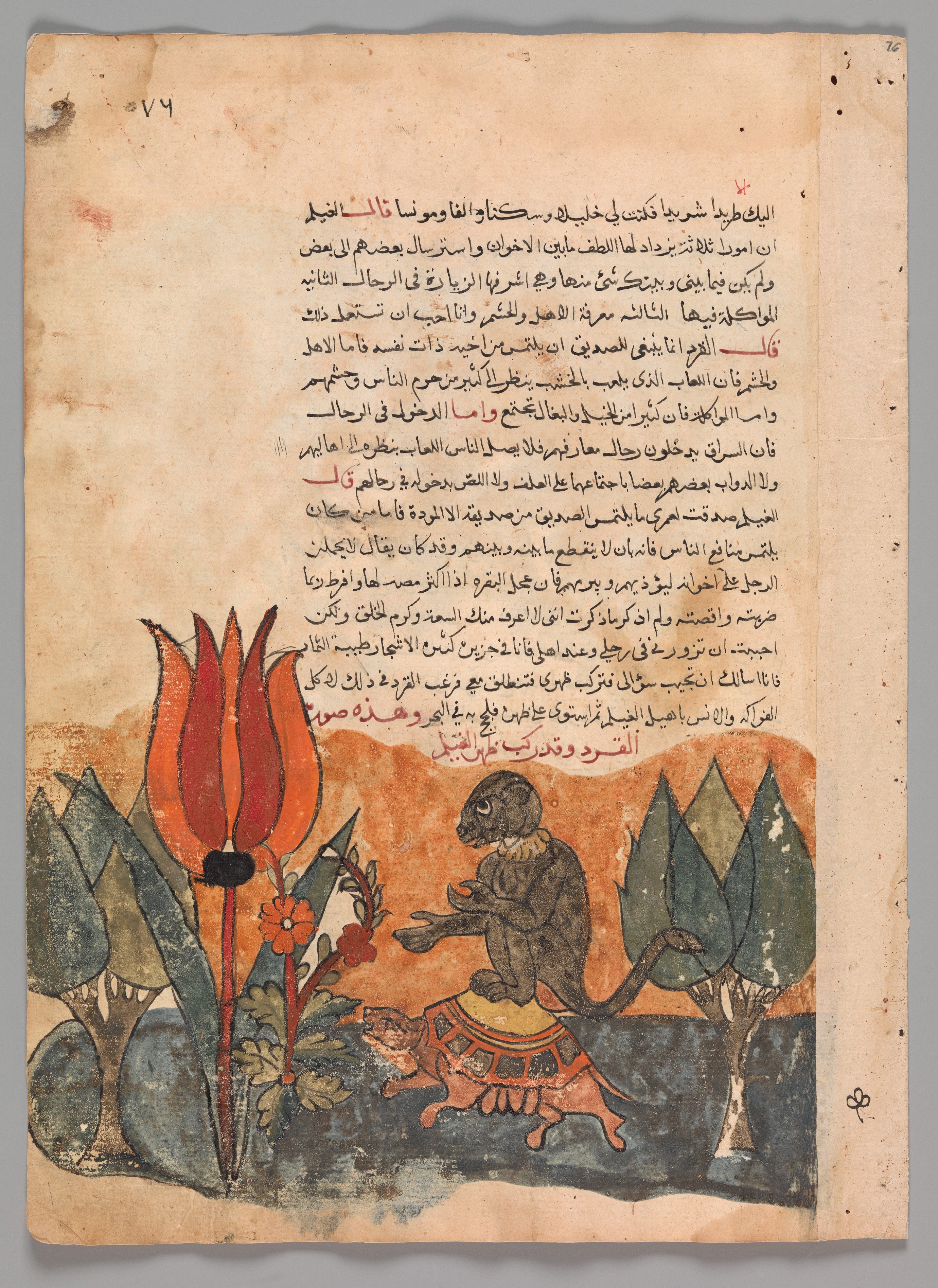
"The Tortoise Ferries the Monkey", Folio from a Kalila wa Dimna, The Metropolitan Museum of Art, New York
The source
"The Tortoise Ferries the Monkey", Folio from a Kalila wa DimnaInk and opaque watercolor on paper · Attributed to India, Gujarat (probably based on an Egyptian original), second quarter 16th century (1525 to 1550) · Overall H. 31.8 cm, W. 22.6 cm; average text size H. 21.9 cm, W. 12.4 cmThe Metropolitan Museum of Art, New York · "The Tortoise Ferries the Monkey", Folio from a Kalila wa Dimna, attributed to Gujarat, India, second quarter 16th century. The Met, The Alice and Nasli Heeramaneck Collection, Gift of Alice Heeramaneck, 1981 (1981.373.76). Public domain (CC0). · object 1981.373.76 · public_domainView at The Metropolitan Museum of Art, New York ↗

Kalila wa Dimna is the Arabic telling of the Panchatantra, the Indian book of animal fables, translated by Ibn al-Muqaffa around 750 CE. In its monkey chapter the crocodile of the Indian version is a tortoise: it ferries the monkey across the water on its back, meaning to take his heart (in the Indian telling, the crocodile's wife wants it). The monkey escapes.

What we saw

Five parts, traced from the photograph
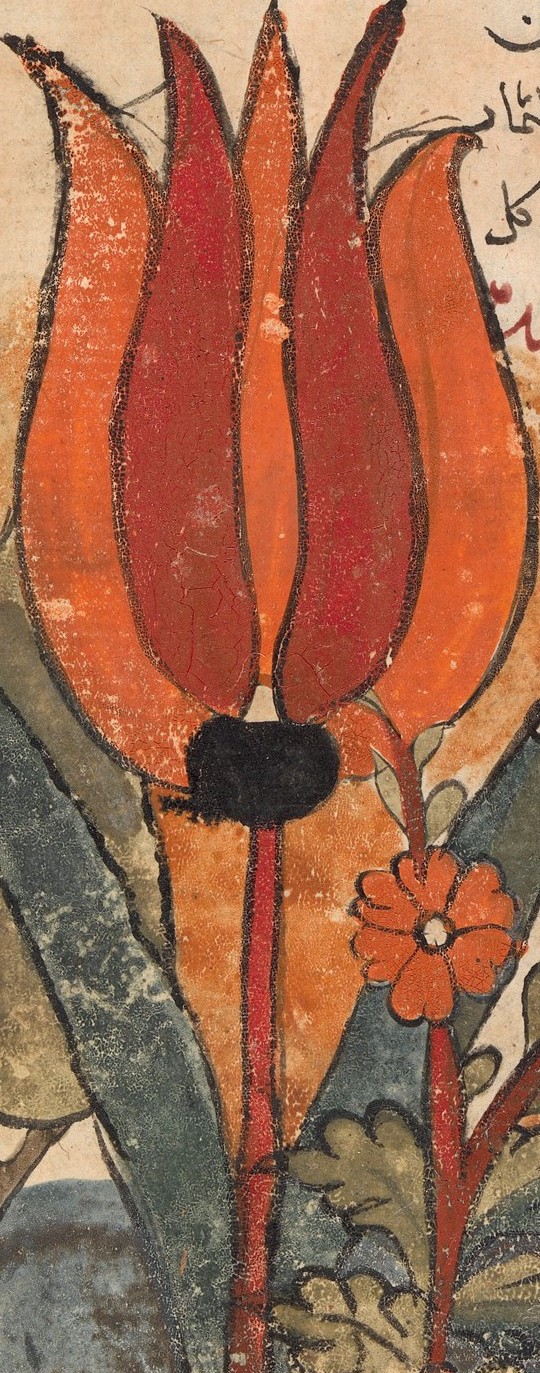
The giant flower
1The giant flowerFirst, the flower. Taller than the trees: five petals, vermilion and madder, on a black knot and a single stem.
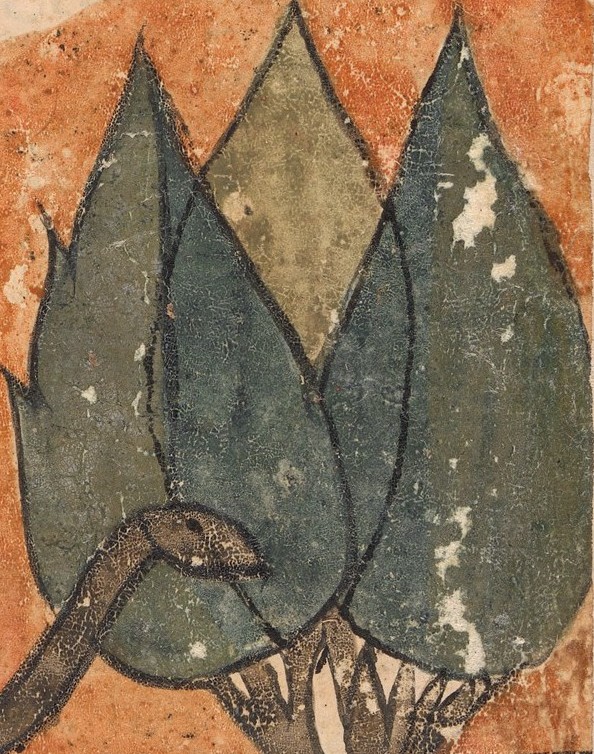
The tree clump
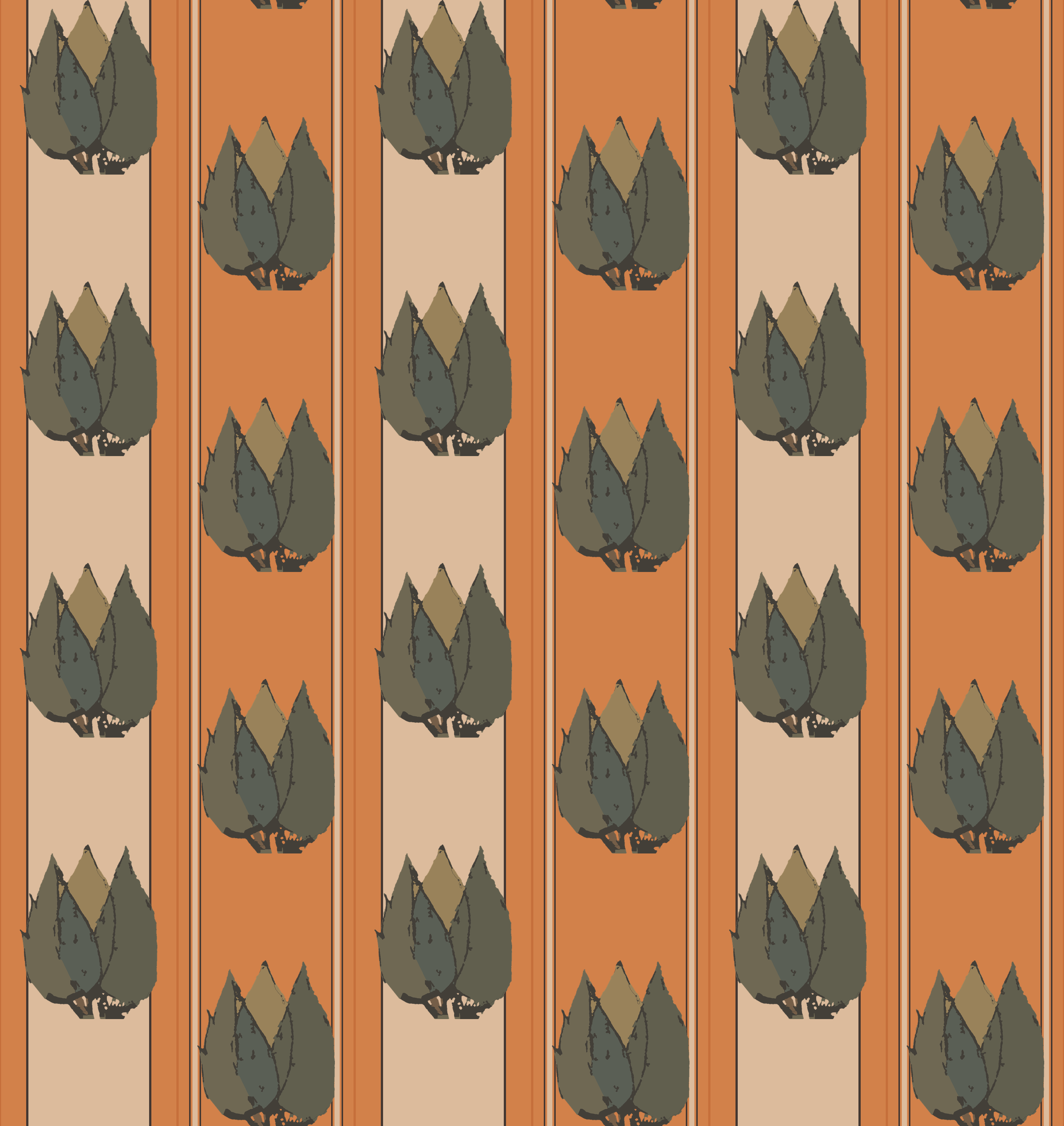
2The tree clumpOn the right, a clump of pointed crowns, cypress-like, green, olive and slate, each outlined in ink.
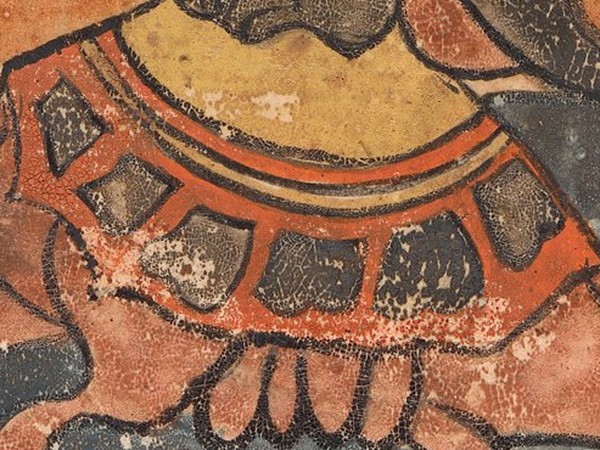
The tortoise's shell
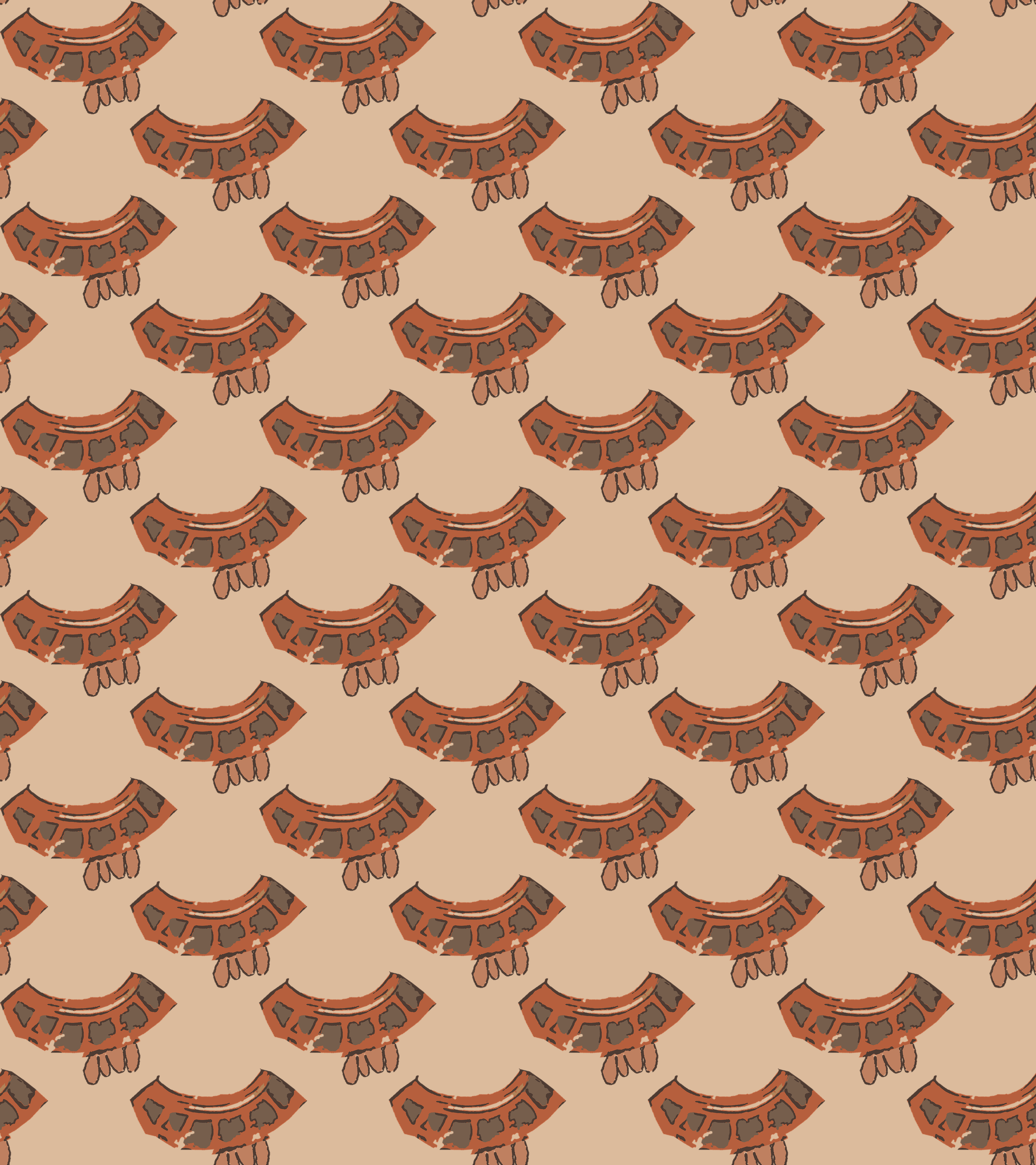
3The tortoise's shellUnder the monkey, the shell. A vermilion frame around six dark plates, and a fringe of four lobes below.
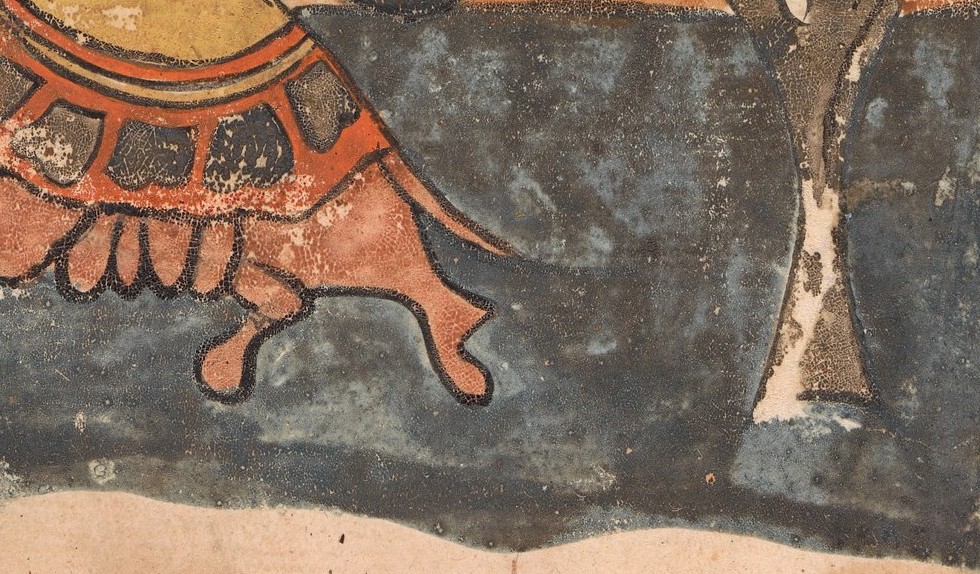
The water
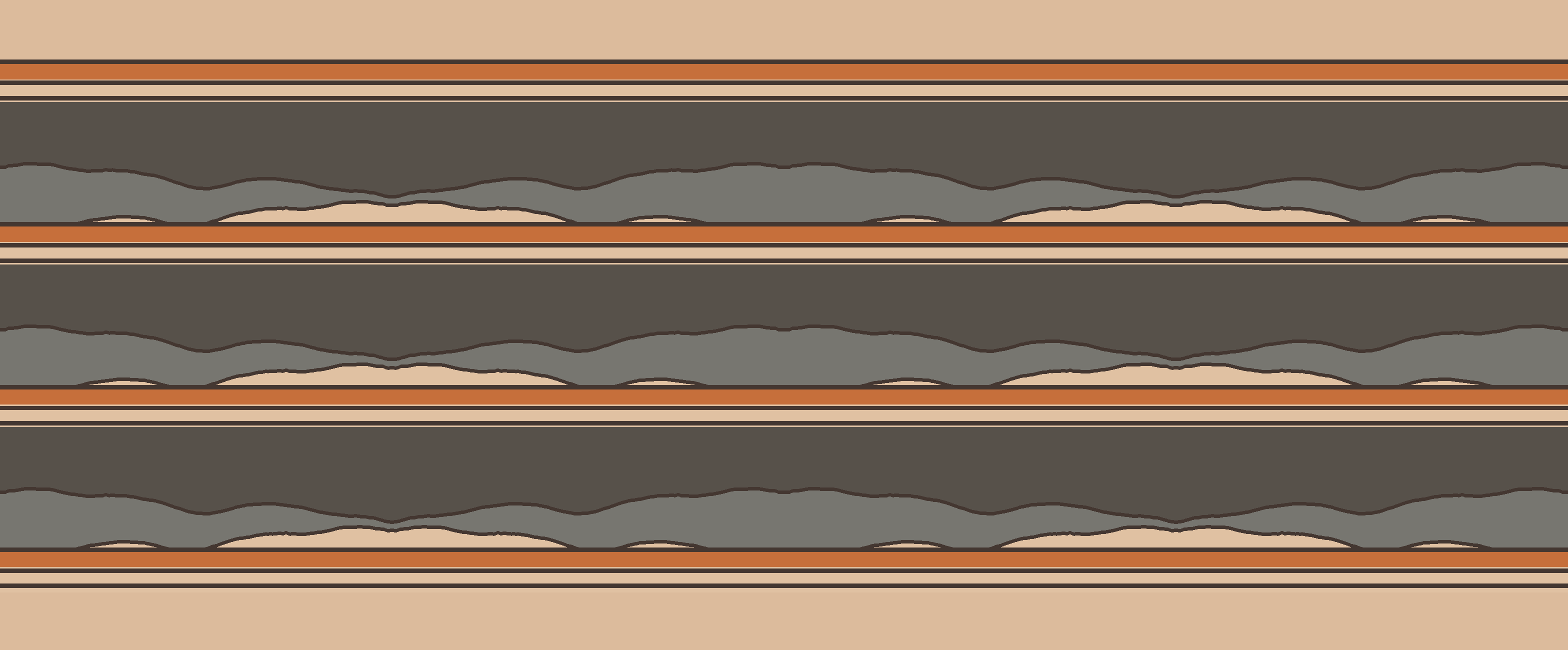
4The waterBelow, the water. A slate band, straight along the horizon, its lower edge a hand-drawn wave.
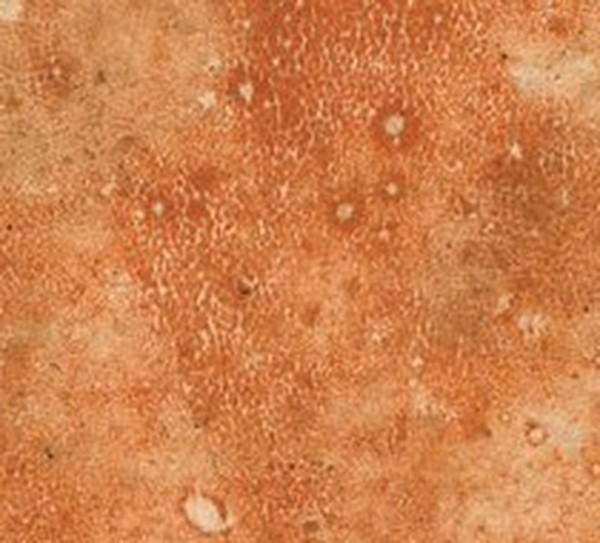
The burnt-orange ground
5The burnt-orange groundAnd behind everything, the ground. Burnt orange, the colour the whole page is lit by.

5 prints, each from a different part

Each print starts from a part of the source

The palette

Every colour here was already in the source.
#D2814ABurnt-orange ground · from the source
#C8663AVermilion · from the source
#994333Madder · from the source
#CE9C5BTortoise ochre · from the source
#5A5F55Tree green · from the source
#99825AOlive crown · from the source
#655F58River slate · from the source
#443731Ink · from the source
#DCBB9CPaper · from the source

Why now

A page attributed to Gujarat, for the Gujarat and Surat trade, ahead of Diwali on 8 November 2026.

Previous storySix Flowers in One Speck of DustNext storyA Carpet Made of Tiles

Source: "The Tortoise Ferries the Monkey", Folio from a Kalila wa Dimna, Attributed to India, Gujarat (probably based on an Egyptian original), second quarter 16th century (1525 to 1550), Ink and opaque watercolor on paper. The Metropolitan Museum of Art, New York, "The Tortoise Ferries the Monkey", Folio from a Kalila wa Dimna, attributed to Gujarat, India, second quarter 16th century. The Met, The Alice and Nasli Heeramaneck Collection, Gift of Alice Heeramaneck, 1981 (1981.373.76). Public domain (CC0)., object 1981.373.76. public_domain. View the object.

Facts from: metmuseum.org, en.wikipedia.org.