
Inside the Story · No. 20 · Monday 2 November 2026 · Craft · South Asia and Western

Pen and Mordant: the Burhanpur Niche

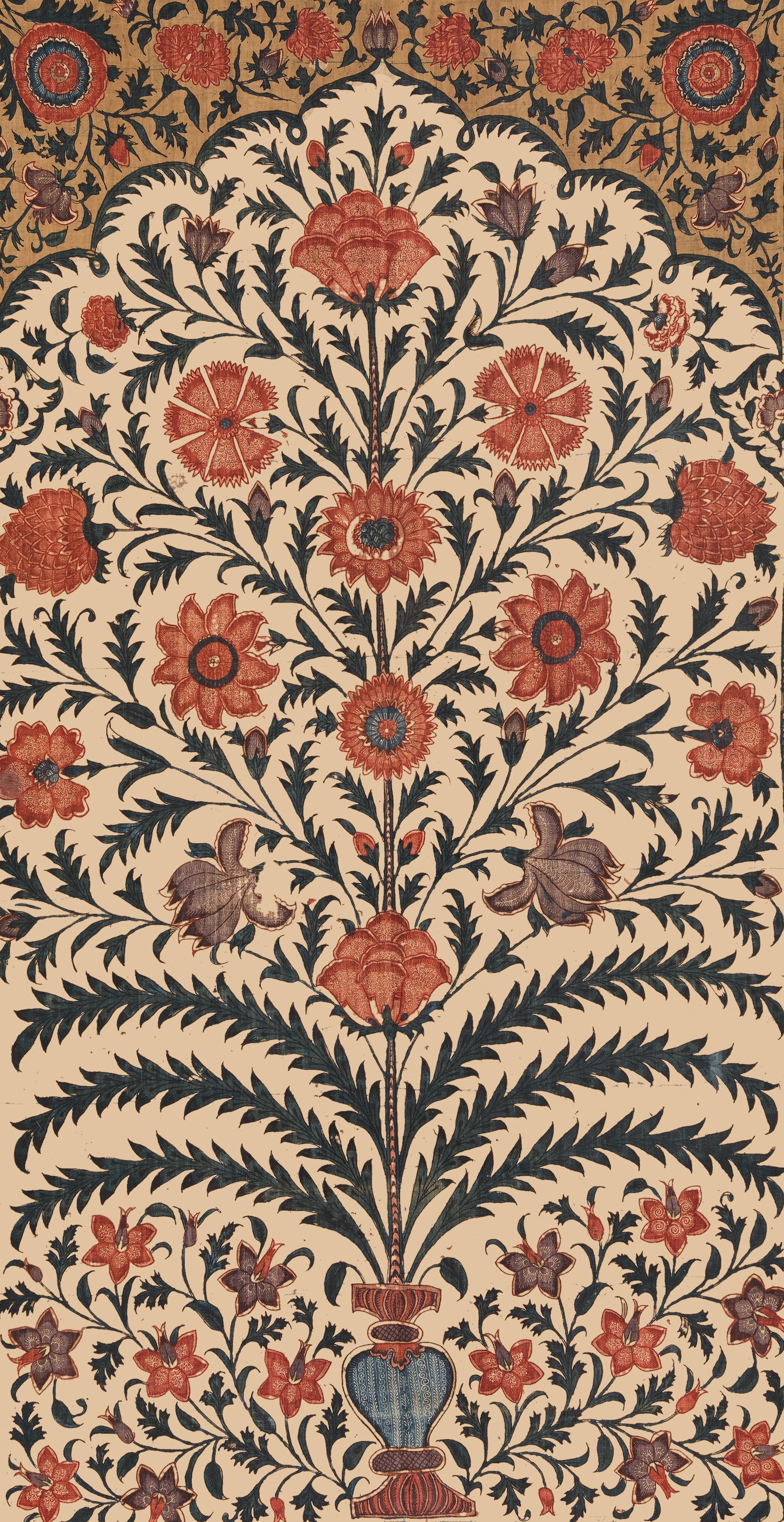
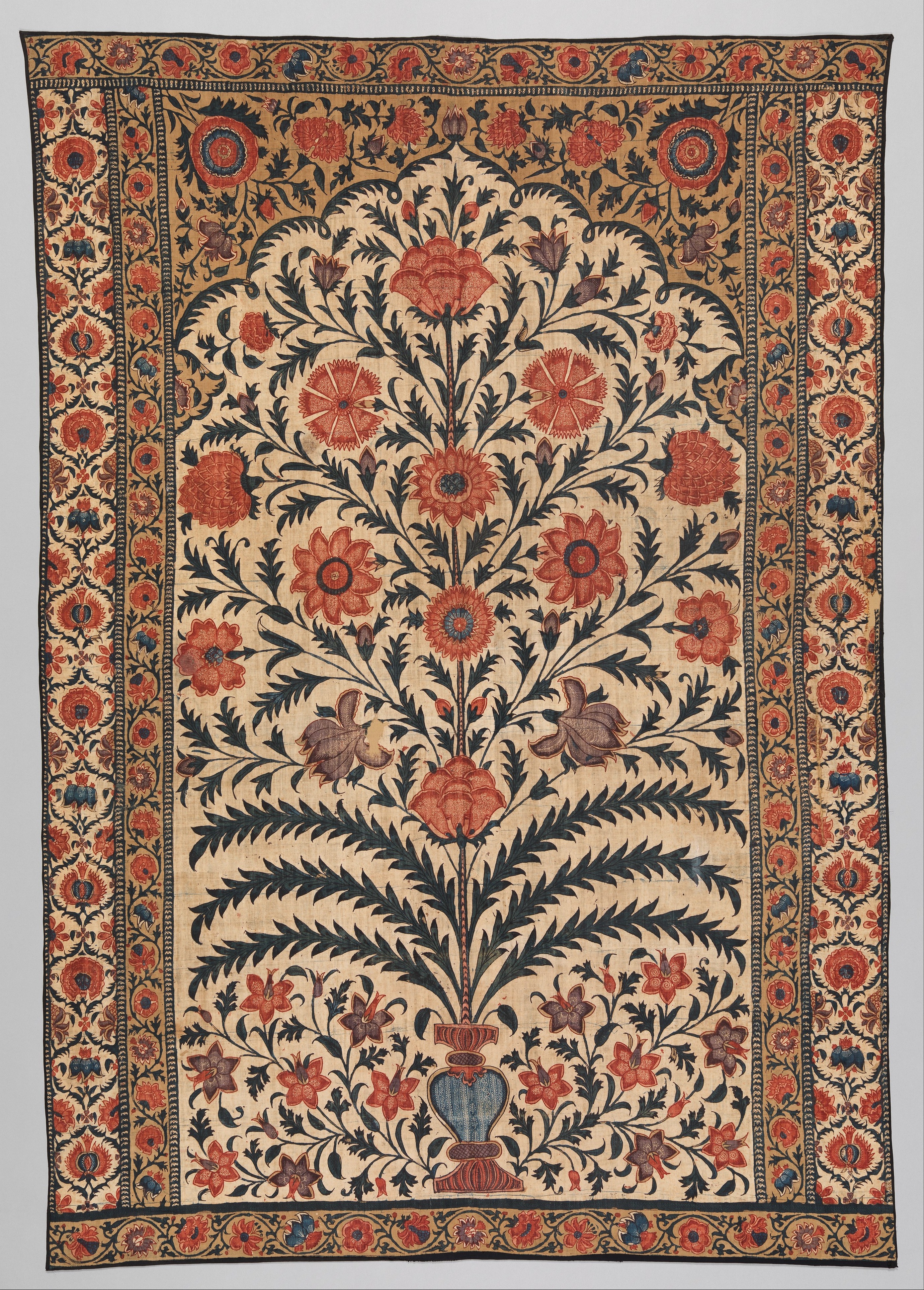
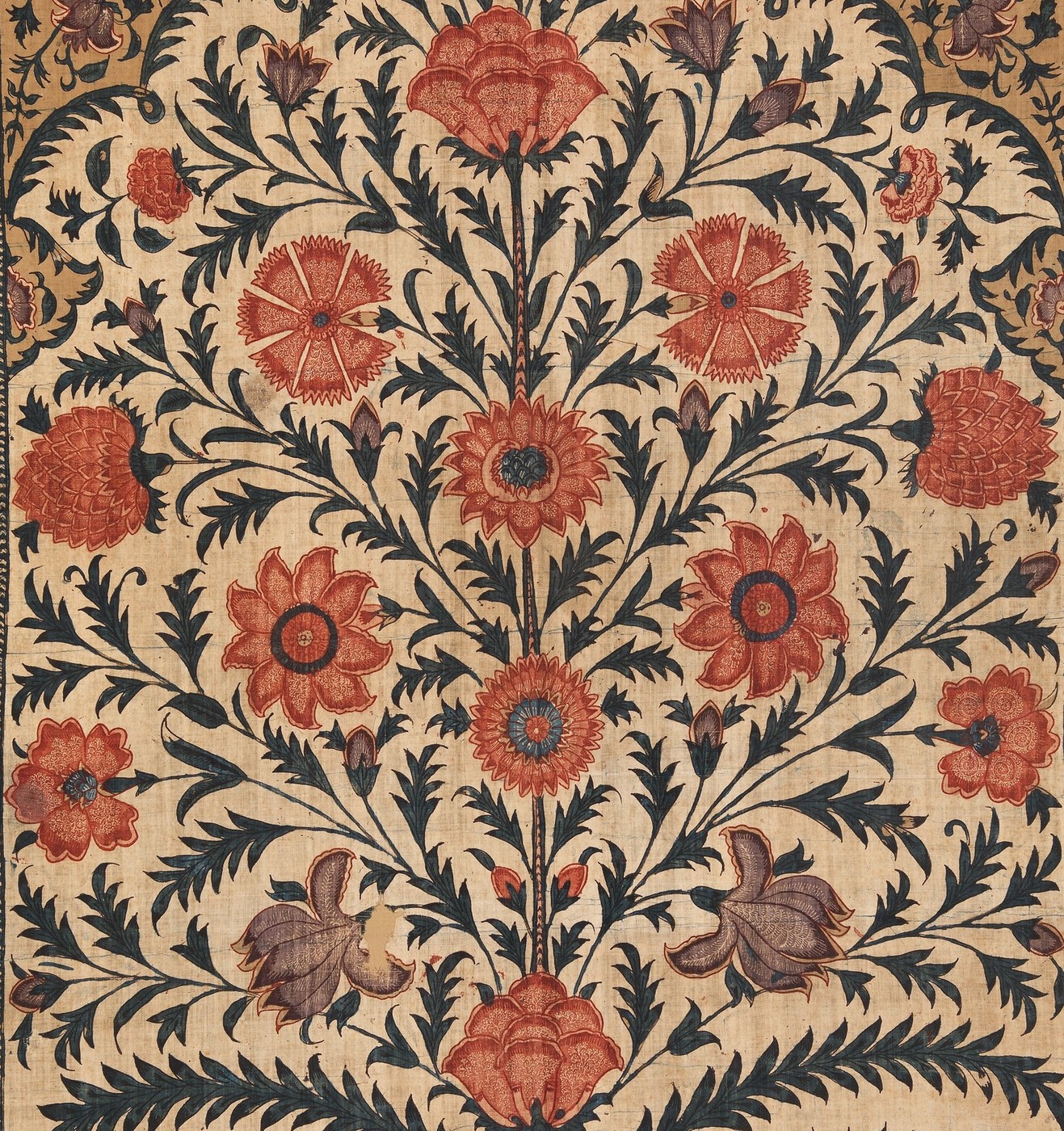
This flowering tree in a scalloped niche was painted on cotton, mordant by mordant, at Burhanpur in the Deccan between 1725 and 1750, for the lining of a tent.

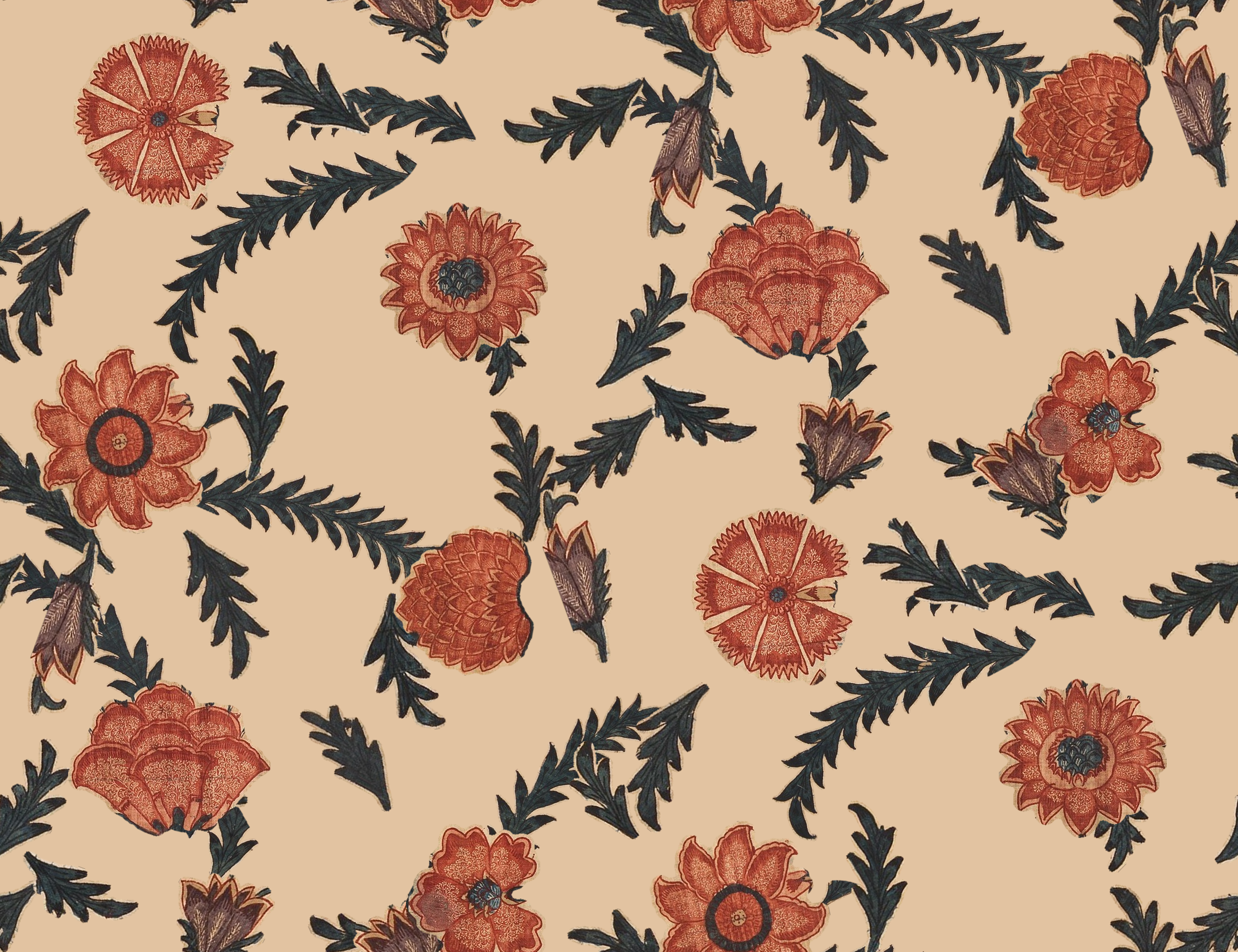
The inside story of a design inspired by a painted cotton tent lining from Burhanpur, 1725 to 1750.

Panel from a Tent Lining, The Metropolitan Museum of Art, New York
The source
Panel from a Tent LiningCotton; plain weave, mordant-painted and dyed, resist-dyed · India, Burhanpur, 1725 to 1750 (API objectDate 1725 to 50; objectBeginDate 1700, objectEndDate 1775) · H. 51 9/16 in. (131 cm), W. 36 5/8 in. (93 cm)The Metropolitan Museum of Art, New York · Panel from a Tent Lining, 1725 to 50. India, Burhanpur. Cotton; plain weave, mordant-painted and dyed, resist-dyed; 131 x 93 cm. The Metropolitan Museum of Art, Purchase, Friends of Islamic Art Gifts, 2011, 2011.528. Public domain (CC0). · object The Metropolitan Museum of Art, accession 2011.528 (web object 457755, never printed on screen) · CC0View at The Metropolitan Museum of Art, New York ↗

The Met attributes the panel to Burhanpur, in the northern Deccan, which it believes was an important centre of production in the eighteenth century. Panels like this, with a tall flowering plant in a niche under a border of scrolling vines, are known in sets; the Met's description names one that belonged to Tipu Sultan of Mysore. The V and A, on a related panel, says continuous cloth panels like these were used as screens around an encampment, decorated on the inner face and plain red outside.

What we saw

Five parts, traced from the photograph
The big blooms
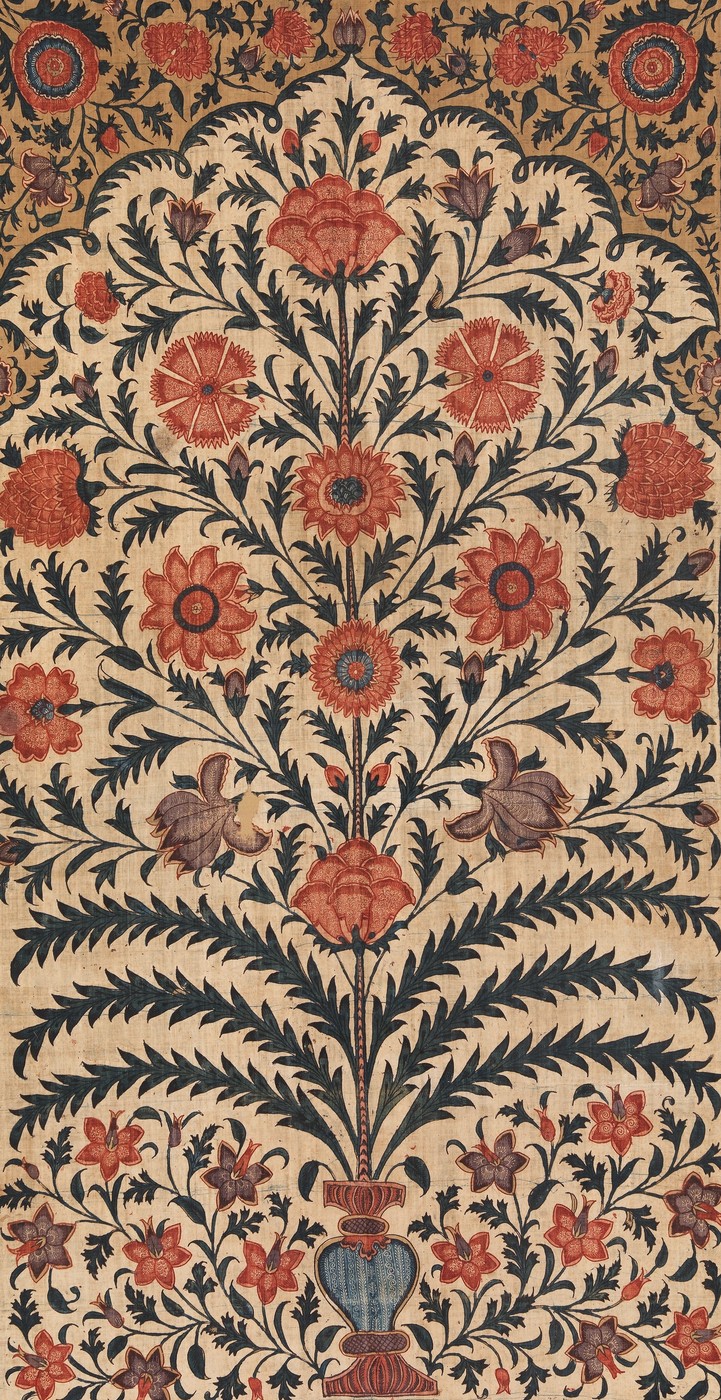
1The big bloomsFirst, the big blooms. Twelve on the tree: two peonies, two fringed carnations, two scaled heads, two daisies with dark-blue hearts, two with a dark ring, and two small ruffled ones.
The serrated fronds
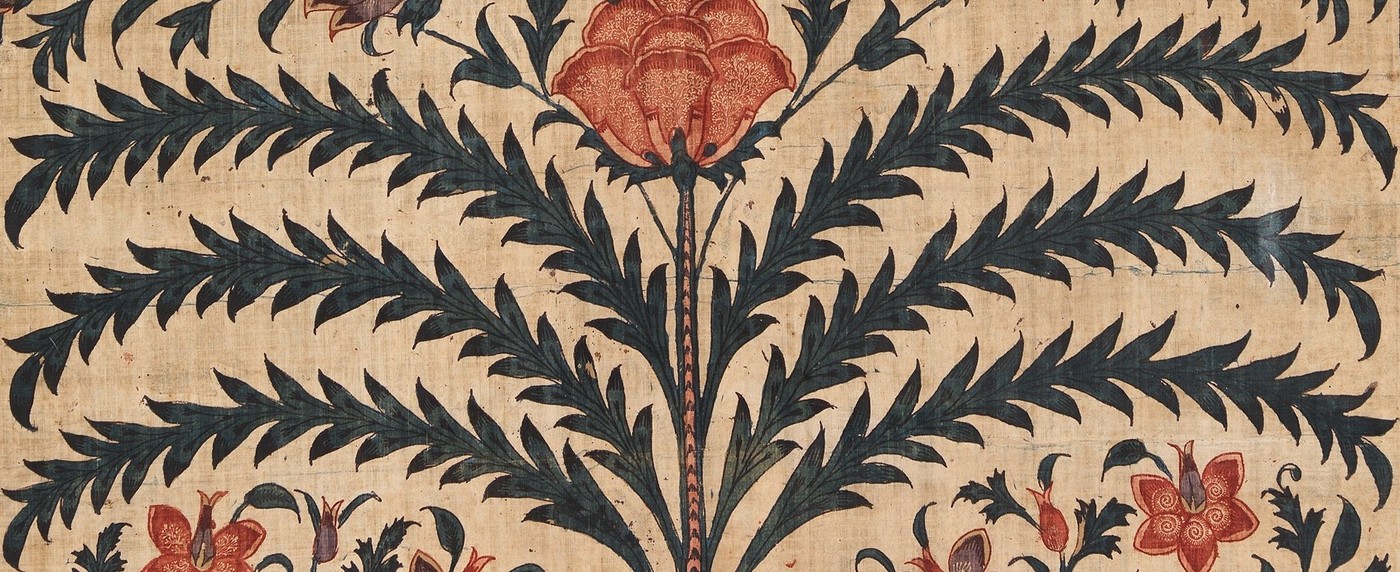
2The serrated frondsThen the serrated fronds. Six big ones at the base, three a side, and the same serrated leaf all over the tree.
The side vine
3The side vineDown each side, a vine. Eight red heads with an indigo heart and four blue buds a side, with small serrated leaves between.
The top band and the spandrels
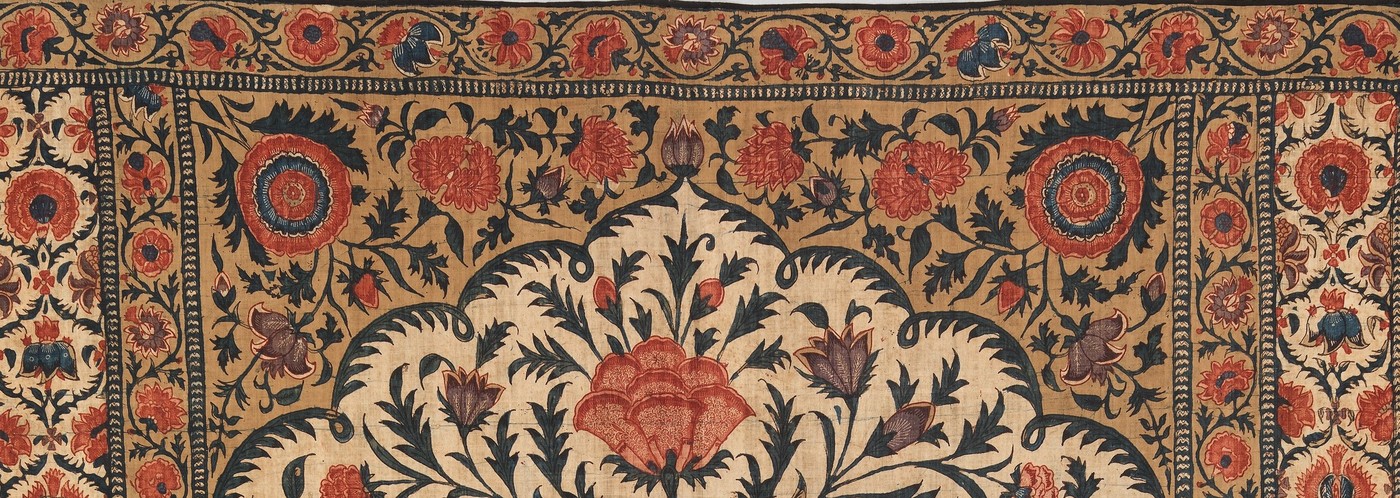
4The top band and the spandrelsAlong the top, a narrow band of small flowers and buds. Above the arch, an ochre ground with sprigs and two big rosettes.
The niche
5The nicheAnd the niche itself. A scalloped arch, and at its foot a blue-and-red vase the whole tree grows from.

5 prints, each from a different part

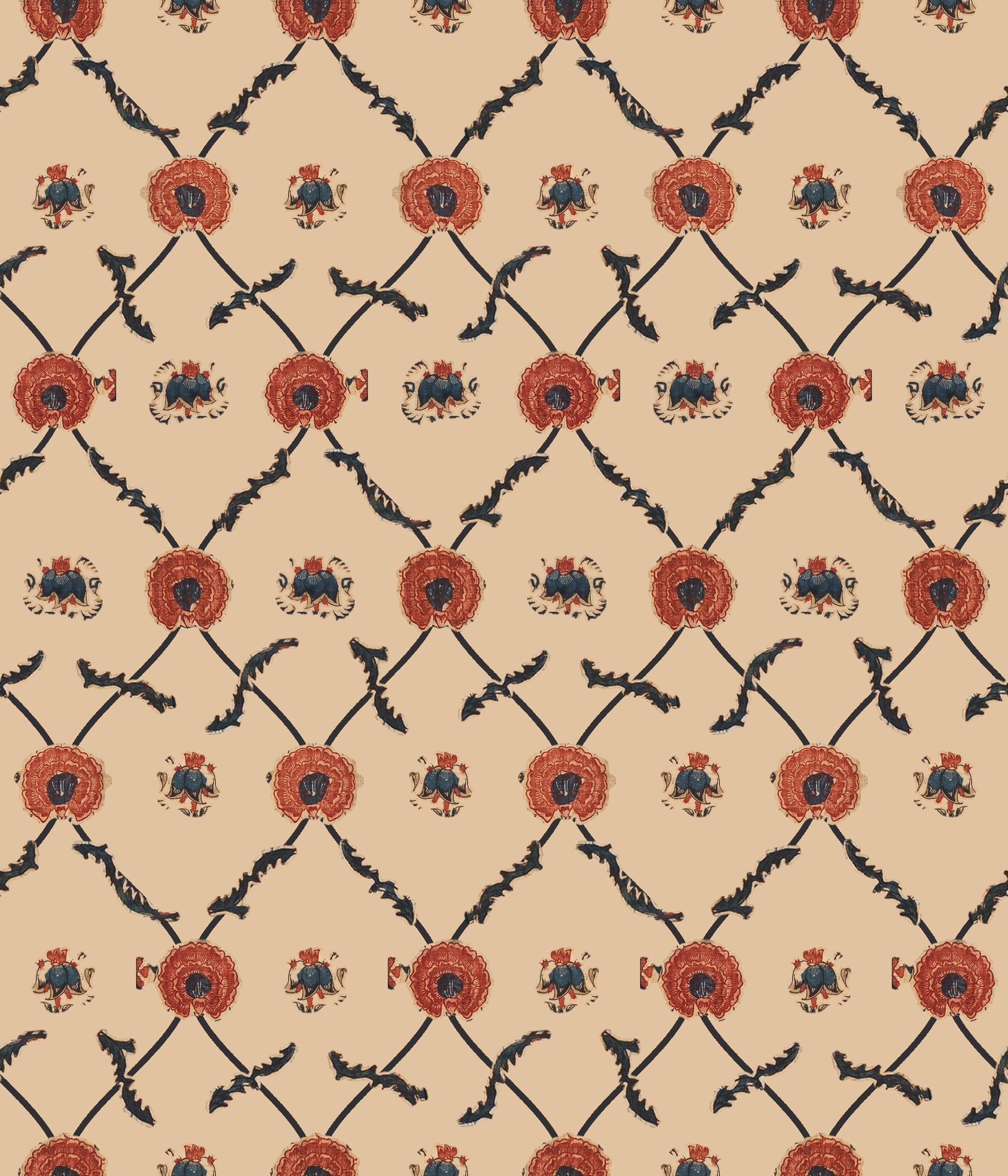
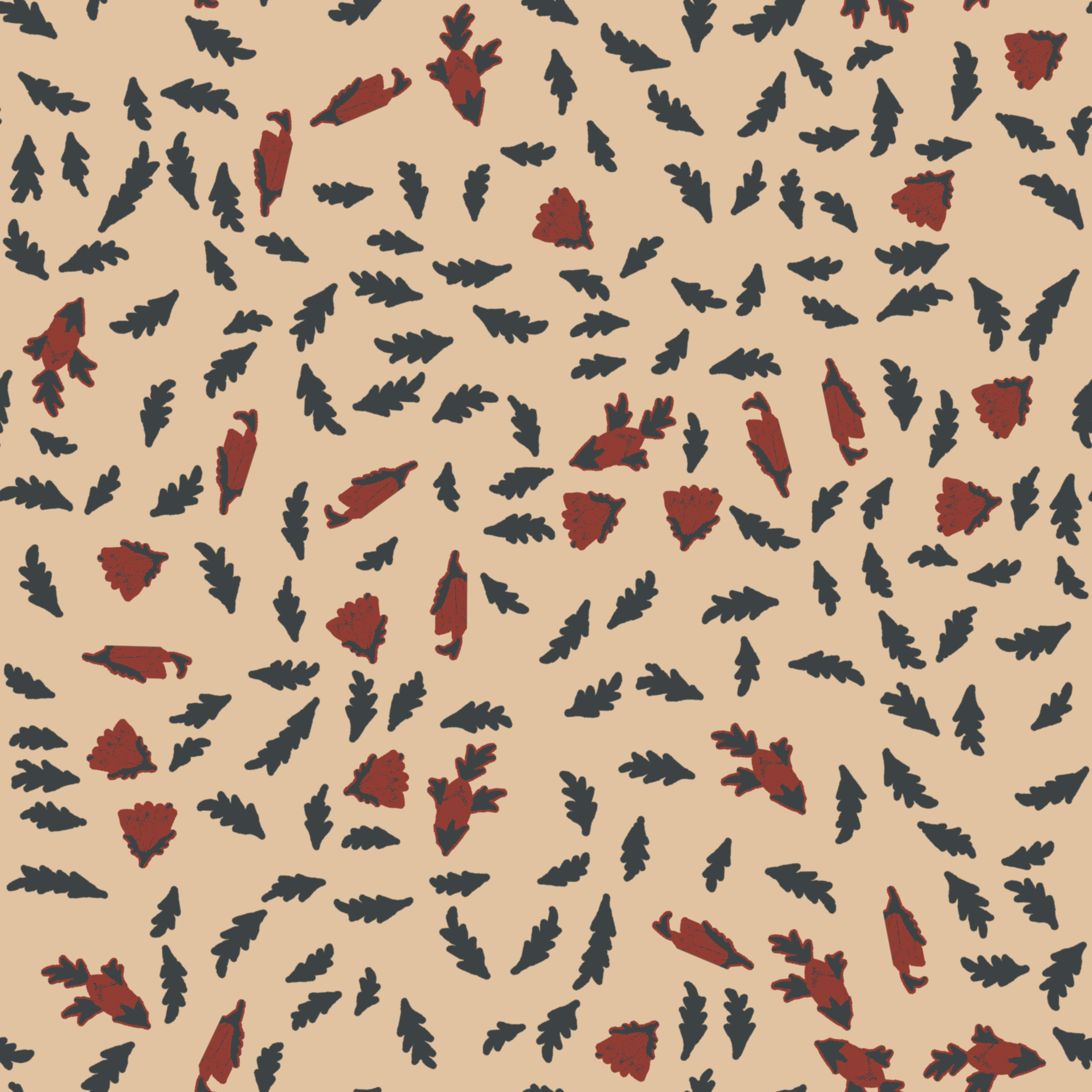
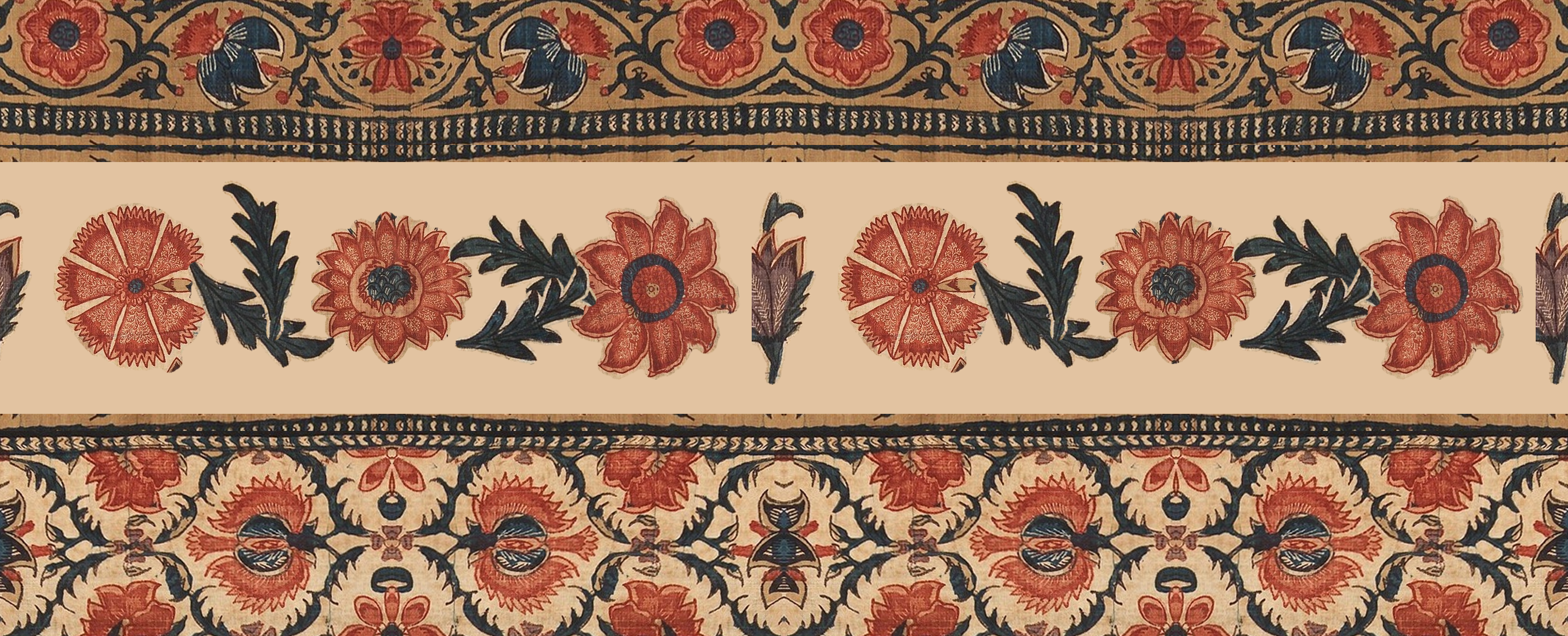
Each print starts from a part of the source

The palette

Every colour here was already in the source.
#E2C3A1Unbleached cotton cream · from the source
#913D34Madder red · from the source
#CE6C54Light madder · from the source
#83625CAubergine purple · from the source
#BF8F61Ochre · from the source
#445461Indigo blue · from the source
#3D4344Frond indigo (near black, with a teal cast) · from the source
#323030Pen line · from the source

Why now

Madder, indigo and cream painted florals for the wedding-season ranges: dress material, a men's kurta trellis, a two-colour shirting, a saree border and a pallu panel from one cloth.

Previous storyDrawn in India for JapanAll storiesBack to Inspiration

Source: Panel from a Tent Lining, India, Burhanpur, 1725 to 1750 (API objectDate 1725 to 50; objectBeginDate 1700, objectEndDate 1775), Cotton; plain weave, mordant-painted and dyed, resist-dyed. The Metropolitan Museum of Art, New York, Panel from a Tent Lining, 1725 to 50. India, Burhanpur. Cotton; plain weave, mordant-painted and dyed, resist-dyed; 131 x 93 cm. The Metropolitan Museum of Art, Purchase, Friends of Islamic Art Gifts, 2011, 2011.528. Public domain (CC0)., object The Metropolitan Museum of Art, accession 2011.528 (web object 457755, never printed on screen). CC0. View the object.

Facts from: metmuseum.org, metmuseum.org.