
Inside the Story · No. 08 · Monday 5 October 2026 · Craft · South Asia

The Forest That Sailed to Sulawesi

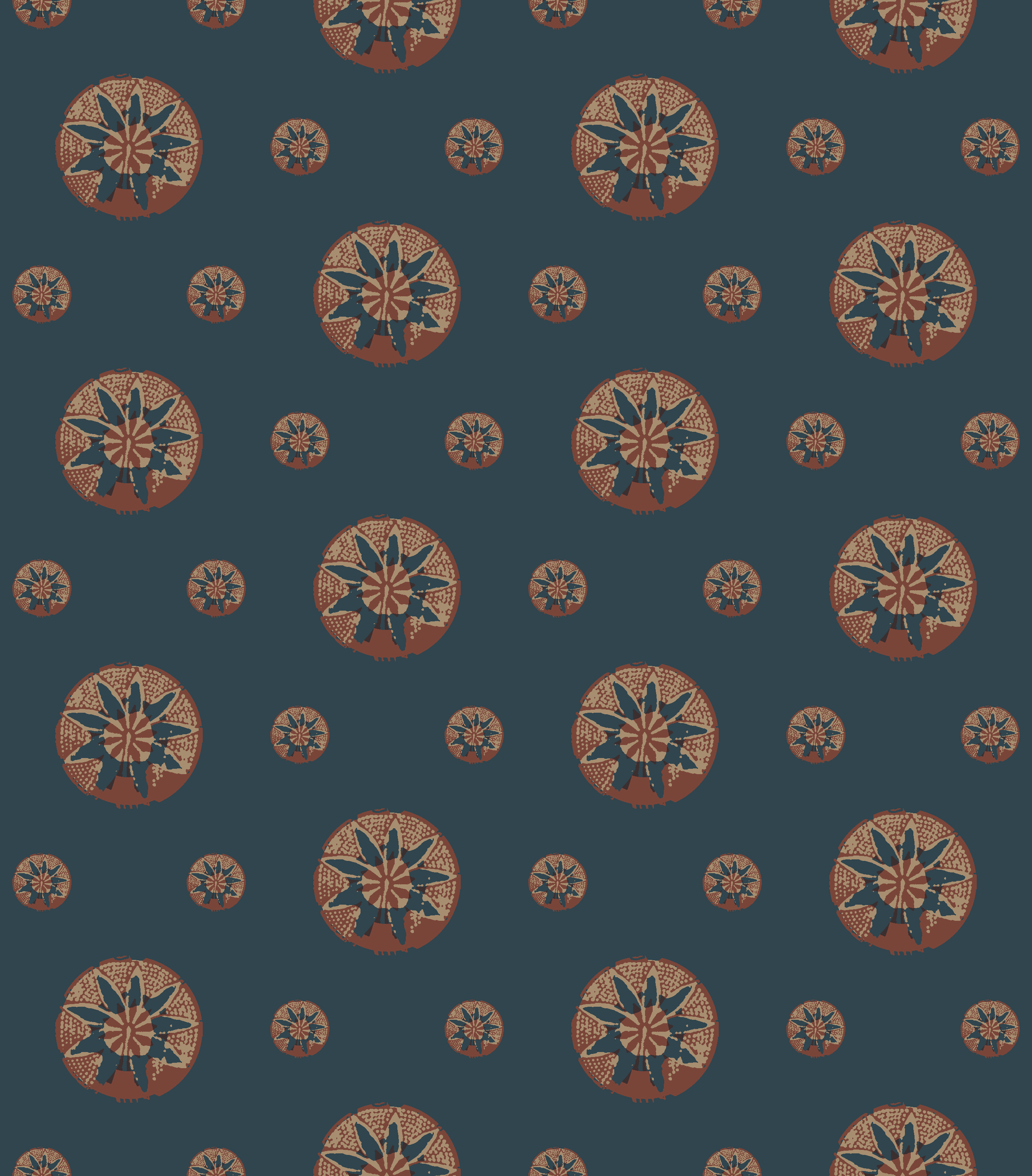
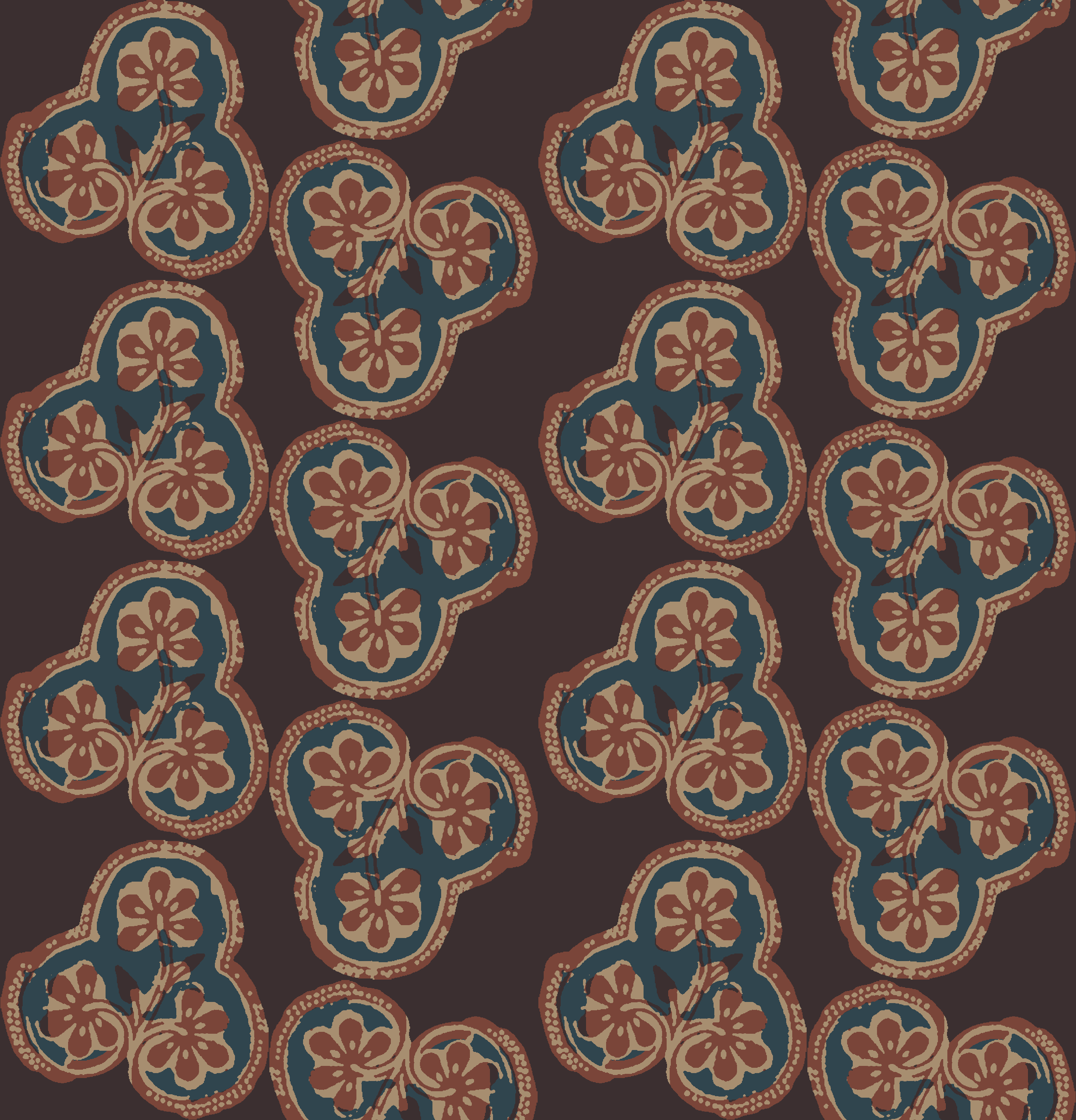
This madder-and-indigo star butti comes from a five-metre Gujarati cotton, printed and dyed around 1400 for buyers in Indonesia.

The inside story of a design inspired by a Gujarati cotton printed for Indonesia around 1400.

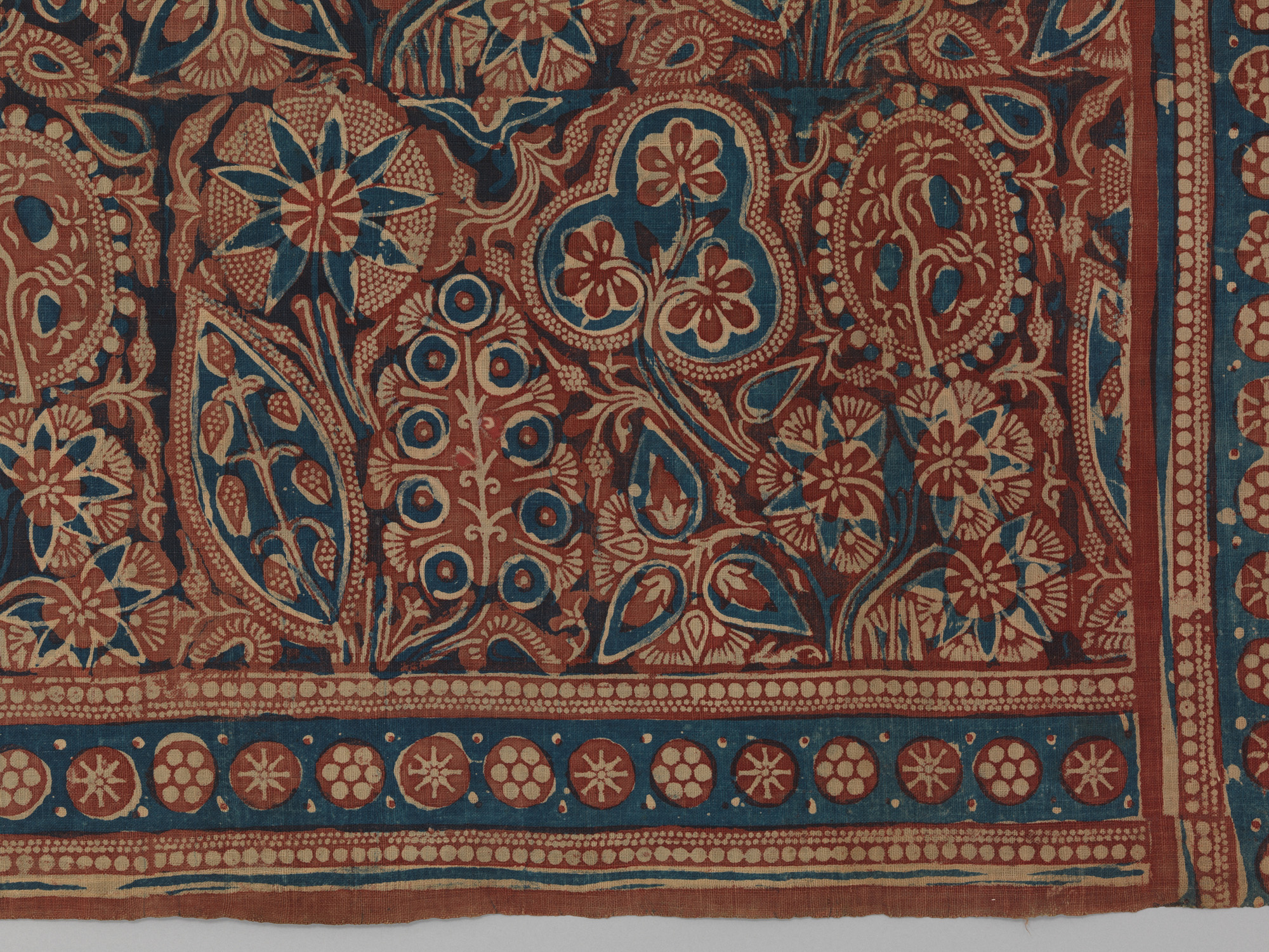
Textile with a Forested Landscape, The Metropolitan Museum of Art, New York
The source
Textile with a Forested LandscapeCotton, painted resist and block-printed mordant, dyed · India (Gujarat), for the Indonesian market, late 14th to early 15th century · H (weft) 98.7 cm (38 7/8 in.) x W (warp) 494.5 cm (194 11/16 in.)The Metropolitan Museum of Art, New York · Textile with a Forested Landscape, India (Gujarat), for the Indonesian market, late 14th to early 15th century. Cotton, painted resist and block-printed mordant, dyed. The Metropolitan Museum of Art, Purchase, Friends of Asian Art Gifts, 2005, 2005.407. Public domain (CC0). · object Met object 72747, accession 2005.407 · CC0View at The Metropolitan Museum of Art, New York ↗

Cloths like this were printed and dyed in Gujarat for the islands of Indonesia. The Met dates this one to the late 14th or early 15th century, which shows the trade was well established long before the Portuguese arrived. The Toraja of highland Sulawesi, who kept such cloths, call them maa'.

What we saw

Five parts, traced from the photograph
The trefoil medallion
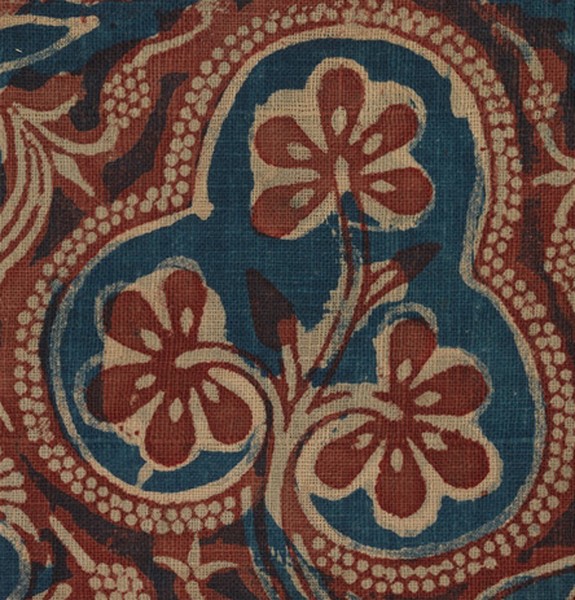
1The trefoil medallionFirst, a medallion with three lobes. Indigo inside, a band of cream dots around it, and three five-petal flowers on one stem.
The star flower
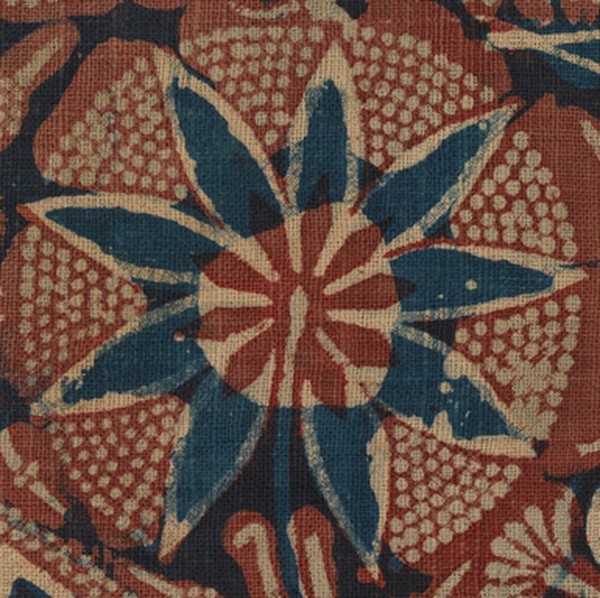
2The star flowerBeside it, a star flower. Nine indigo points around a cream disc with ten madder petals, and dotted wedges between the points.
The tree of rings
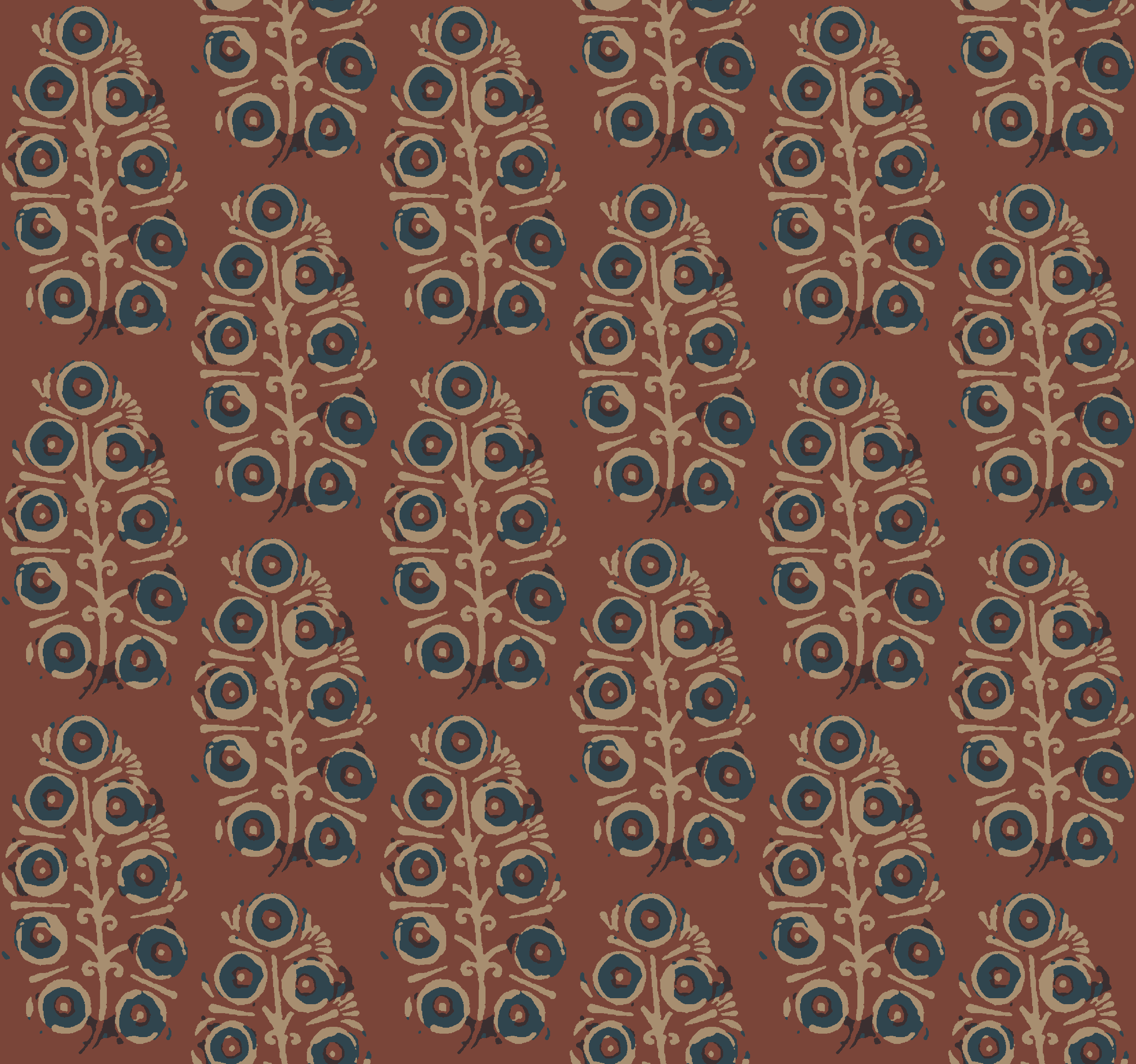
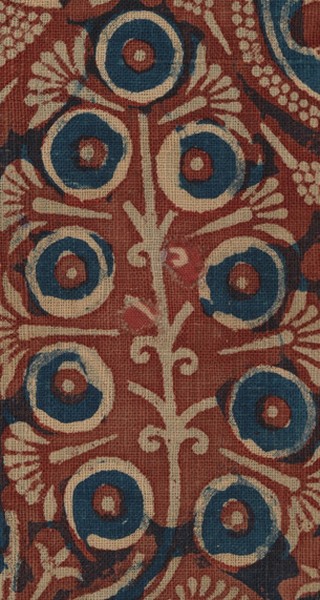
3The tree of ringsThen a tree. Nine ringed roundels on one cream stem, with fan-shaped leaves between them.
The roundel border
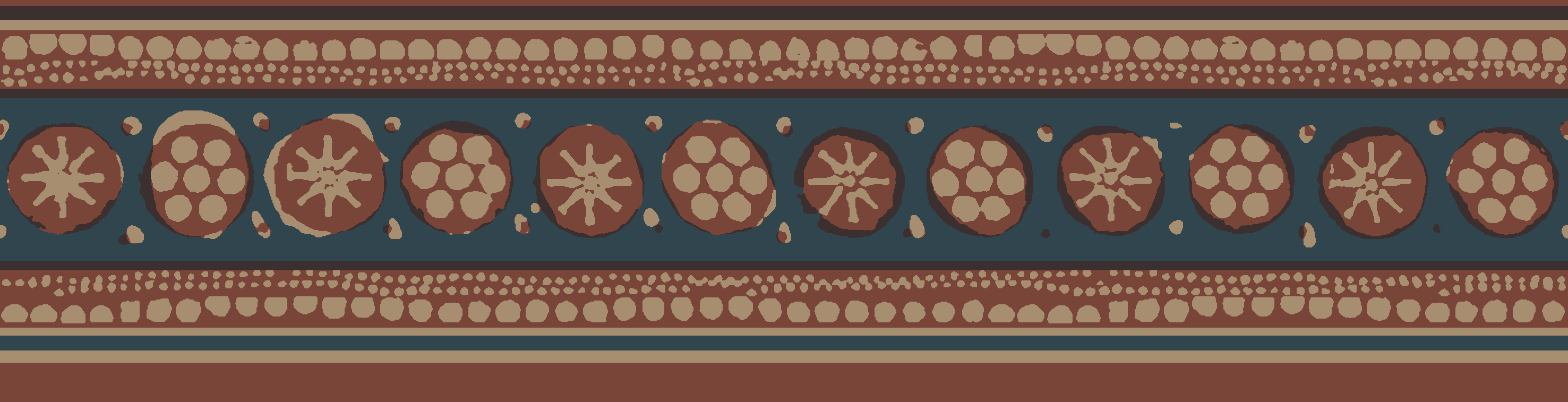
4The roundel borderAlong the long edge, an indigo band. Madder roundels take turns: seven cream dots, then an eight-spoked star.
The end panel
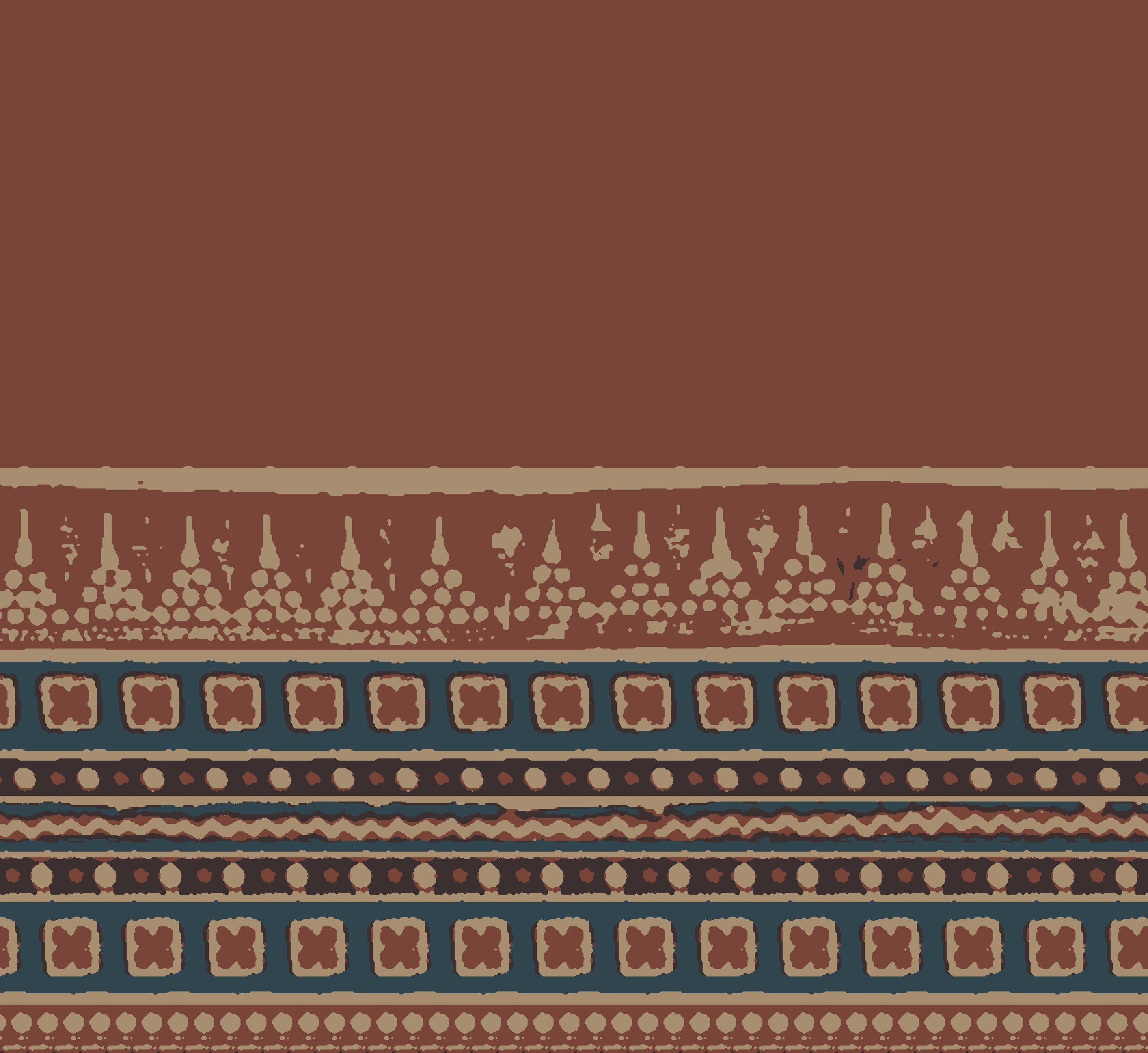
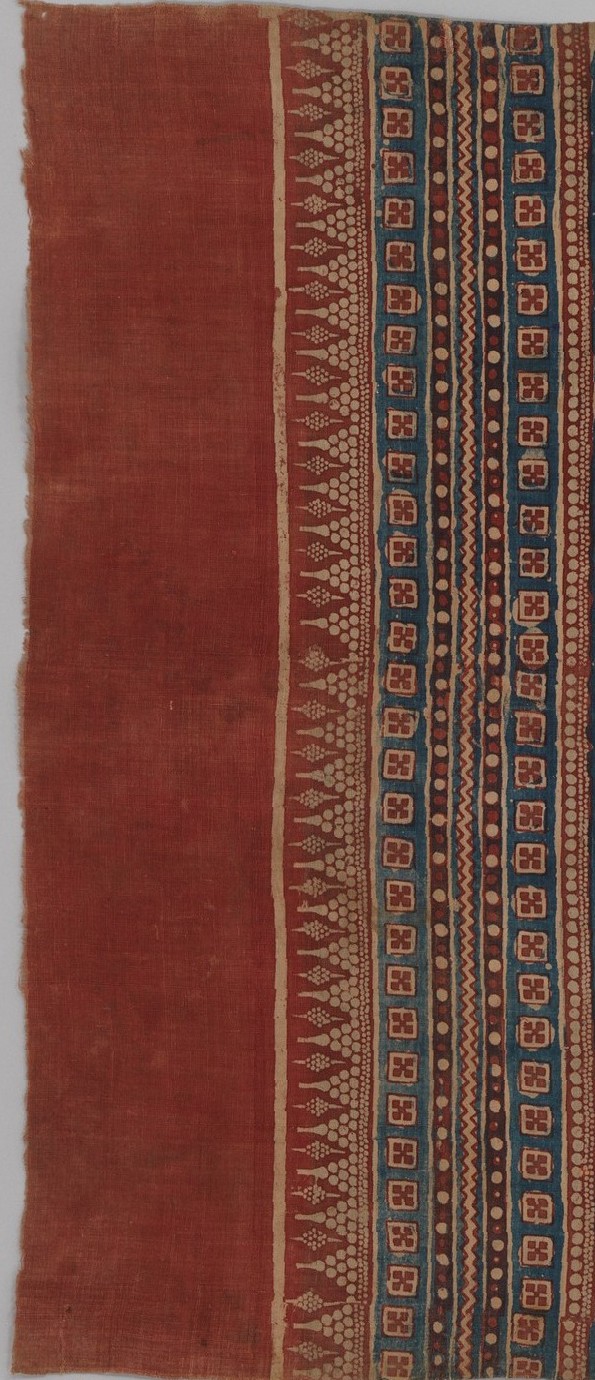
5The end panelAnd at the end: plain madder, then a band of dotted triangles with spikes, then two rows of small squares.

5 prints, each from a different part

Each print starts from a part of the source

The palette

Every colour here was already in the source.
#A78E70Unbleached cotton cream · from the source
#7A4539Madder red · from the source
#30454EIndigo blue · from the source
#3B2F30Madder-under-indigo brown-black · from the source

Why now

Indigo and madder, in the cloth's own four colours, for festive kurtas, saree borders and pallus, and home textiles.

Previous storyNine Nights, Nine Colours, One CircleAll storiesBack to Inspiration

Source: Textile with a Forested Landscape, India (Gujarat), for the Indonesian market, late 14th to early 15th century, Cotton, painted resist and block-printed mordant, dyed. The Metropolitan Museum of Art, New York, Textile with a Forested Landscape, India (Gujarat), for the Indonesian market, late 14th to early 15th century. Cotton, painted resist and block-printed mordant, dyed. The Metropolitan Museum of Art, Purchase, Friends of Asian Art Gifts, 2005, 2005.407. Public domain (CC0)., object Met object 72747, accession 2005.407. CC0. View the object.

Facts from: metmuseum.org, roots.gov.sg.