Inside the Story · No. 11 · Thursday 8 October 2026 · Craft · South Asia and Western

The Invisible Net

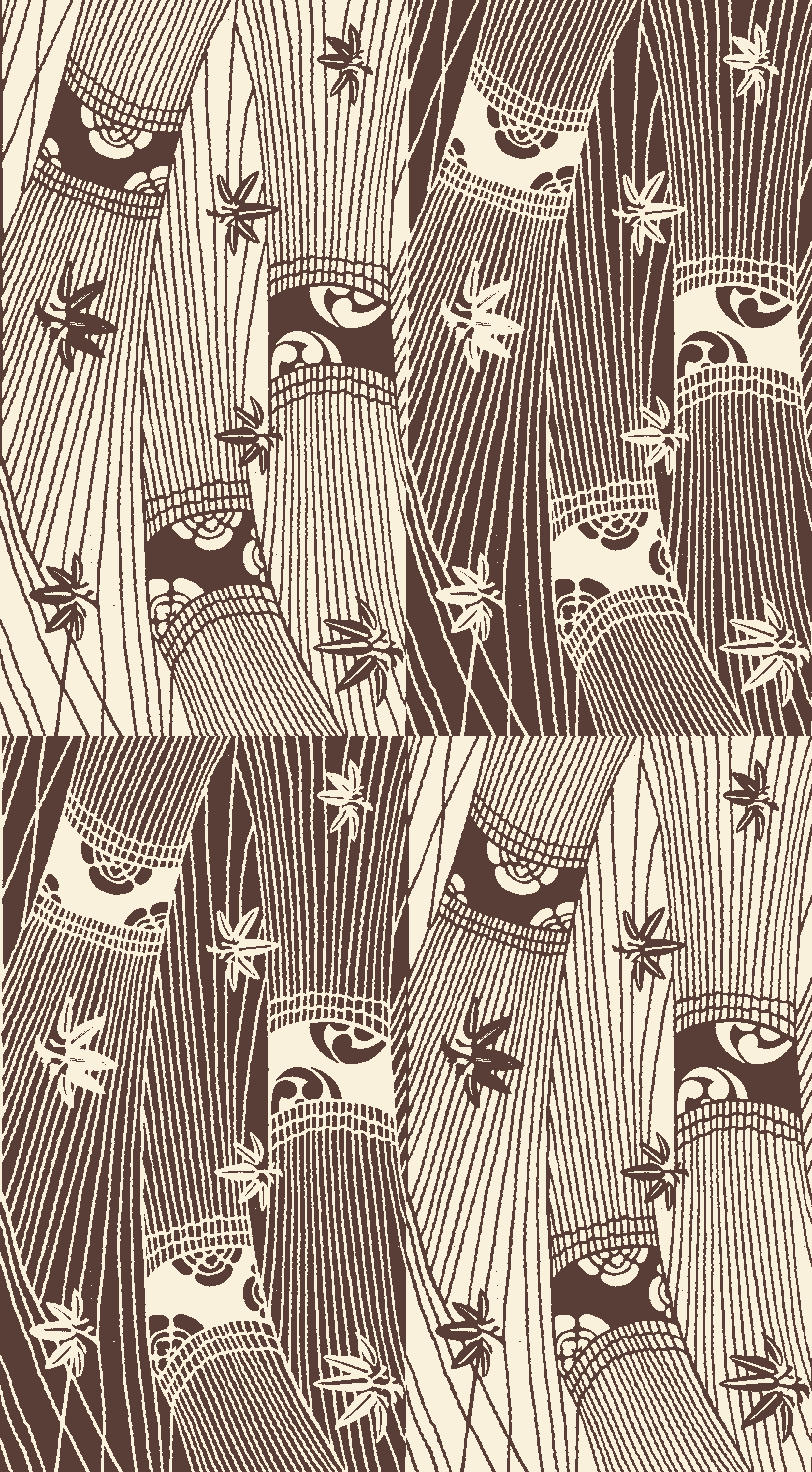
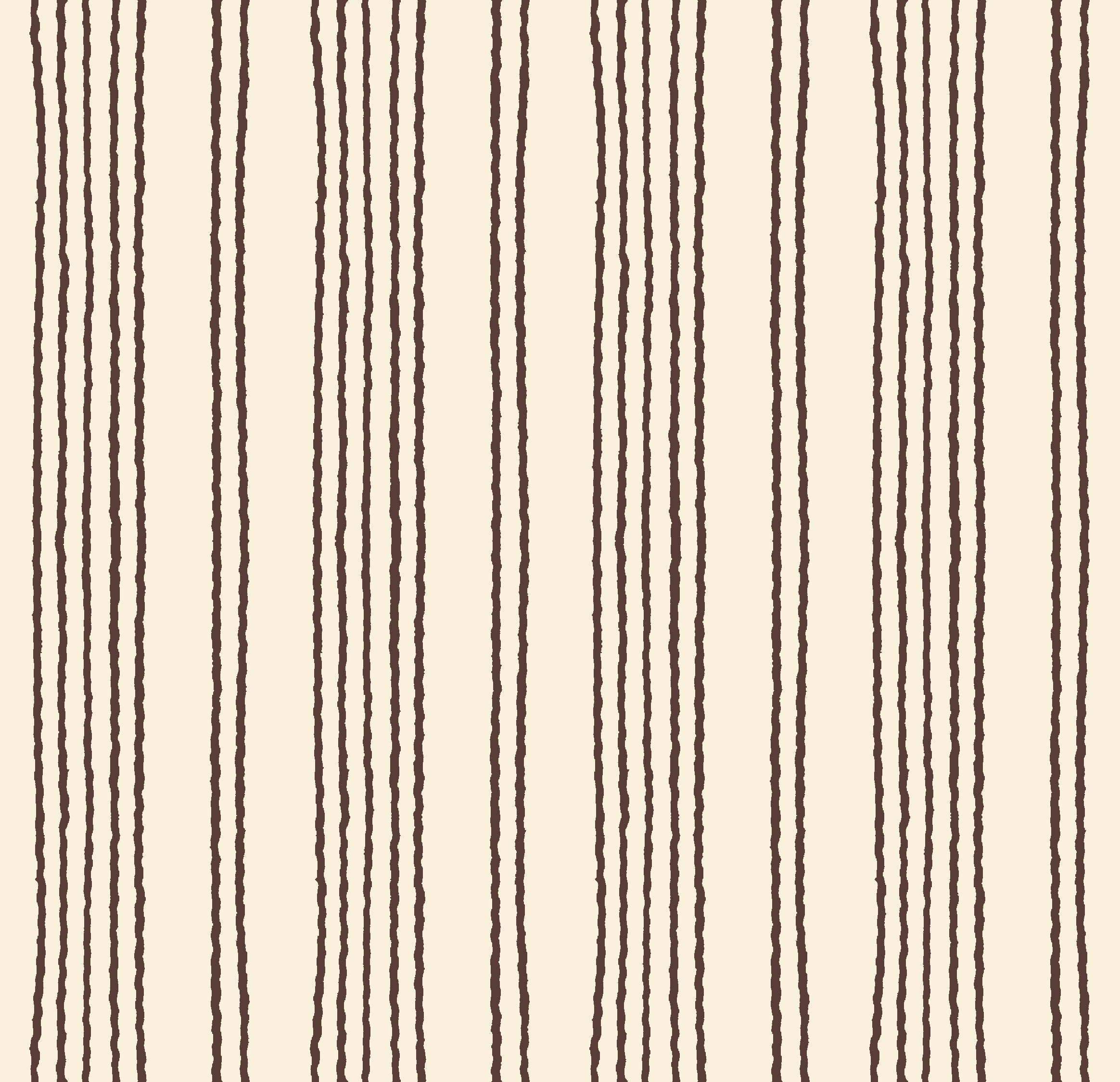
This wavy stripe was cut into paper stiffened with persimmon juice, and hidden inside it is a net of silk threads.

The inside story of a design inspired by a Japanese katagami, a dyer's paper stencil.

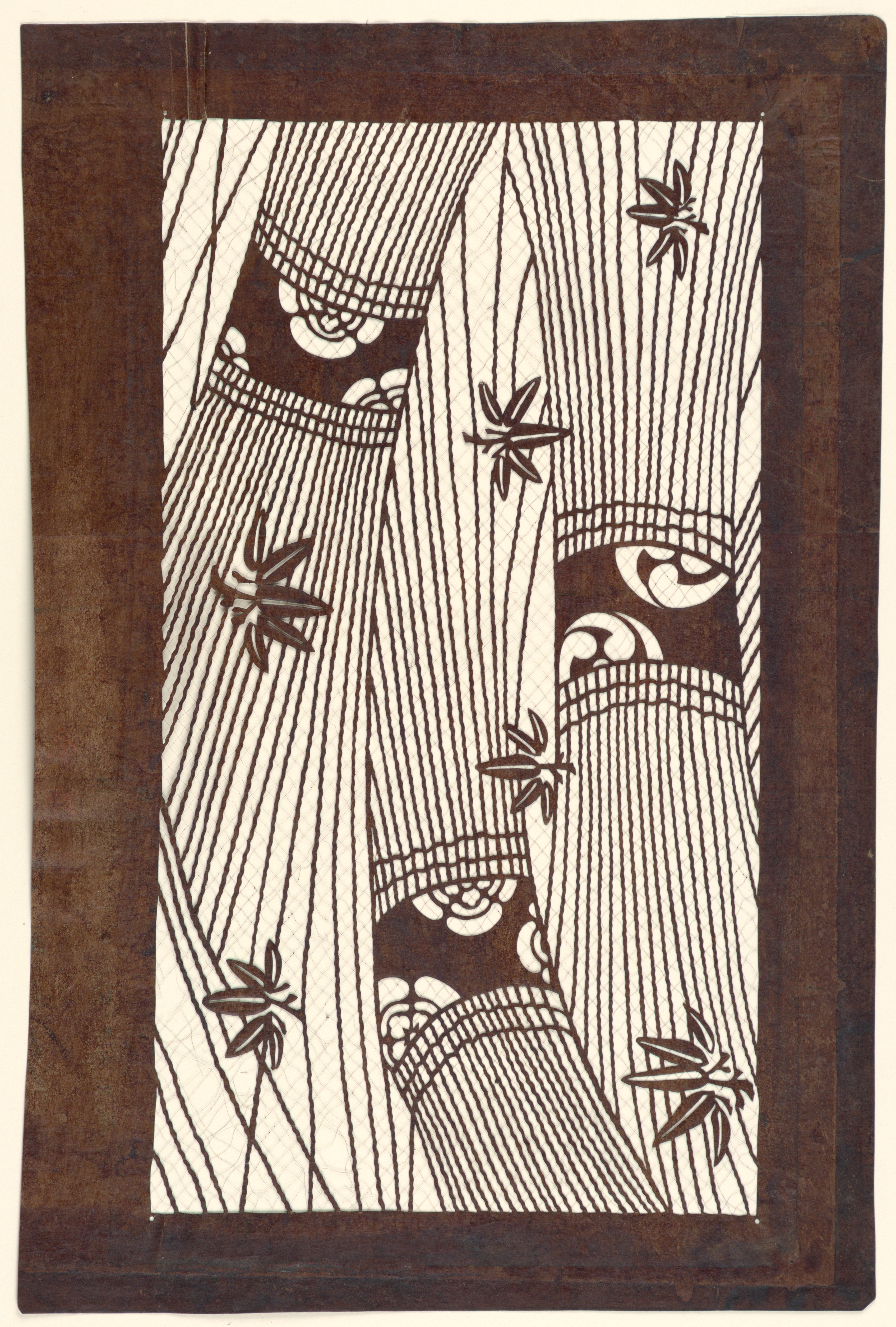
Reed Brushes and Bamboo Leaves, Cooper Hewitt, Smithsonian Design Museum
The source
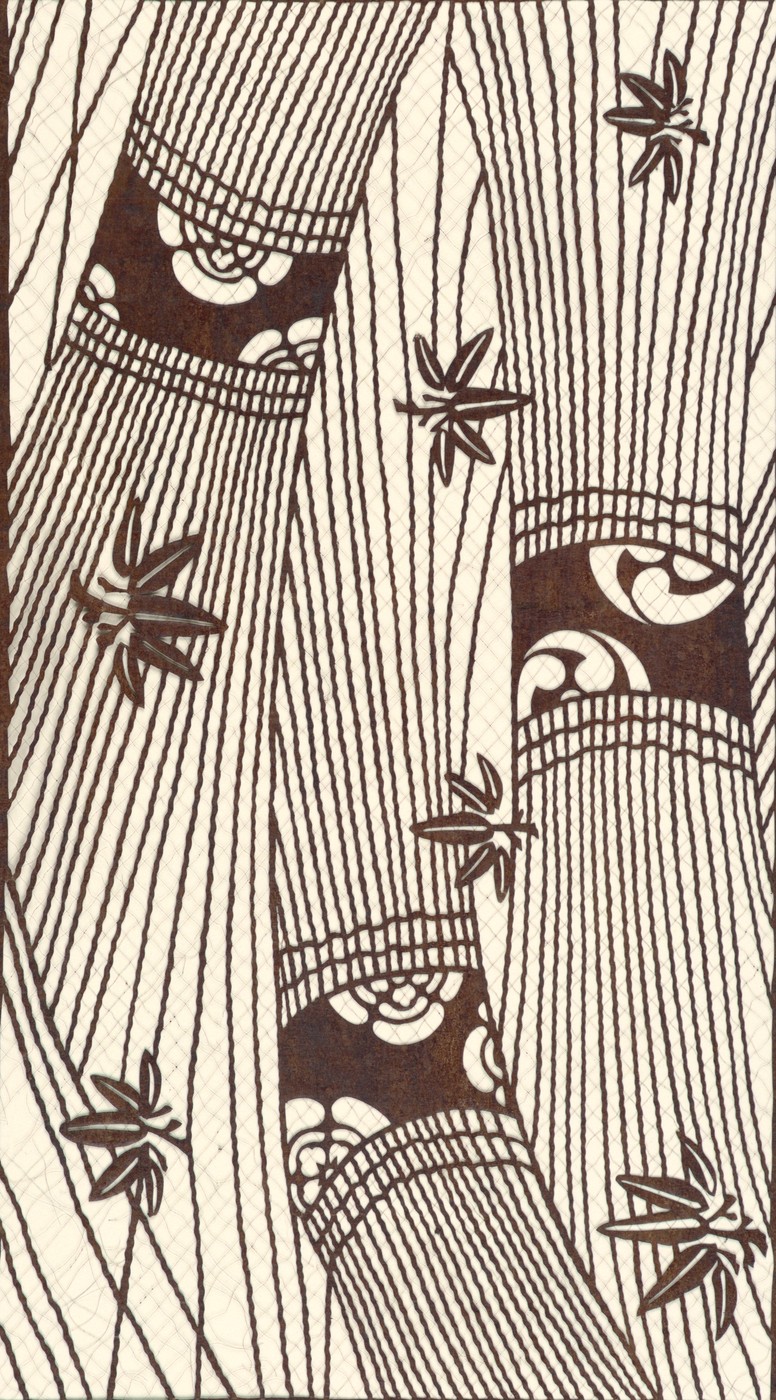
Reed Brushes and Bamboo LeavesMulberry paper (kozo washi) treated with fermented persimmon tannin (kakishibu), and silk threads (itoire) · Japan, mid 18th to early 19th centuryCooper Hewitt, Smithsonian Design Museum · Reed Brushes and Bamboo Leaves, katagami, Japan, mid 18th to early 19th century. Cooper Hewitt, Smithsonian Design Museum, Gift of Helen Snyder, 1976-103-101. CC0. · object 1976-103-101 · CC0View at Cooper Hewitt, Smithsonian Design Museum ↗

A katagami is a dyer's stencil. Paper is stiffened with persimmon tannin and cut; rice paste is pushed through the cuts onto cloth, and when the cloth is dyed, the pasted areas stay undyed. Where the cuts are long and fine, the stencil is held together by silk threads laid inside the paper: the itoire.

What we saw

Five parts, traced from the photograph
The bristle lines
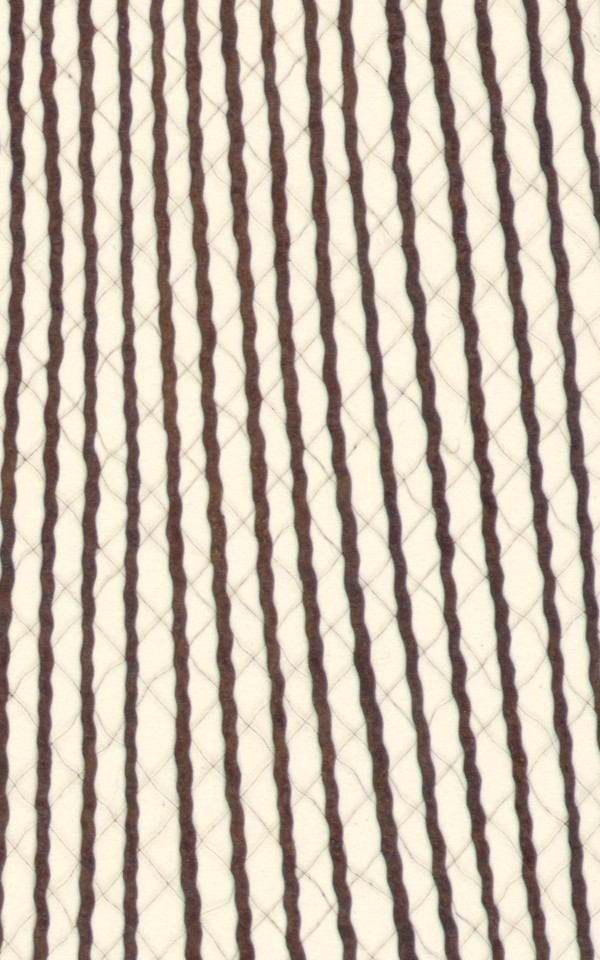
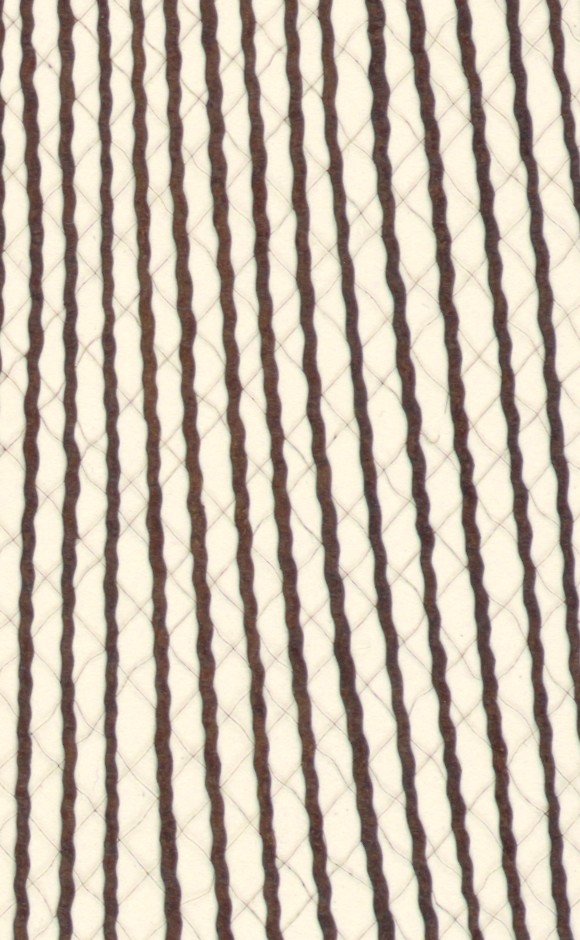
1The bristle linesFirst, the bristles. Every wavy line is a strip of paper left standing between two cuts.
The bamboo-leaf sprigs
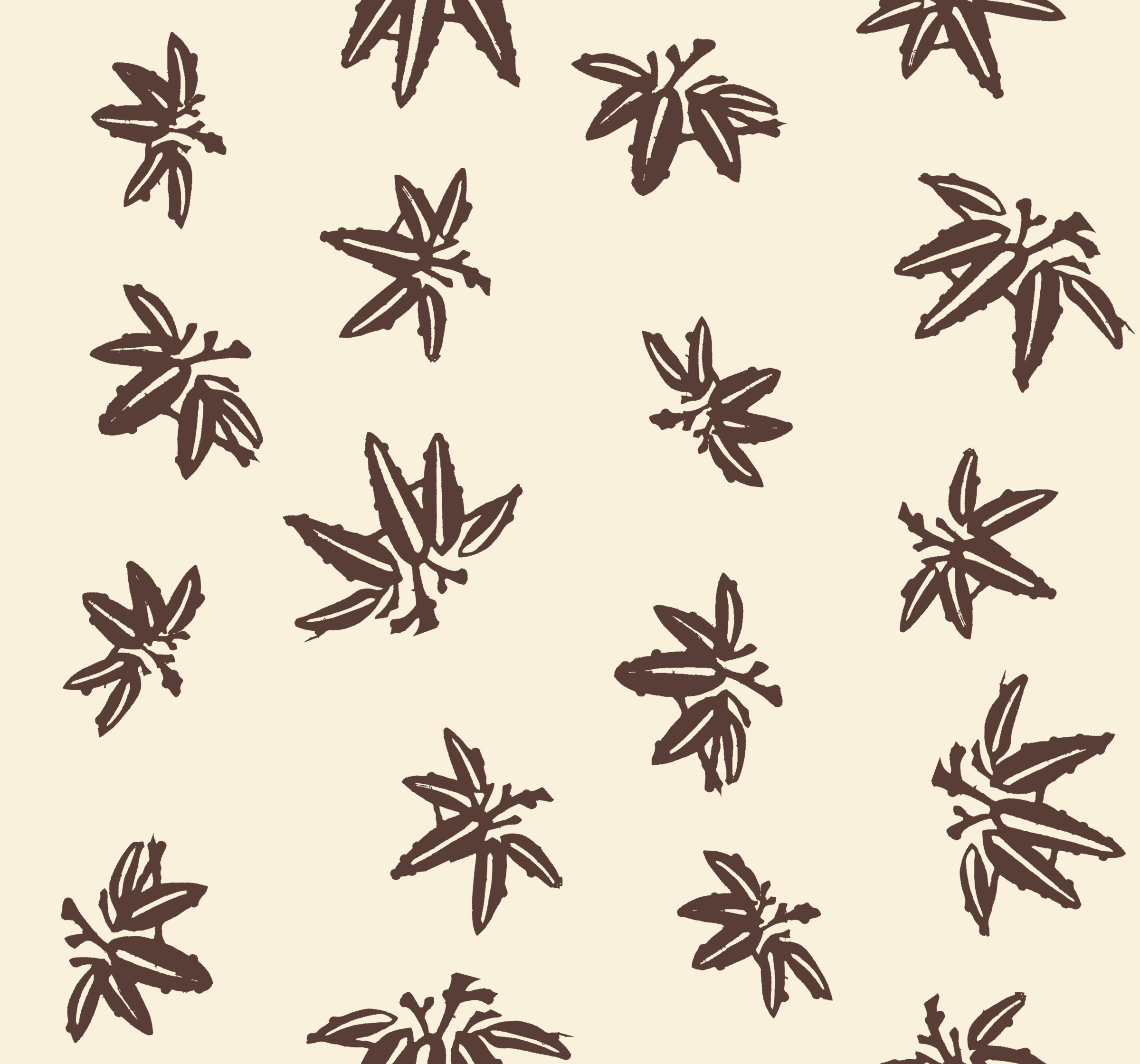
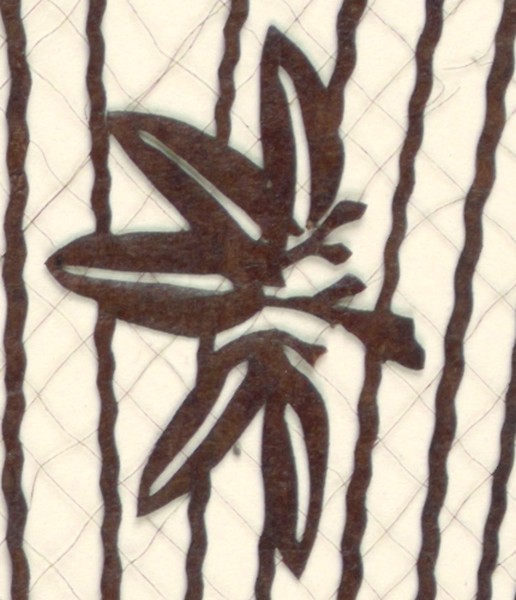
2The bamboo-leaf sprigsScattered on top, six bamboo sprigs. Five leaves each, every leaf with a slit cut down its middle.
The binding band
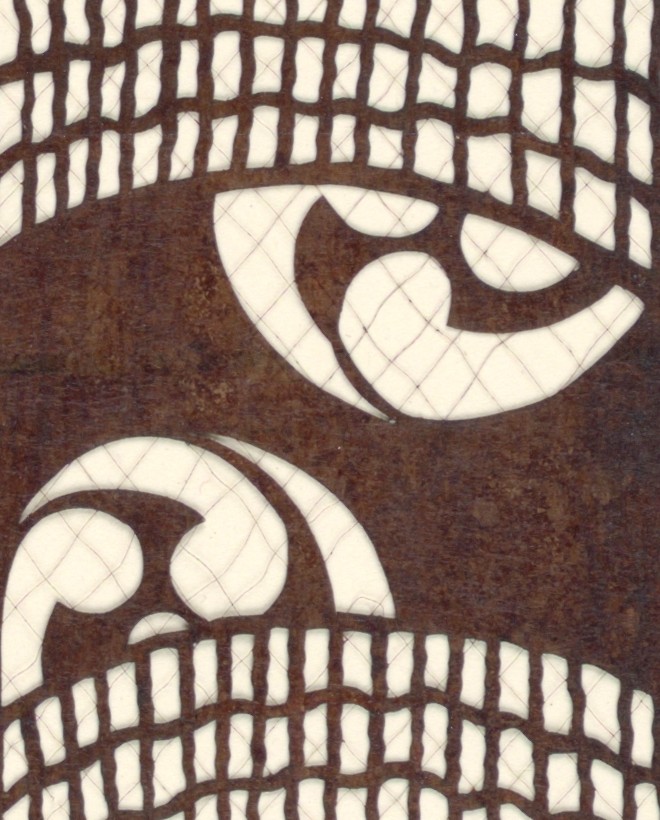
3The binding bandThen the binding. A dark band with round cut-outs, edged top and bottom with cord.
The itoire net
4The itoire netAnd the part you are not meant to see. A net of silk threads, laid inside the paper to hold the fine cuts.
Two tones
5Two tonesOnly two tones: persimmon paper and the open cut.

5 prints, each from a different part

Each print starts from a part of the source

The palette

Every colour here was already in the source.
#583E37Persimmon brown · from the source
#4C302BDeep persimmon · from the source
#FAF1DCPaper cream · from the source
#E4DBC8Cream in shadow · from the source
#D5C7B7Silk thread · from the source

Why now

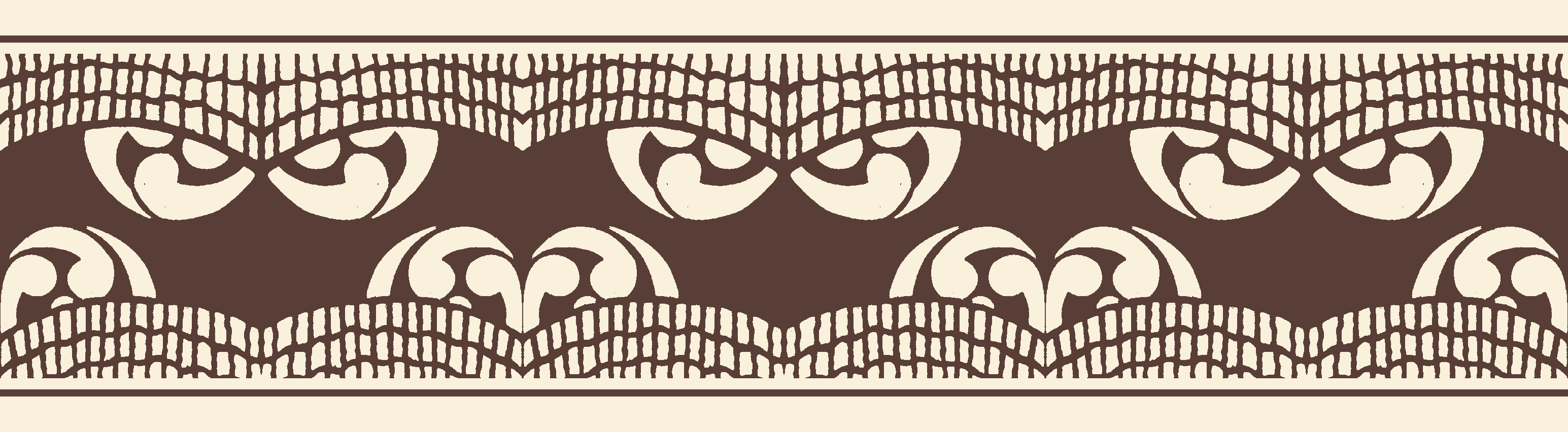
Every print here needs only two colours, from shirting stripes to saree borders and bedding.

Previous storyThe Ibex and the Fingerprint JarAll storiesBack to Inspiration

Source: Reed Brushes and Bamboo Leaves, Japan, mid 18th to early 19th century, Mulberry paper (kozo washi) treated with fermented persimmon tannin (kakishibu), and silk threads (itoire). Cooper Hewitt, Smithsonian Design Museum, Reed Brushes and Bamboo Leaves, katagami, Japan, mid 18th to early 19th century. Cooper Hewitt, Smithsonian Design Museum, Gift of Helen Snyder, 1976-103-101. CC0., object 1976-103-101. CC0. View the object.

Facts from: collection.cooperhewitt.org, en.wikipedia.org.