Inside the Story · No. 10 · Wednesday 7 October 2026 · Art · South Asia and Western

The Ibex and the Fingerprint Jar

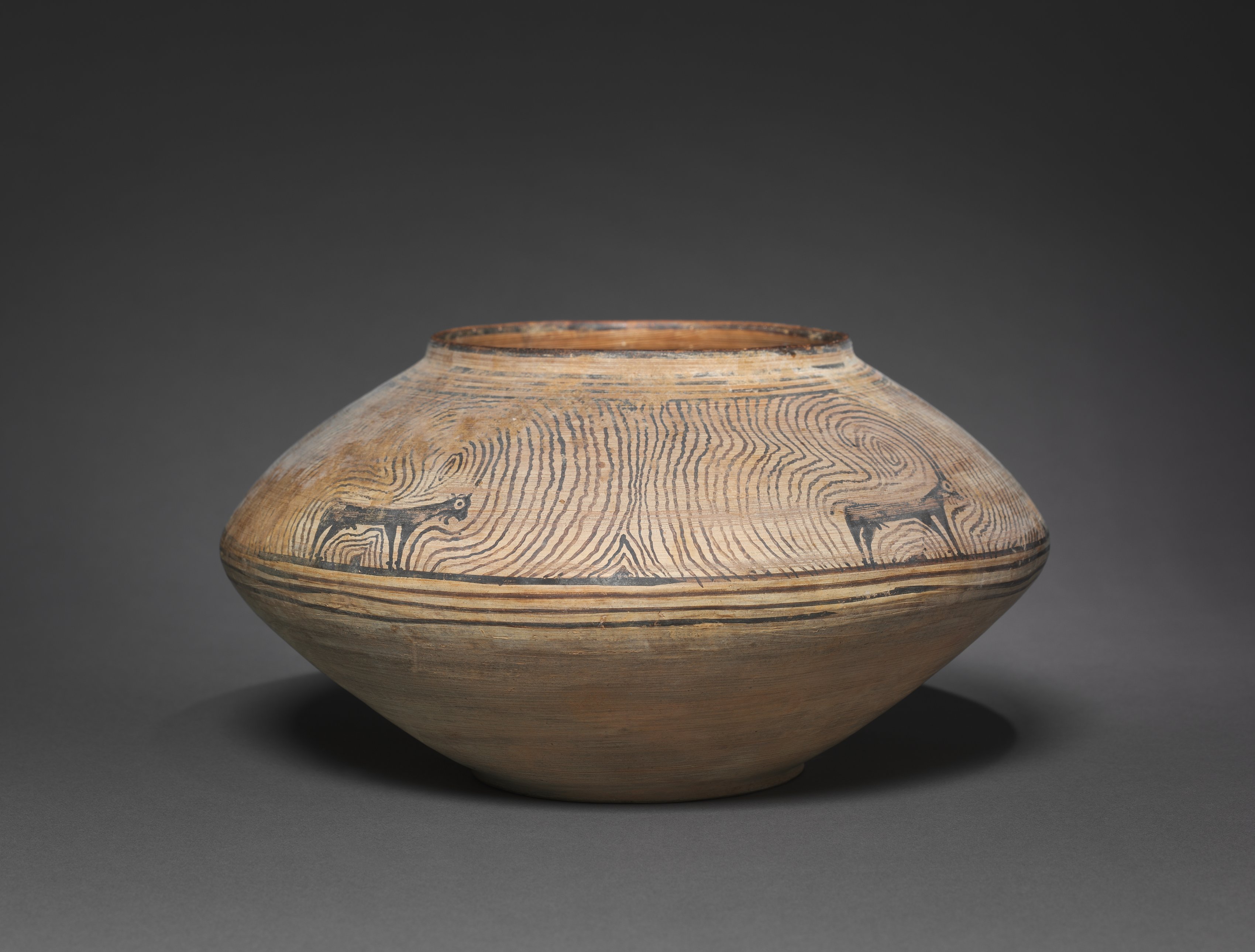
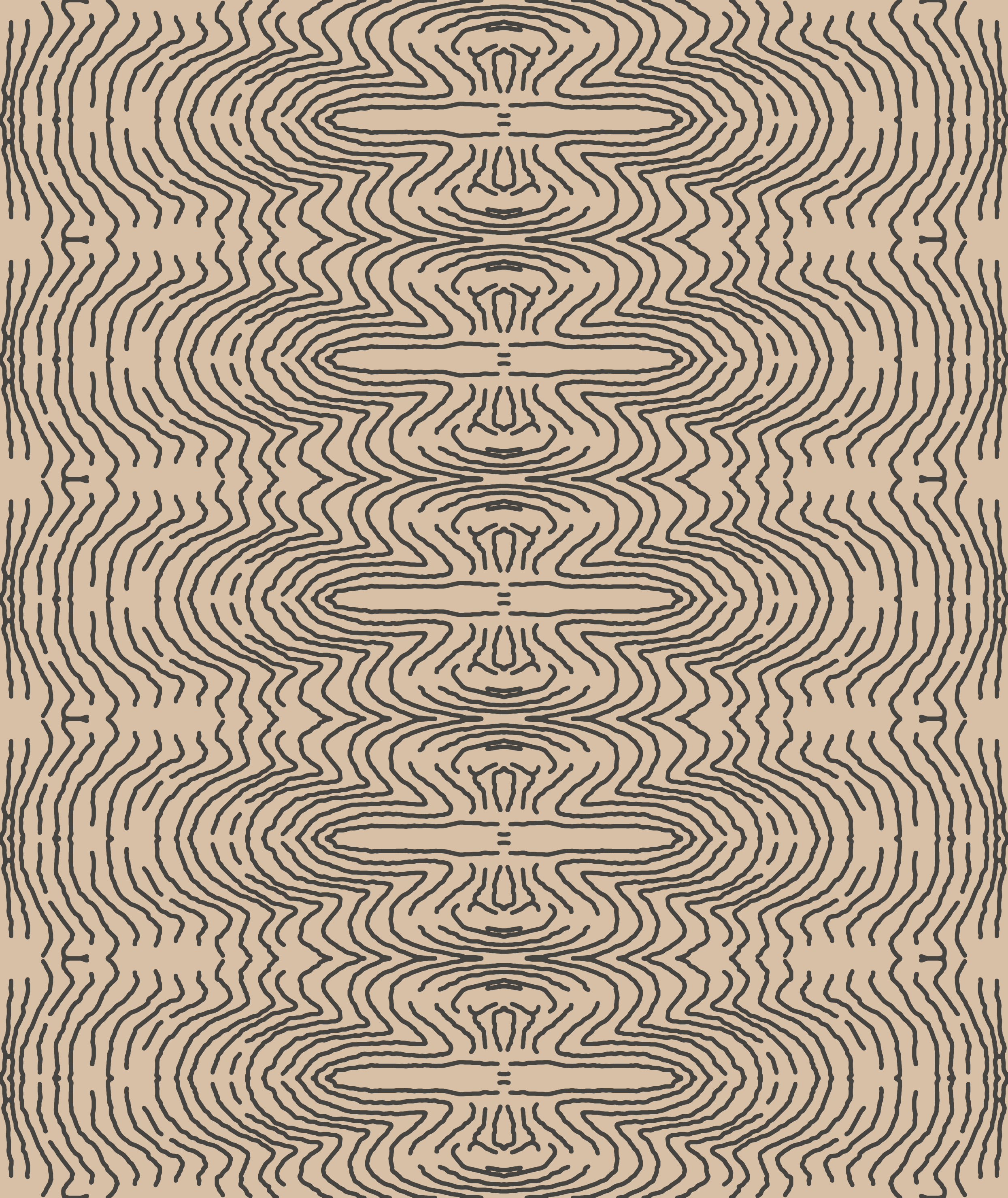
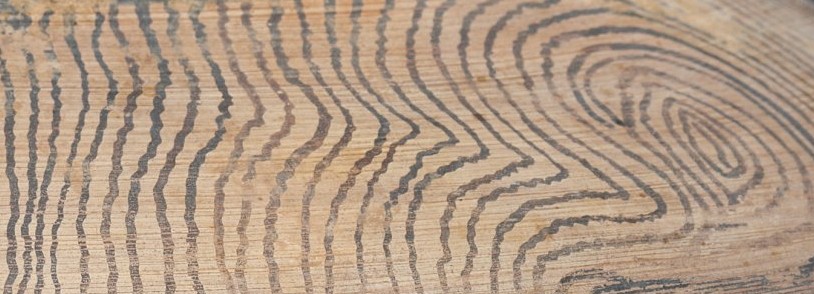
This op-art whorl stripe isn't digital. It is painted on a 4,500-year-old jar, probably from the Quetta valley, with ibex walking through it.

The inside story of a design inspired by a 4,500-year-old painted jar, probably from Quetta.

Jar with Four Ibex, The Cleveland Museum of Art
The source
Jar with Four Ibexceramic with black slip · Pakistan, probably Quetta, Indus Valley Civilization, c. 2800 to 2500 BCE · Overall: 12.2 x 23 cm (4 13/16 x 9 1/16 in.)The Cleveland Museum of Art · Jar with Four Ibex, c. 2800 to 2500 BCE. Pakistan, probably Quetta, Indus Valley Civilization. Ceramic with black slip. The Cleveland Museum of Art, John L. Severance Fund, 2001.1. CC0. · object 2001.1 · CC0View at The Cleveland Museum of Art ↗

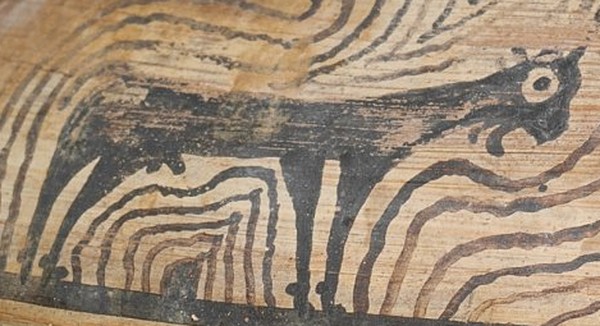
The museum places it in the Indus Valley civilization: a jar with walls so thin, it says, that it must have been made on a potter's wheel, painted in black slip on buff clay. It was probably made around Quetta, in Baluchistan, where black-on-buff wheel-made pottery with geometric and naturalistic designs is known as Quetta ware. Four male ibex walk round it, with long curving horns and hairs under the chin, inside a field of wavy lines that gathers into whorls.

What we saw

Five parts, traced from the photograph
The ibex
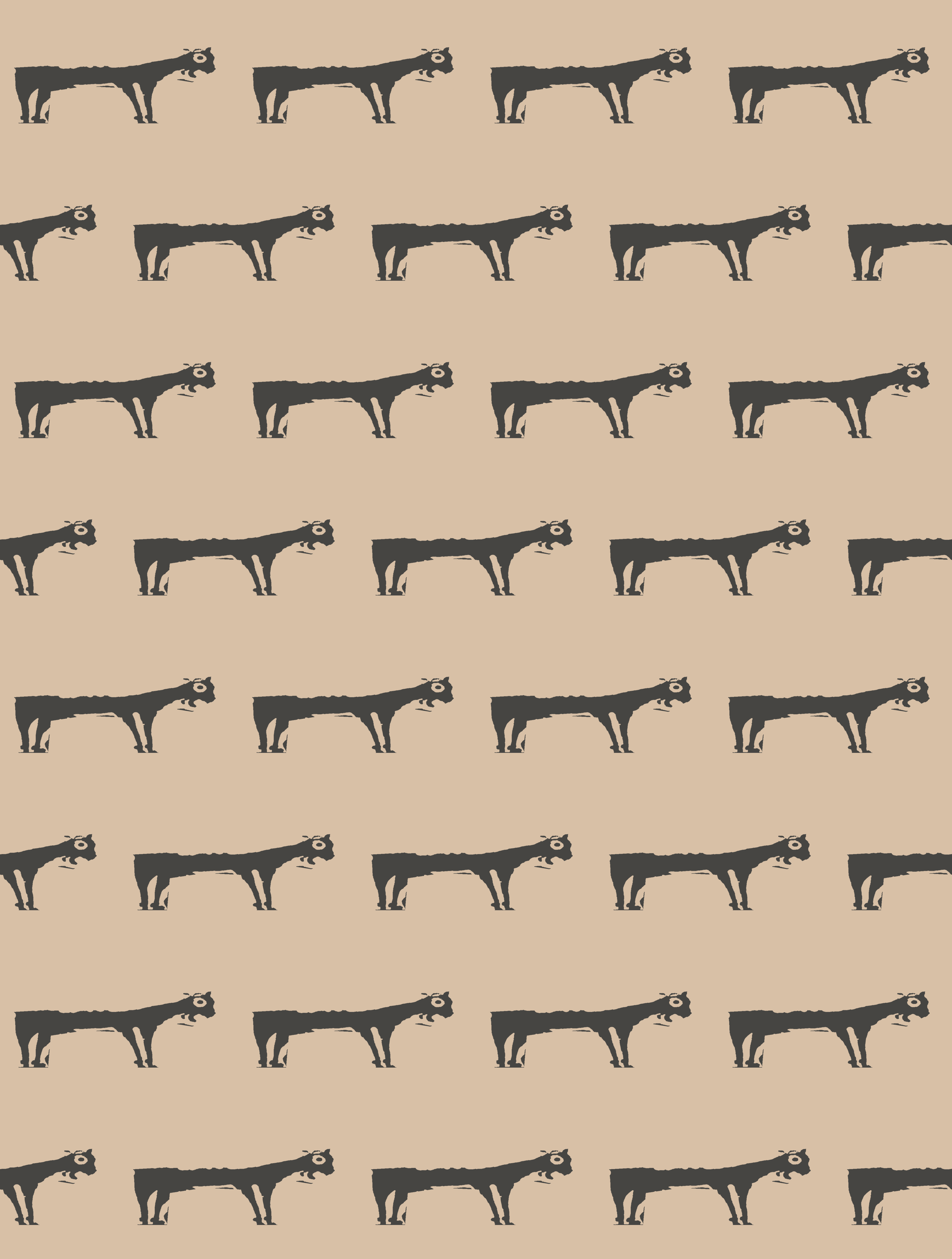
1The ibexFirst, the ibex. Four of them walk round the jar, all the same way. Long body, ringed eye, hairs under the chin.
The fingerprint field
2The fingerprint fieldAround them, the field. Wavy lines, side by side, that bend and gather into whorls, like a fingerprint.
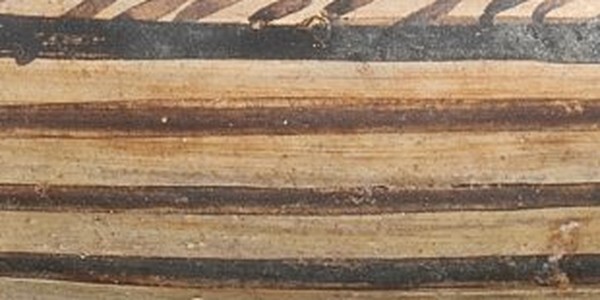
The band of lines
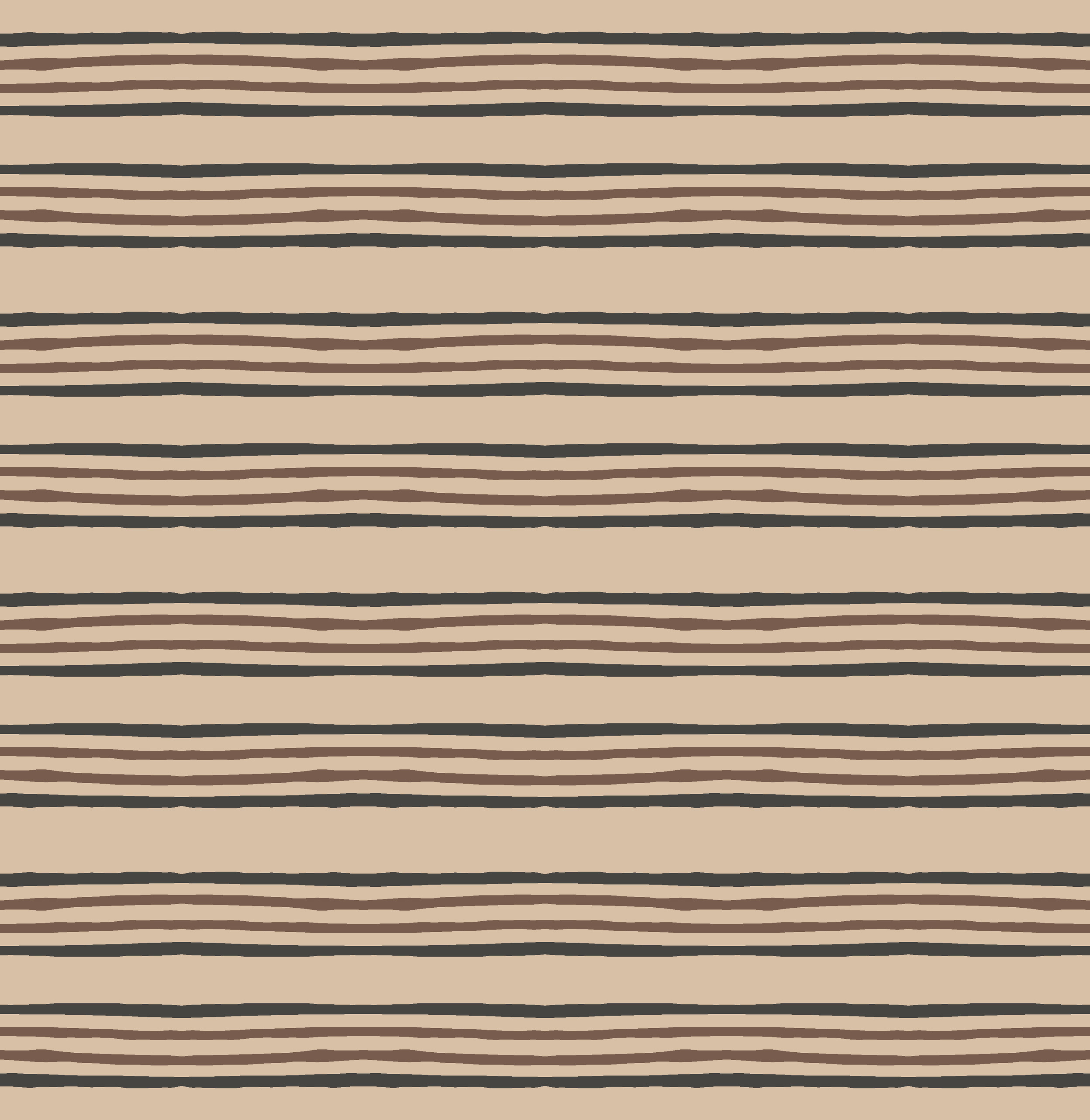
3The band of linesUnder their hooves, a band. One thick black ground line, then three thinner lines.
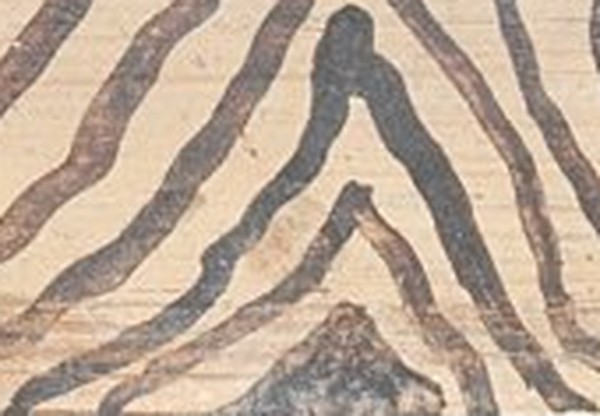
The peaked V
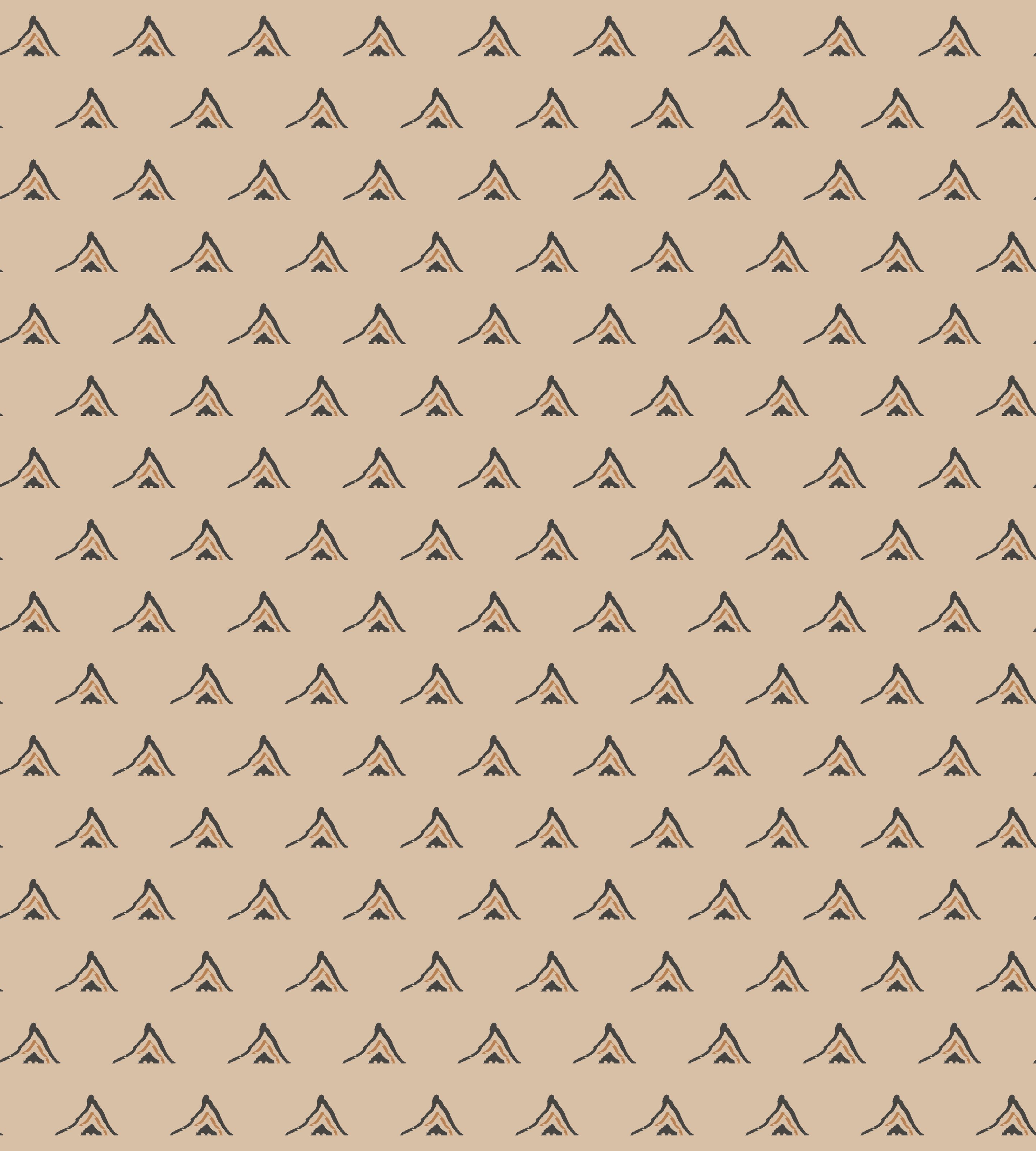
4The peaked VWhere two line fields meet, a peak. A chevron with a knob at the tip, a smaller one inside, a little mound at the base.
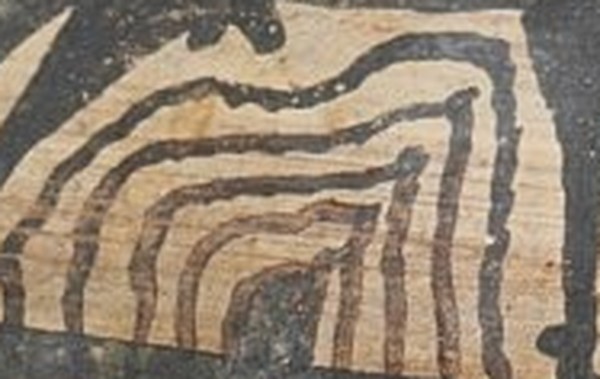
The arches between the legs
5The arches between the legsAnd between the ibex's legs, the lines fold into arches. Four of them, round a solid mound.

5 prints, each from a different part

Each print starts from a part of the source

The palette

Every colour here was already in the source.
#D8C0A6Buff clay · from the source
#464542Black slip · from the source
#B78154Terracotta · from the source
#785D4ERed-brown slip · from the source

Why now

Made for spring and summer 2027: an op-art line field for dresses, and an ibex conversational for resort shirts and kidswear.

Previous storyWhat the Romans Put on the FloorAll storiesBack to Inspiration

Source: Jar with Four Ibex, Pakistan, probably Quetta, Indus Valley Civilization, c. 2800 to 2500 BCE, ceramic with black slip. The Cleveland Museum of Art, Jar with Four Ibex, c. 2800 to 2500 BCE. Pakistan, probably Quetta, Indus Valley Civilization. Ceramic with black slip. The Cleveland Museum of Art, John L. Severance Fund, 2001.1. CC0., object 2001.1. CC0. View the object.

Facts from: clevelandart.org, ebooks.inflibnet.ac.in.