Inside the Story · No. 18 · Monday 26 October 2026 · Craft · South Asia and Western

Indian Red on an English Block

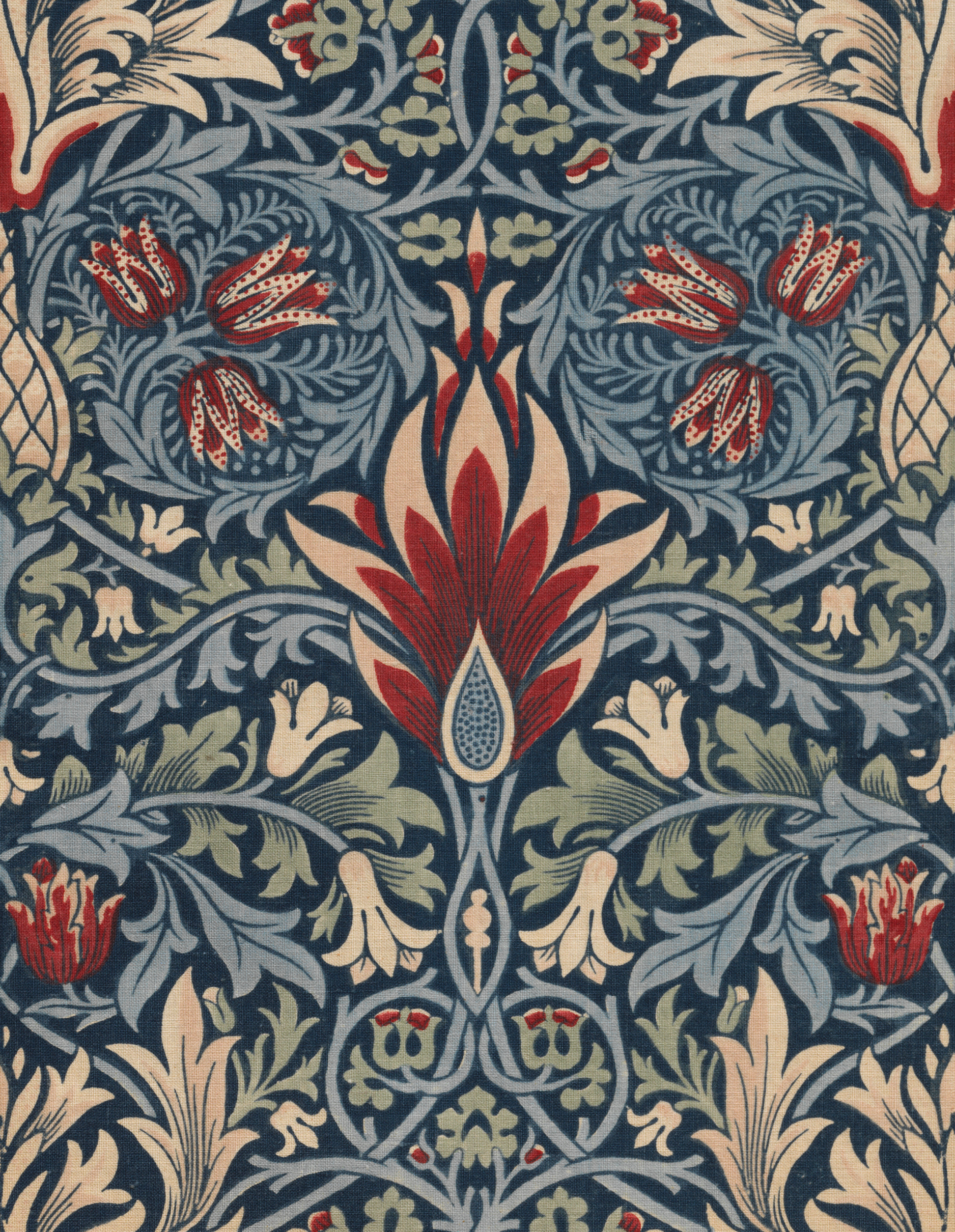
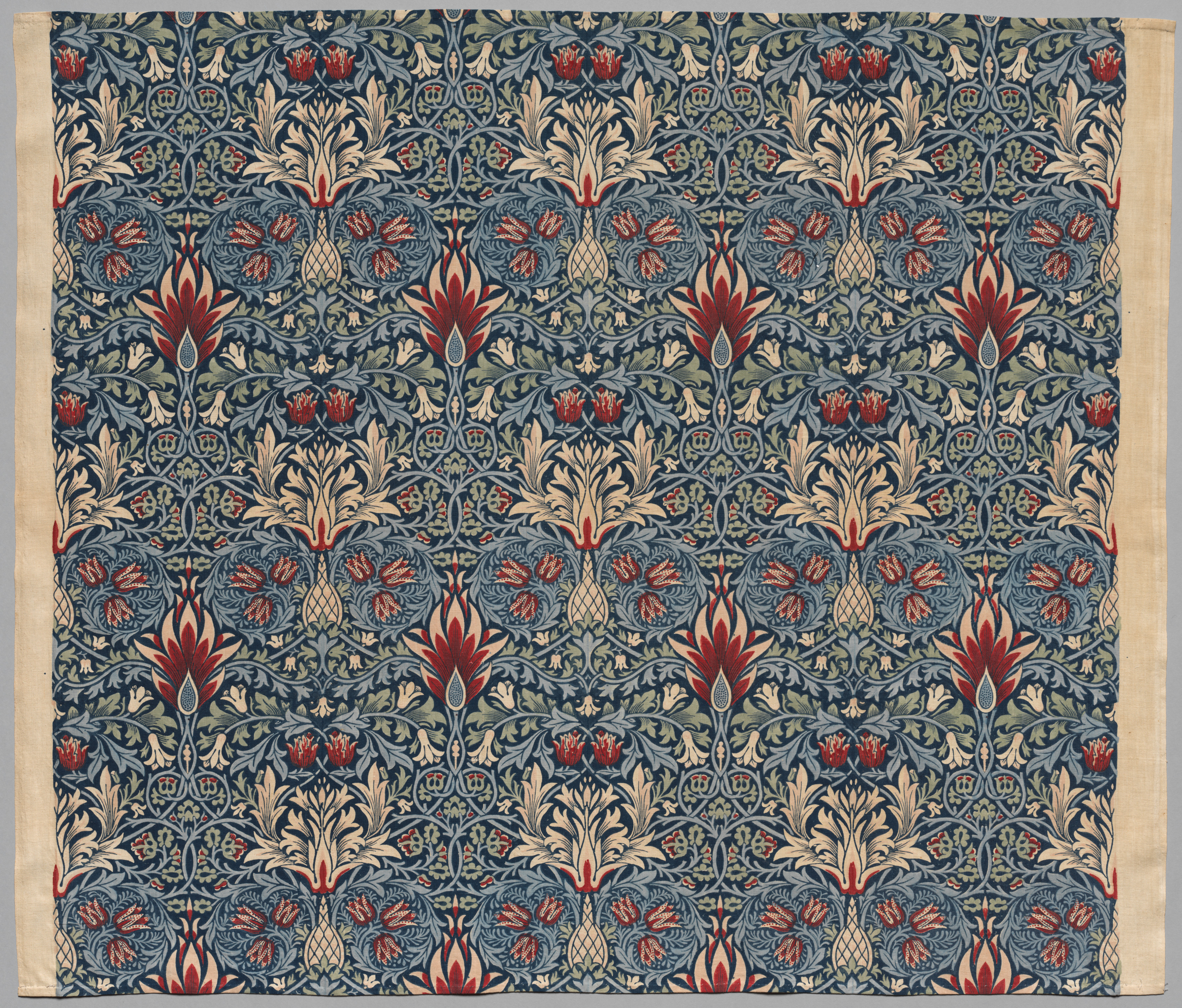
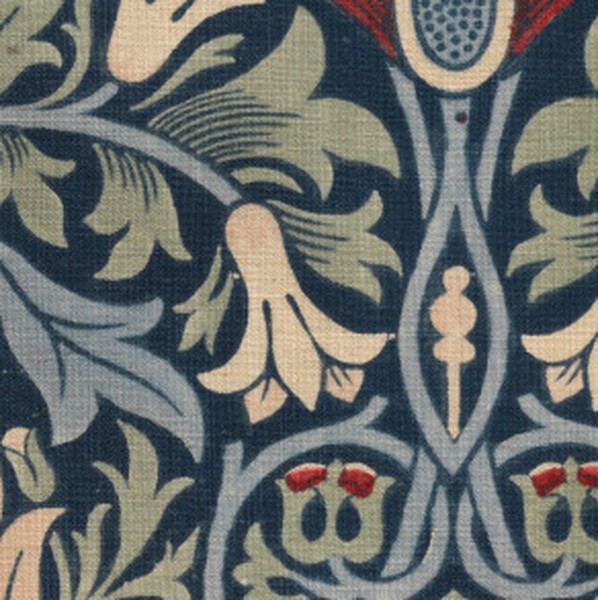
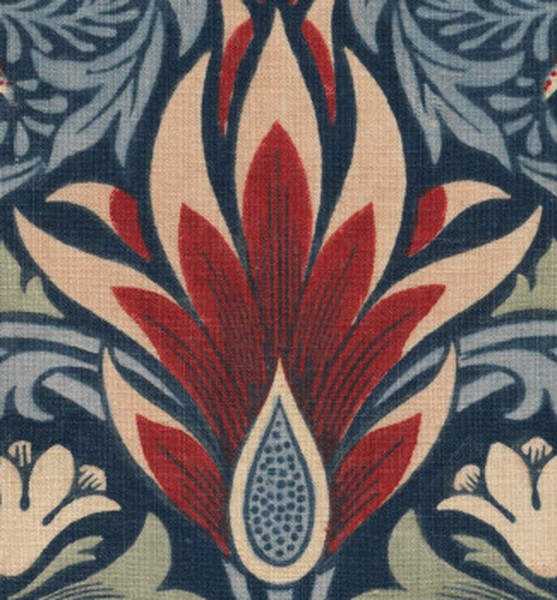
This fritillary comes from Snakeshead, a William Morris cotton of 1876 or 1877, block printed in England while Indian silks were in style and widely imported from British India.

The inside story of a design inspired by Snakeshead, a William Morris cotton of 1876 or 1877, in The Cleveland Museum of Art.

Snakeshead, The Cleveland Museum of Art
The source
SnakesheadPlain weave cotton, printed · England, Walthamstow (printing); the design by William Morris (British, 1834 to 1896), Early 20th century printing (museum date 1920) of a design of 1876 or 1877 · Overall: 85.1 x 100.3 cm (33 1/2 x 39 1/2 in.)The Cleveland Museum of Art · Snakeshead, Early 20th century. William Morris (British, 1834 to 1896). Plain weave cotton, printed; overall: 85.1 x 100.3 cm. The Cleveland Museum of Art, Gift of Mrs. Henry Chisholm, 1937.695. CC0. · object Cleveland Museum of Art accession 1937.695 (web id 117128, never used on screen) · CC0View at The Cleveland Museum of Art ↗

When Morris designed Snakeshead, the museum says, Indian silks were in style and widely imported from British India; its strong red and black were fashionable only for a short time before paler hues regained favour. The flower is the fritillary, a wildflower Morris remembered from the meadows near Oxford. The V&A dates the design to 1876, with first trials in Thomas Wardle's pattern books in January 1877; Wardle block printed it at Leek for Morris & Co., which sold its textiles in two London shops. The V&A adds that the design may have been at least partly inspired by Indian palampores.

What we saw

Five parts, traced from the photograph
The fritillary
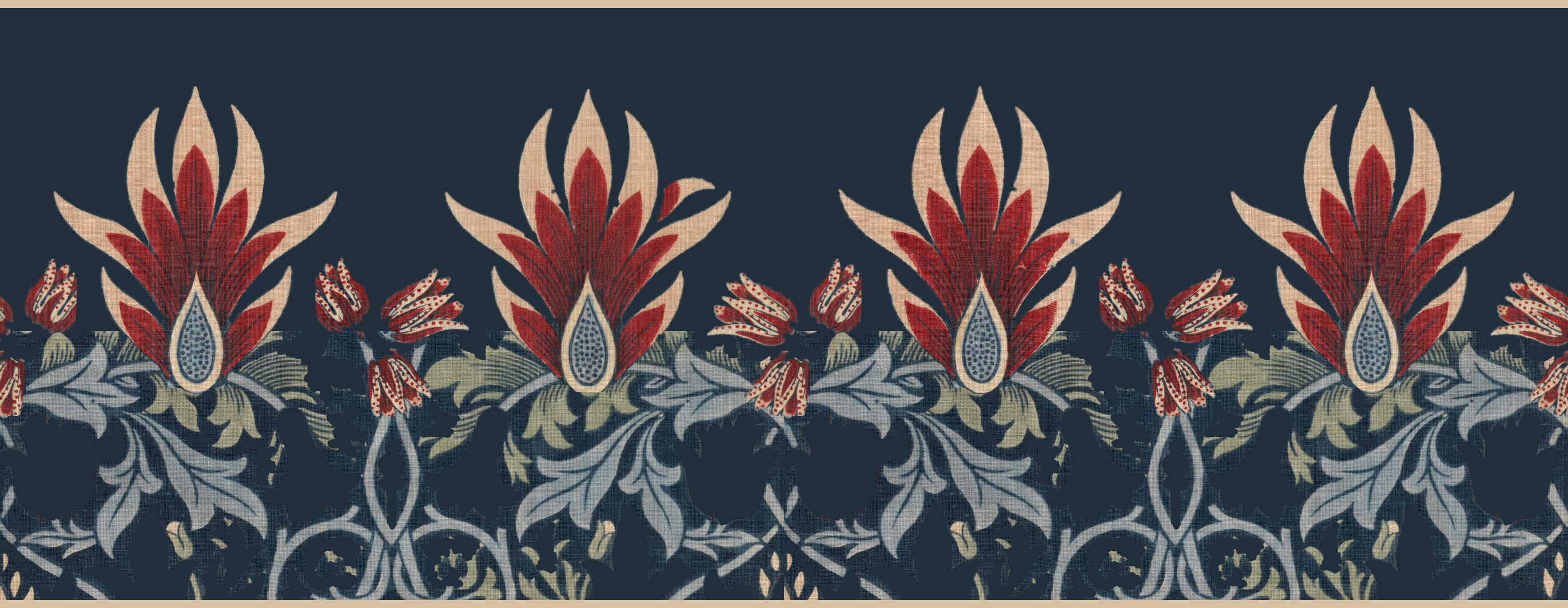
1The fritillaryFirst, the fritillary. Red flames with cream outer petals, and a dotted teardrop at its heart. Four across the cloth.
The flame-leaf fan
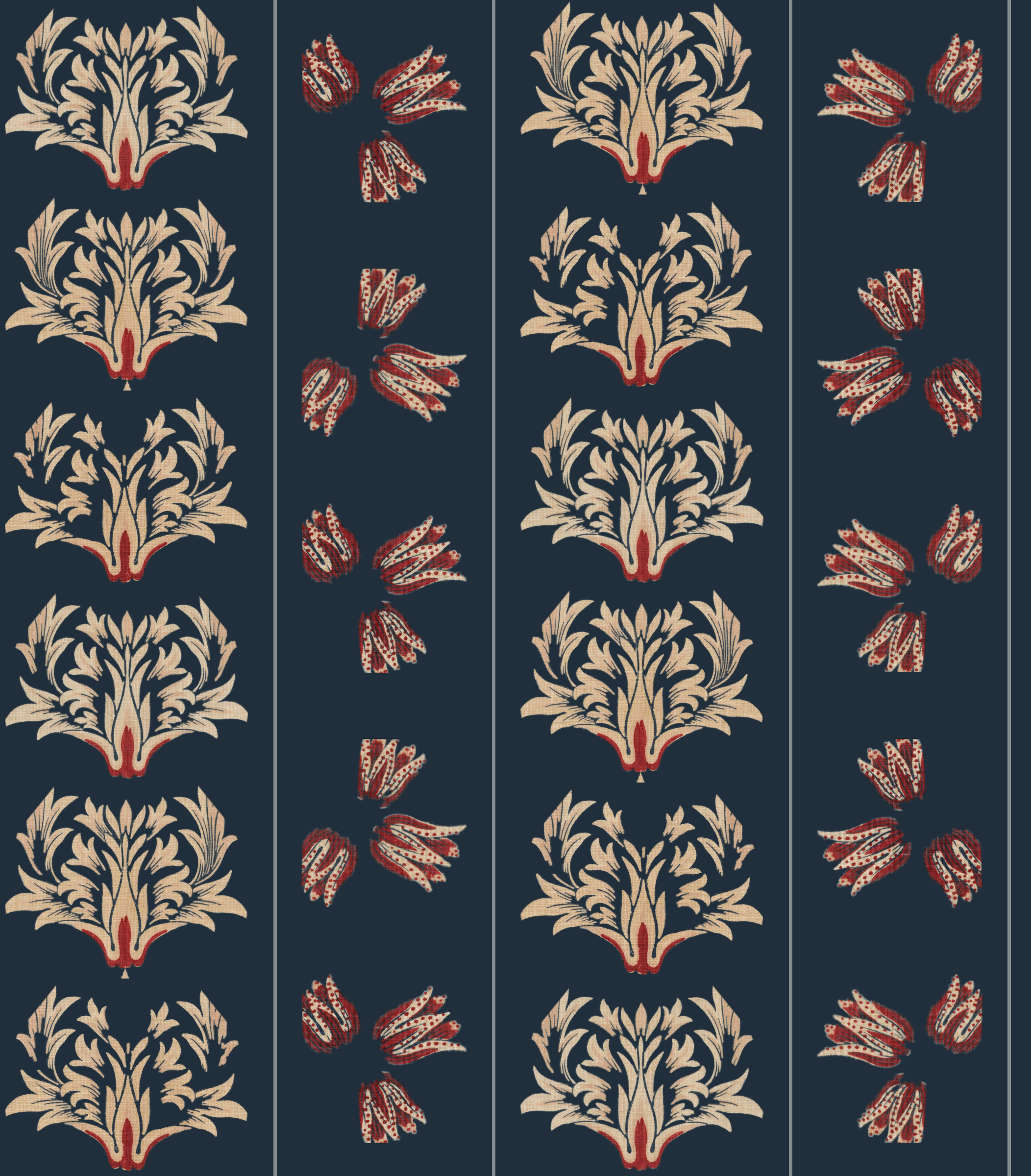
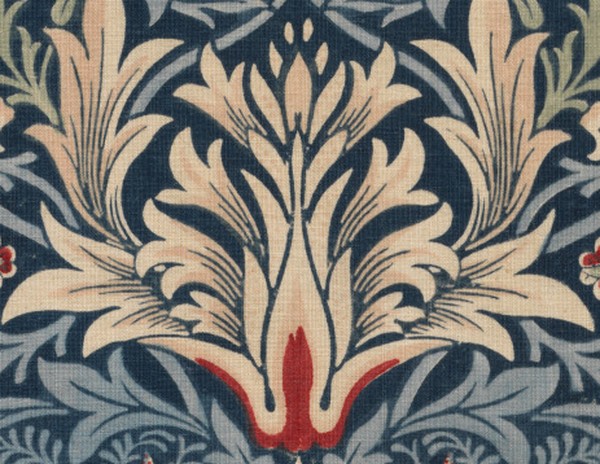
2The flame-leaf fanThen the flame-leaf fan. Cream leaves on a red base, thirteen centimetres wide.
The lattice cone
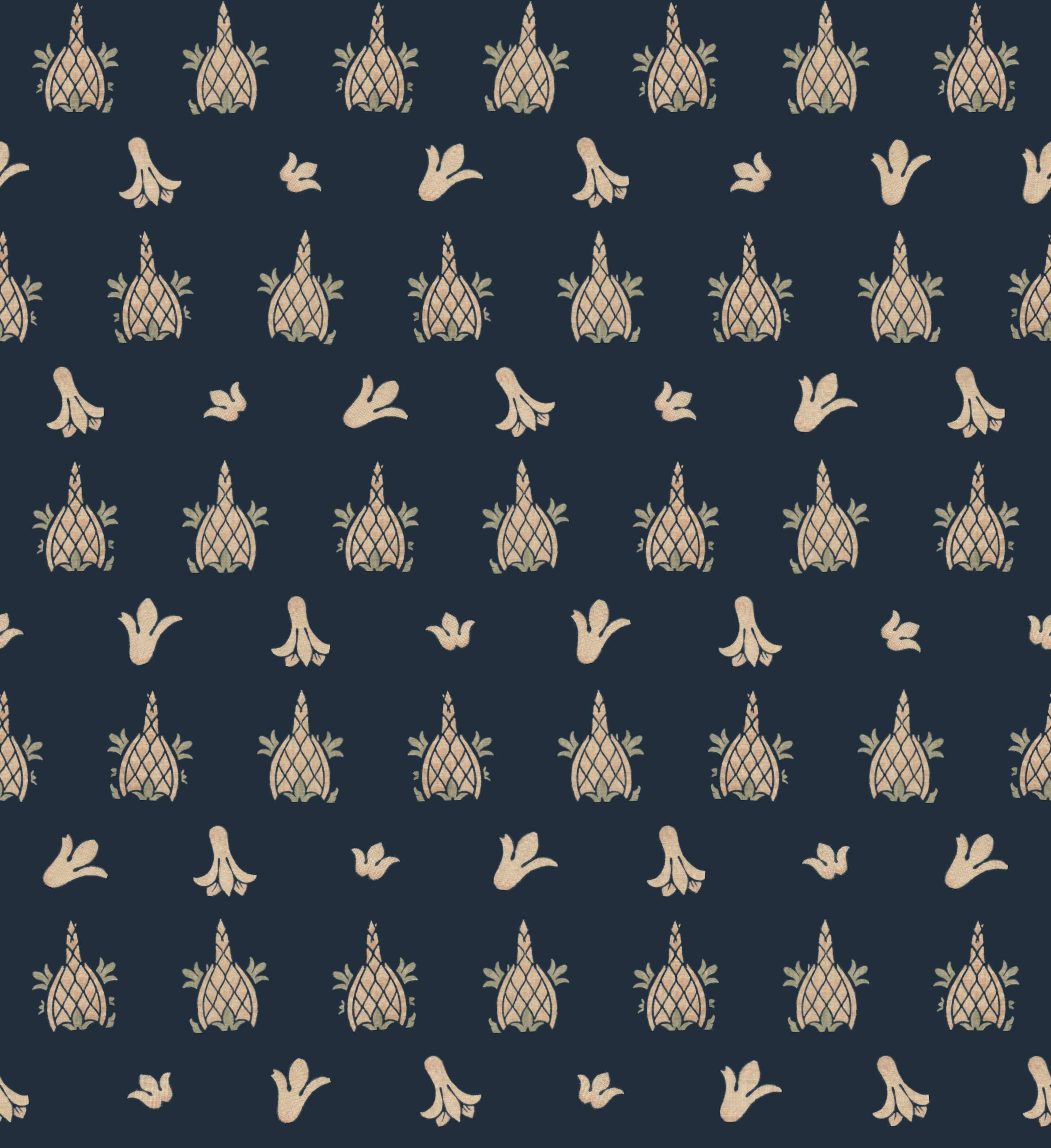
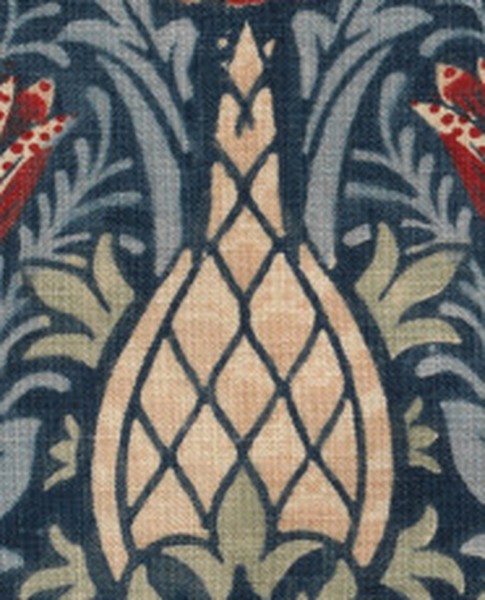
3The lattice coneA lattice cone, like a pine cone, with two sage leaves.
The speckled bells
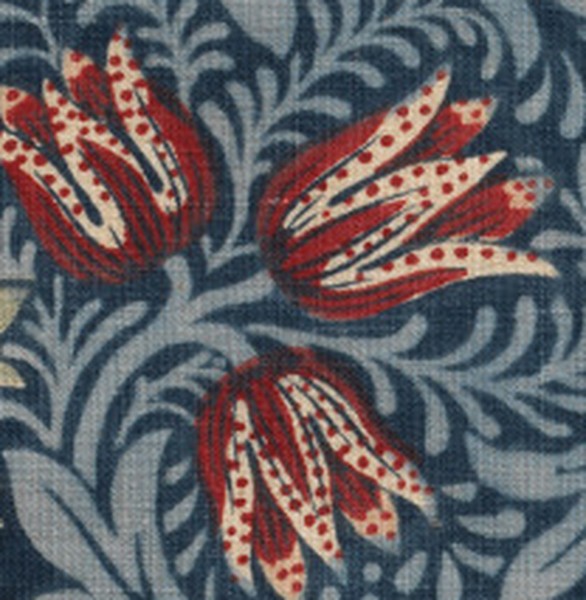
4The speckled bellsThe speckled bells. Red, with cream tips, three to a spray.
The small white bells and the scrolling leaf ground
5The small white bells and the scrolling leaf groundAnd the small white bells, single and in threes, on the scrolling leaf ground.

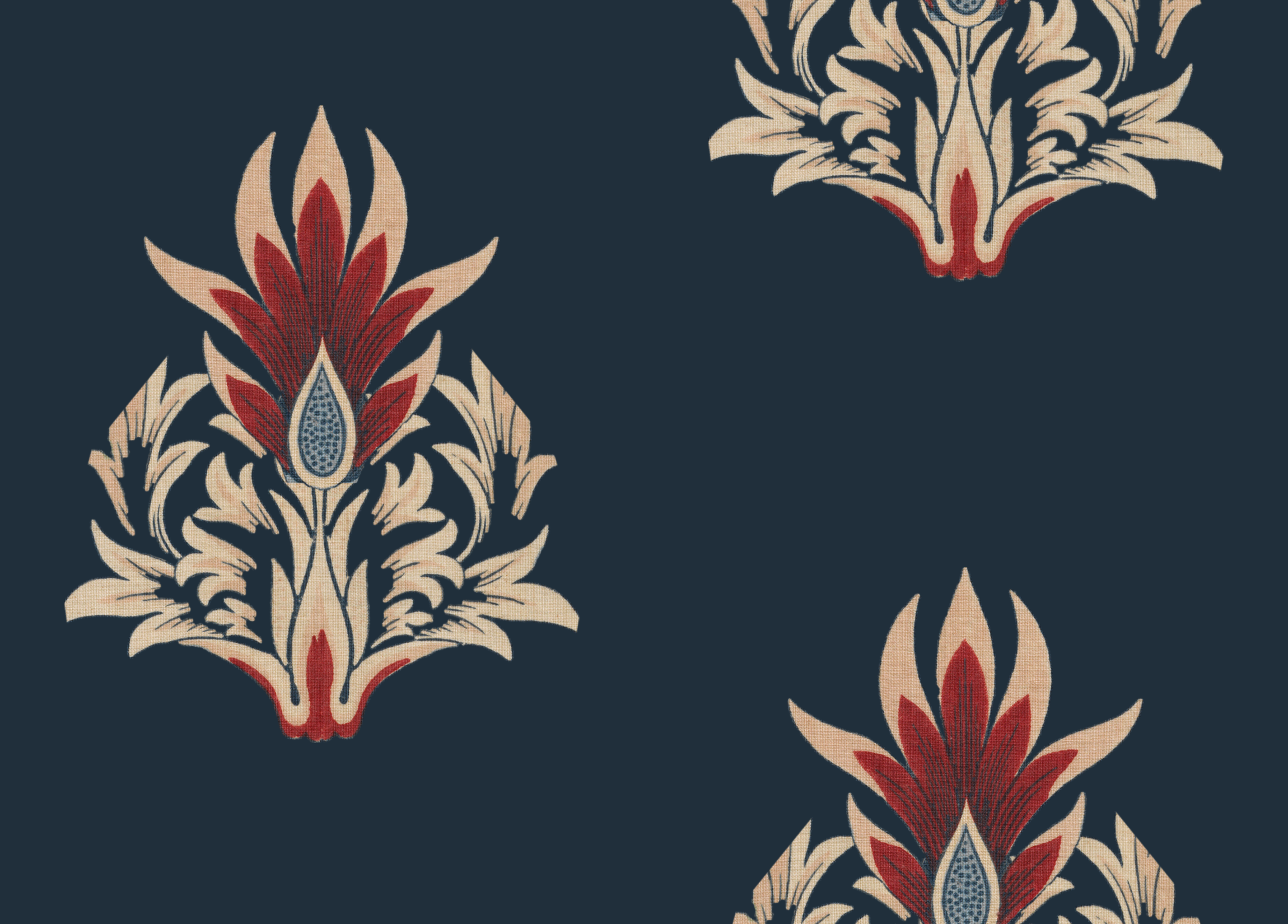
5 prints, each from a different part

Each print starts from a part of the source

The palette

Every colour here was already in the source.
#202F3BNavy ground · from the source
#8E2D30Madder red · from the source
#D8C0A3Cream · from the source
#858C8ESlate blue · from the source
#939176Sage green · from the source
#E0BDA7Salmon (the fritillary's outer petals) · from the source

Why now

Navy and madder in the cloth's own six colours for AW27 dress, shirting and border development; the cream colourway for summer.

Previous storyFlower Work, Counted From the BackNext storyDrawn in India for Japan

Source: Snakeshead, England, Walthamstow (printing); the design by William Morris (British, 1834 to 1896), Early 20th century printing (museum date 1920) of a design of 1876 or 1877, Plain weave cotton, printed. The Cleveland Museum of Art, Snakeshead, Early 20th century. William Morris (British, 1834 to 1896). Plain weave cotton, printed; overall: 85.1 x 100.3 cm. The Cleveland Museum of Art, Gift of Mrs. Henry Chisholm, 1937.695. CC0., object Cleveland Museum of Art accession 1937.695 (web id 117128, never used on screen). CC0. View the object.

Facts from: clevelandart.org, collections.vam.ac.uk.