

Inside the Story · No. 17 · Thursday 29 October 2026 · Craft · South Asia

Red Velvet, Gold Poppies

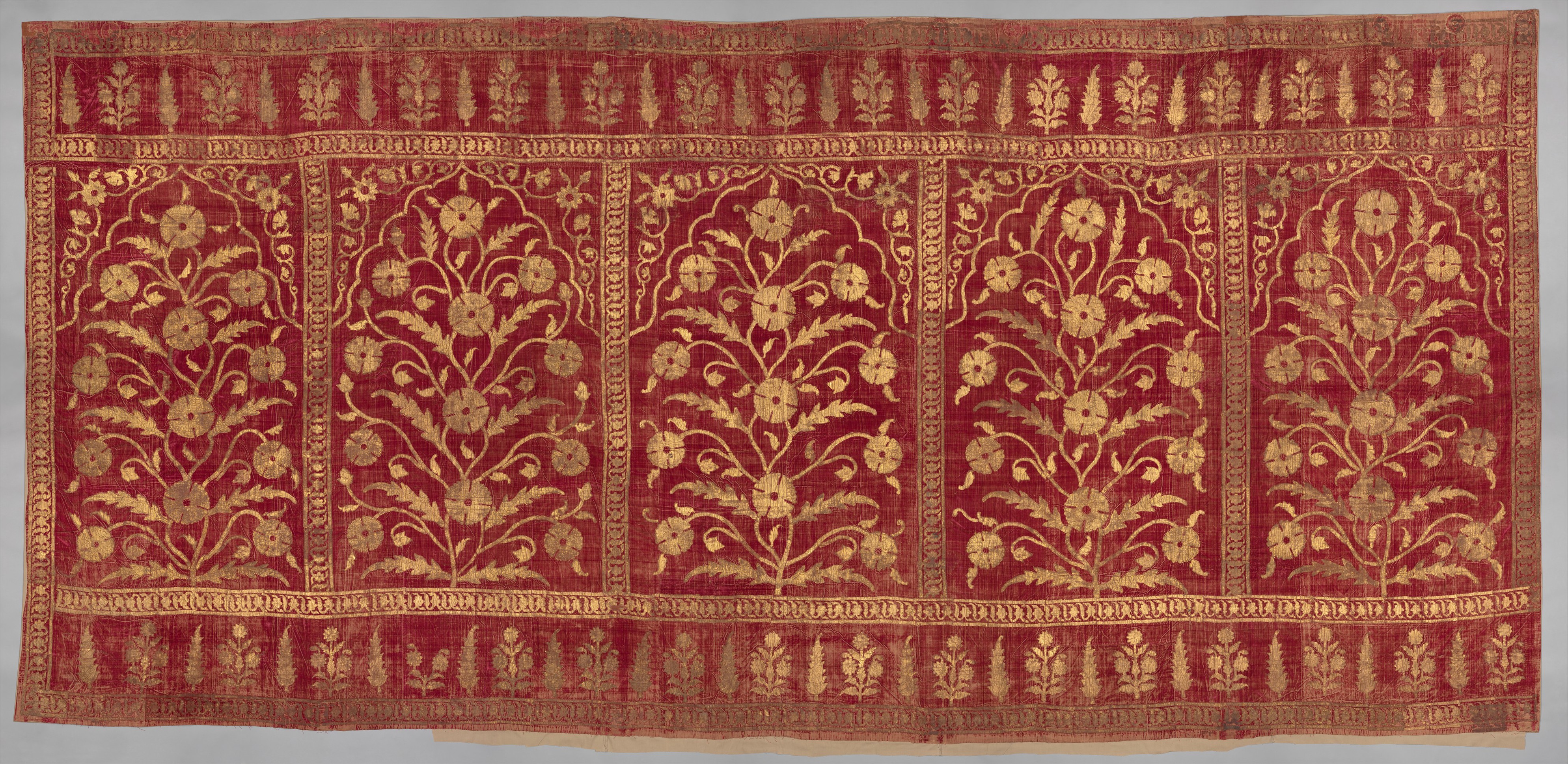
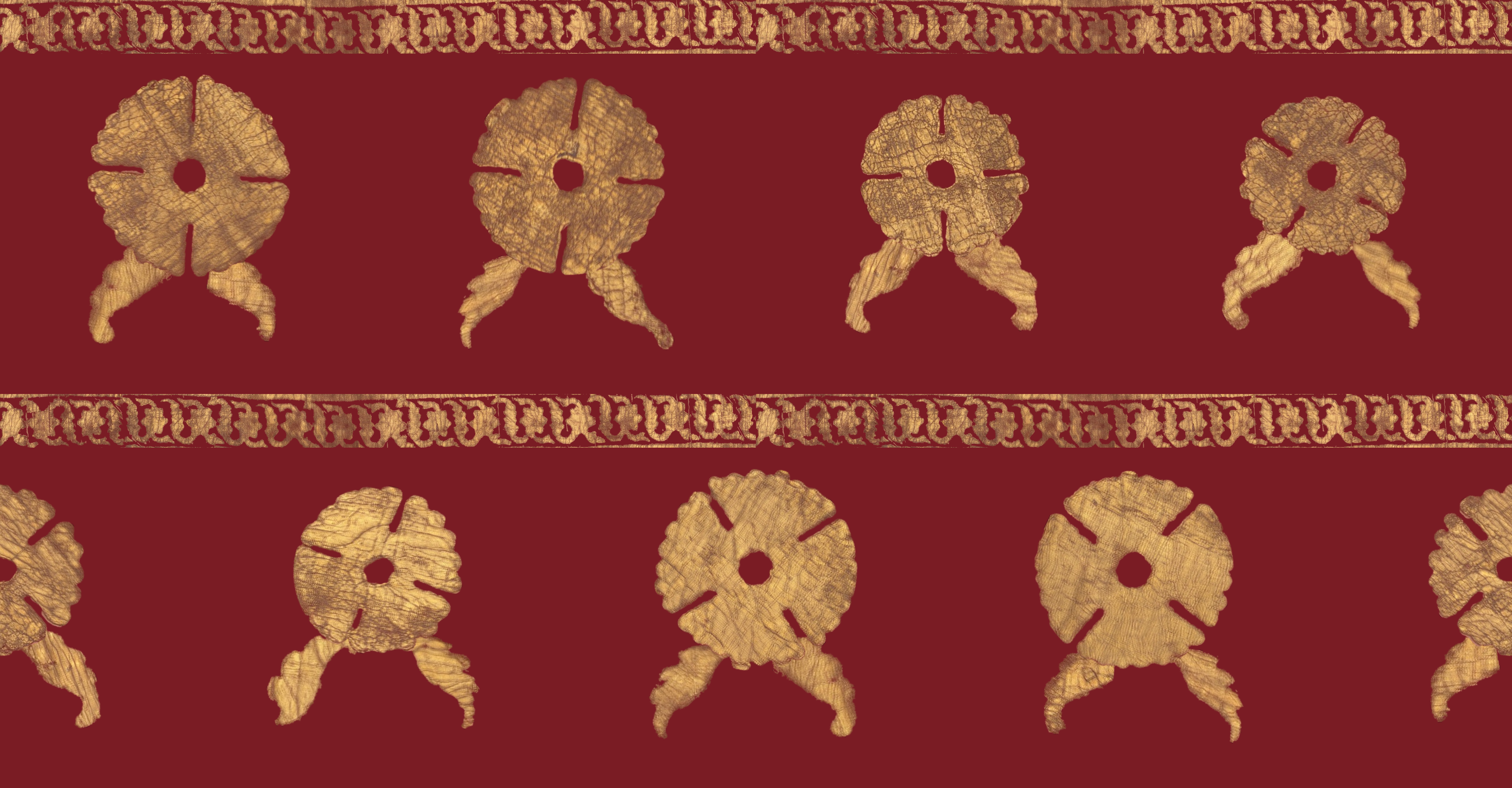
This gold poppy buta comes from a tent wall more than five and a half metres long: crimson silk velvet with gold leaf pressed into it, attributed to India and dated by the Met to about 1635.

The inside story of a design inspired by a crimson velvet tent panel with gold-leaf poppies, India, about 1635.

Floral Tent Panel, The Metropolitan Museum of Art, New York
The source
Floral Tent PanelSilk, gold; cut velvet, painted · Attributed to India, ca. 1635 (API range 1610 to 1660) · Textile: L. 105 3/4 in. (268.6 cm) x W. 221 1/4 in. (562 cm); tube: L. 120 in. (304.8 cm) x W. 20 in. (50.8 cm)The Metropolitan Museum of Art, New York · Floral Tent Panel, ca. 1635. Attributed to India. Silk, gold; cut velvet, painted; textile 268.6 x 562 cm. The Metropolitan Museum of Art, Purchase, Bequest of Helen W. D. Mileham, by exchange, Wendy Findlay Gift, and funds from various donors, 1981, 1981.321. Public domain (CC0). · object Met object 453054, accession 1981.321 · CC0View at The Metropolitan Museum of Art, New York ↗

The Met says that in the lavish encampments used by Indian rulers when travelling, tents were lined with beautiful textiles, and that this panel comes from the interior of a tent complex probably made for Raja Jai Singh I of Amber. The gold was laid on an adhesive, covered with gold leaf, beaten into the surface and burnished.

What we saw

Five parts, traced from the photograph
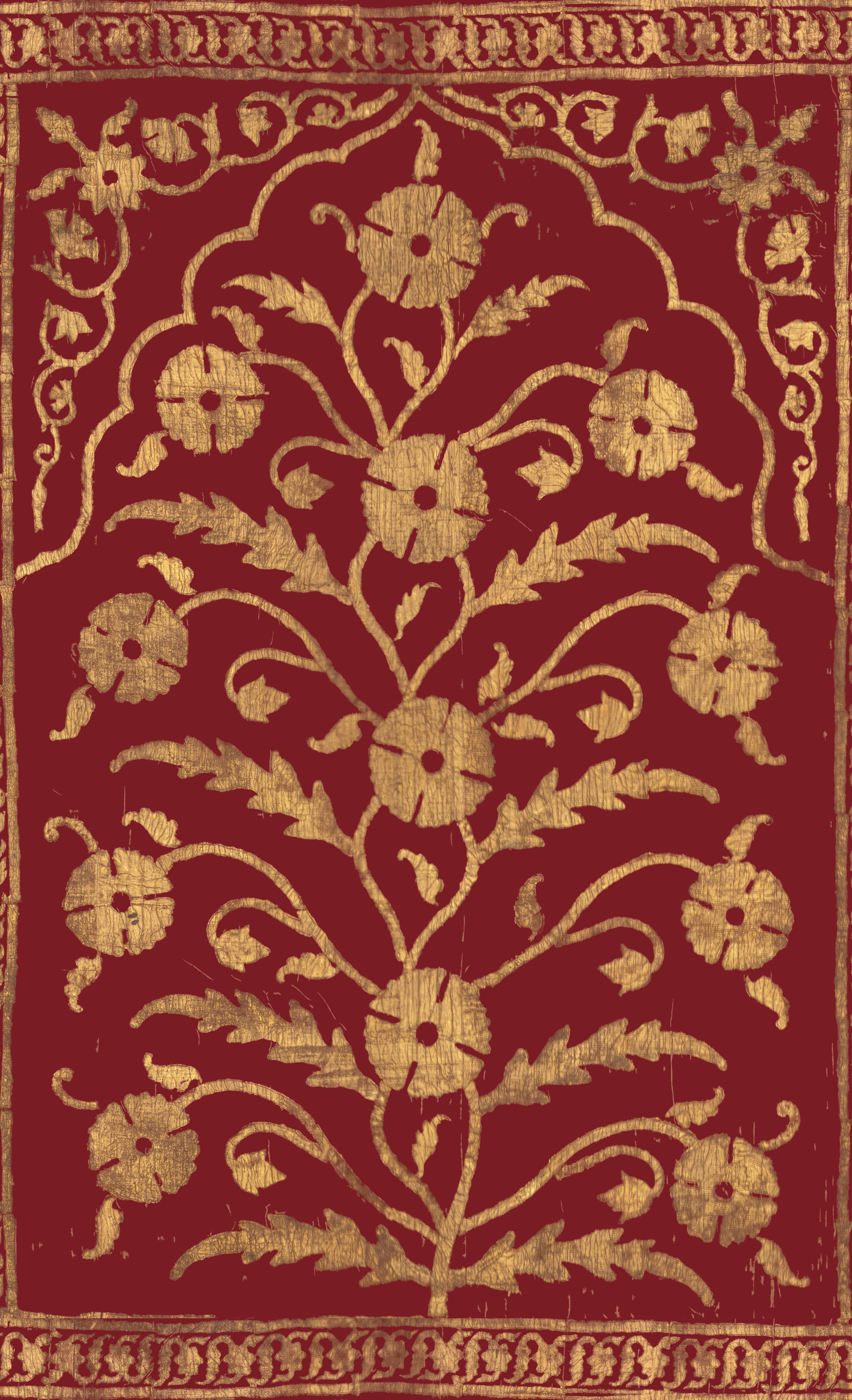
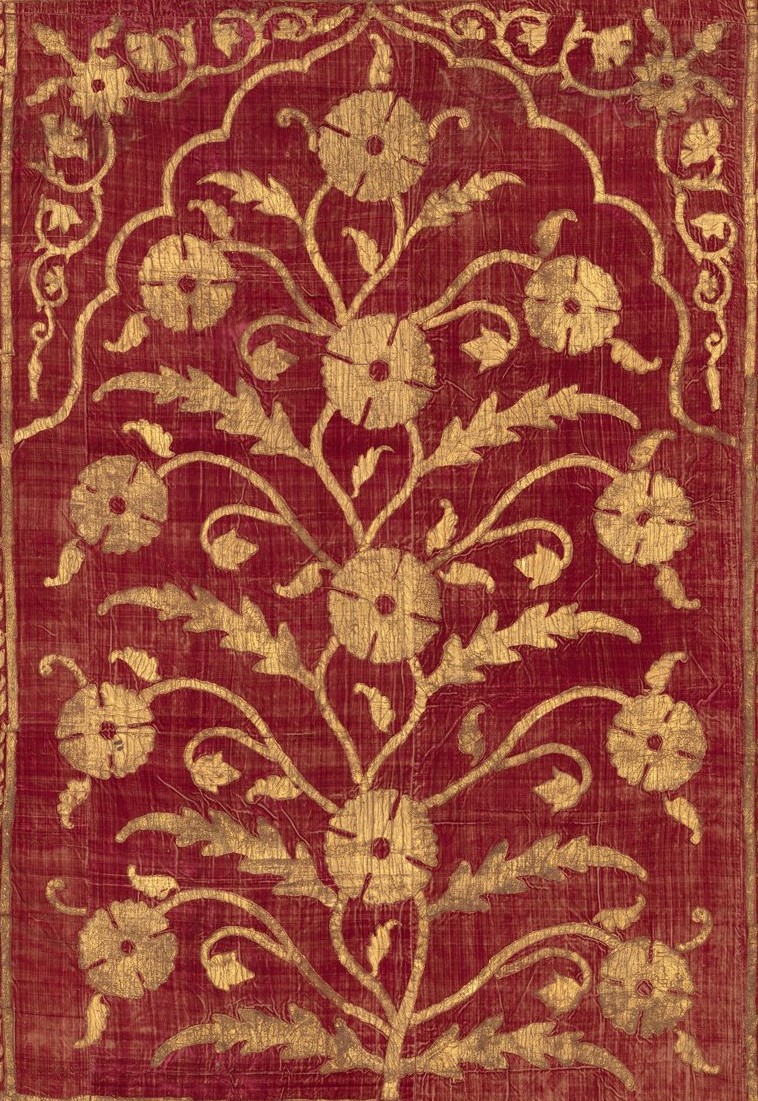
The poppy plant under its arch
1The poppy plant under its archFirst, the plant. One poppy plant under a cusped arch, in each of the five compartments, with scrolls in the spandrels.
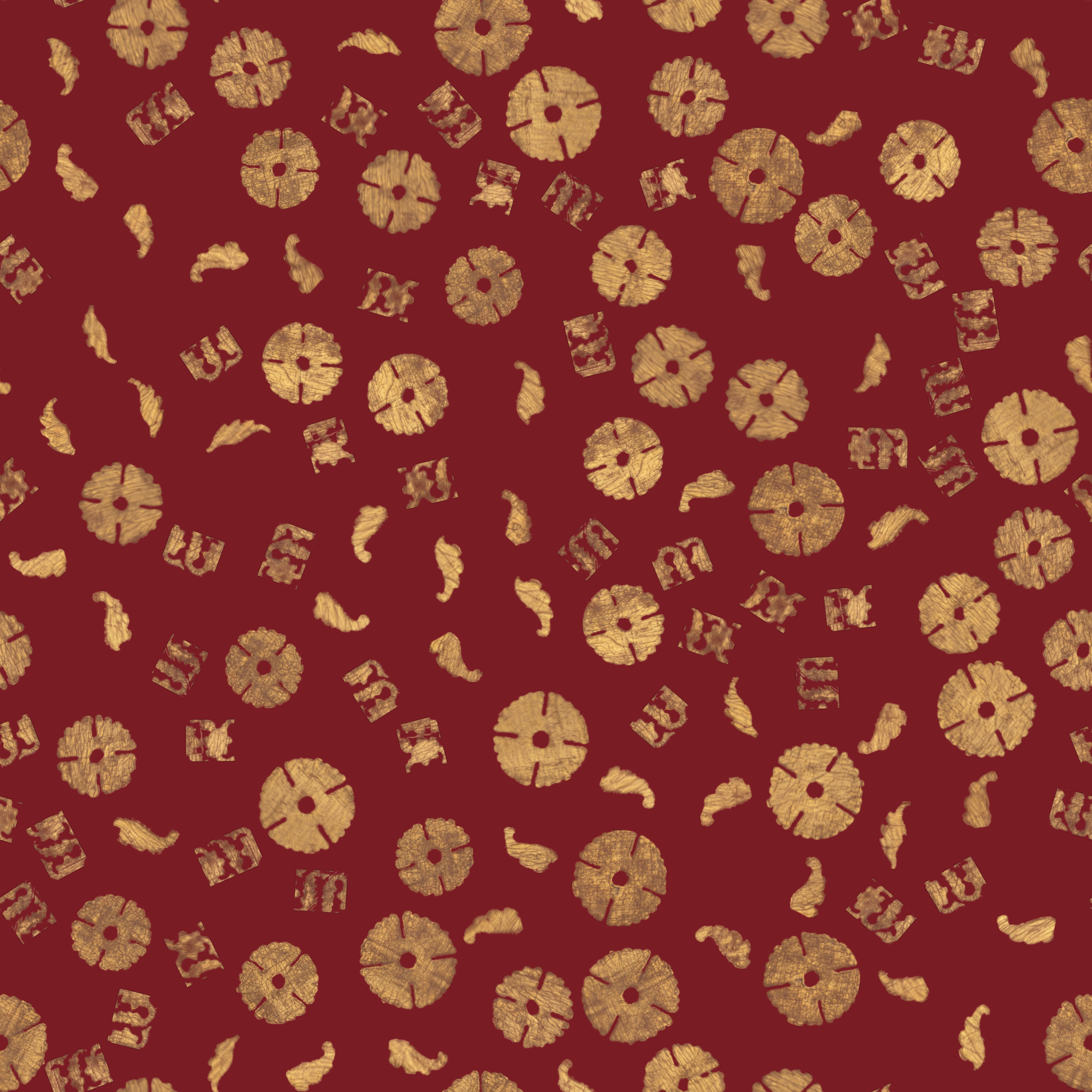
The poppy head
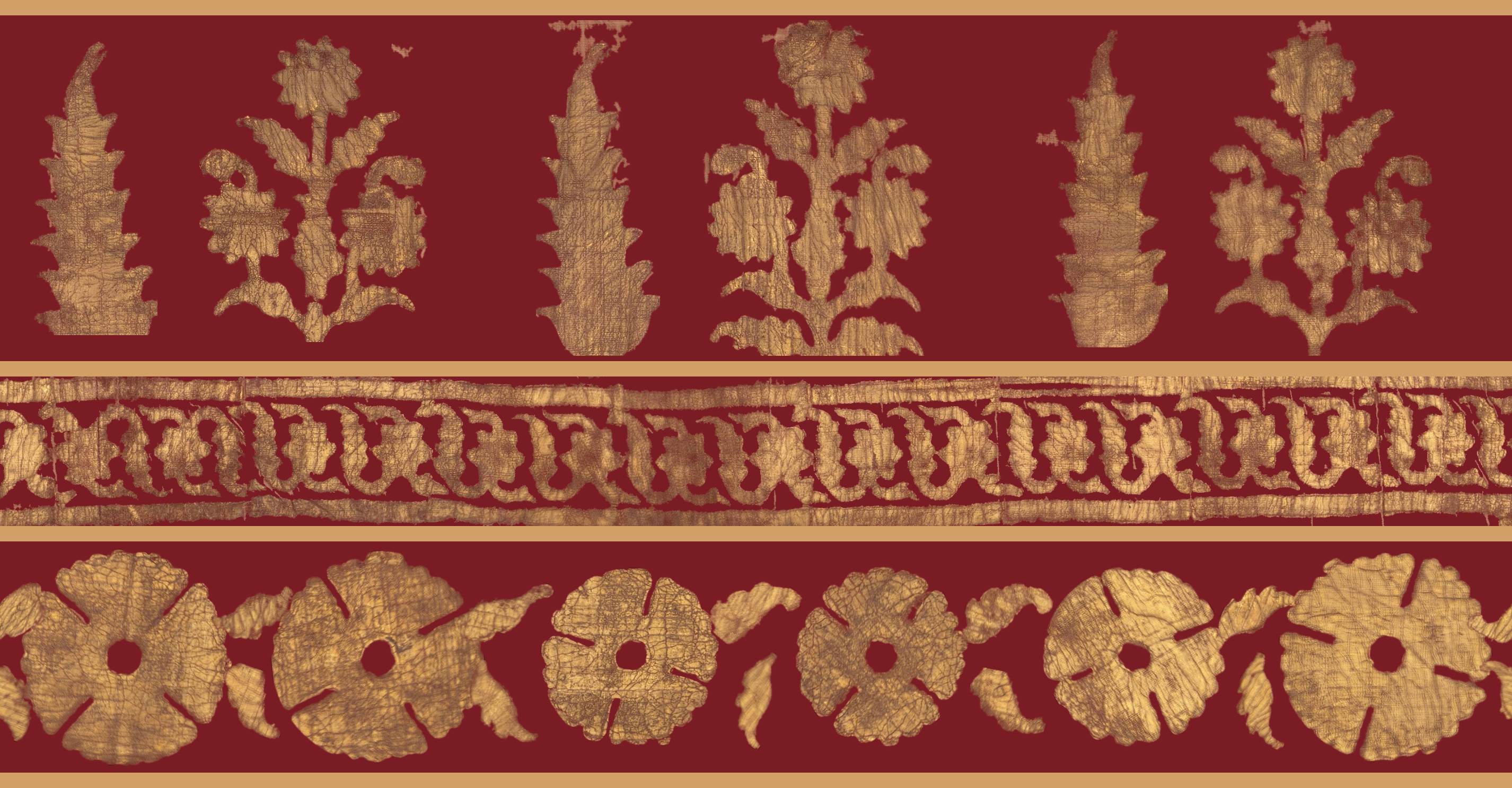
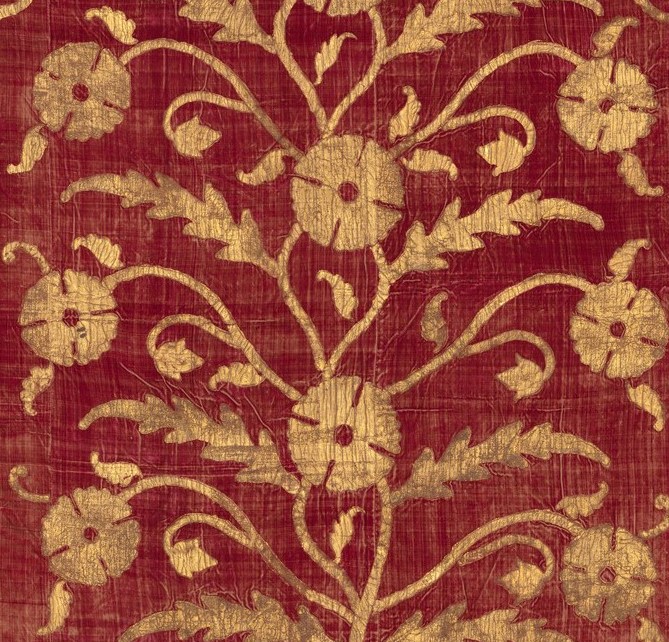
2The poppy headThen the heads. Twelve on every plant: a gold disc with five slits round a crimson dot, about fifteen centimetres across.
The serrated leaf
3The serrated leafThen the serrated leaves that spring from the stem, each one a different cut of gold.
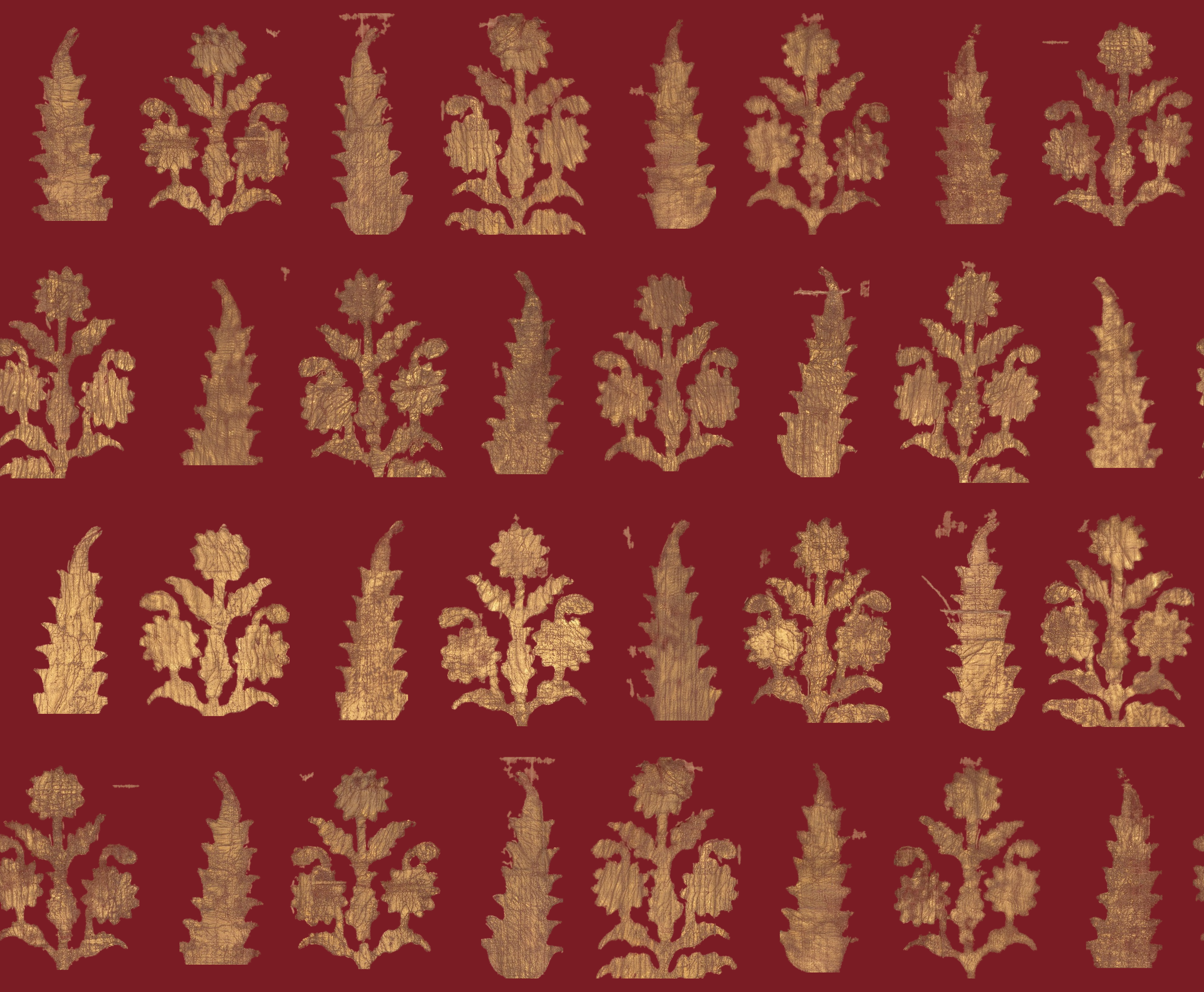
The cypress and plant row
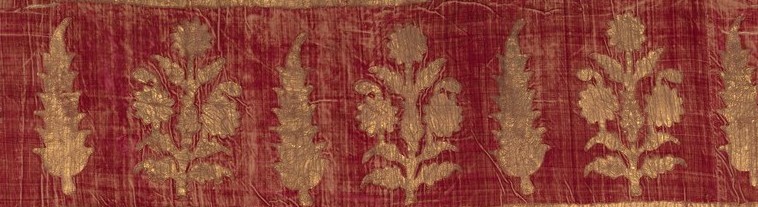
4The cypress and plant rowAlong the top and the bottom, a row of cypresses and flowering plants taking turns. Sixteen of each along the top.
The vine band
5The vine bandAnd between the rows and the compartments, a band of scrolling vine between two gold rules.

5 prints, each from a different part

Each print starts from a part of the source

The palette

Every colour here was already in the source.
#D2A066Gold leaf · from the source
#7A1C24Crimson velvet · from the source
#72111FDeep crimson (the pile in shadow) · from the source
#744739Worn gold (the crackle) · from the source
#B0957ALining cream · from the source

Why now

Diwali is 8 November 2026 and the wedding season follows: red and gold, in the velvet's own two colours, for festive dress material, saree borders and pallus; the cream colourway for daywear.

Previous storyFlower Work, Counted From the BackNext storyIndian Red on an English Block

Source: Floral Tent Panel, Attributed to India, ca. 1635 (API range 1610 to 1660), Silk, gold; cut velvet, painted. The Metropolitan Museum of Art, New York, Floral Tent Panel, ca. 1635. Attributed to India. Silk, gold; cut velvet, painted; textile 268.6 x 562 cm. The Metropolitan Museum of Art, Purchase, Bequest of Helen W. D. Mileham, by exchange, Wendy Findlay Gift, and funds from various donors, 1981, 1981.321. Public domain (CC0)., object Met object 453054, accession 1981.321. CC0. View the object.

Facts from: metmuseum.org, metmuseum.org.